The quick version
- Harbour seals are the most common seal species in the Jökulsárlón area, so keep watching the water between the ice.[1]
- Some of the icebergs that calve into the lagoon are thought to be made of ice more than 1,000 years old.[2]
- When light hits the large, dense crystals in deep glacier ice, short-waved blue light is scattered and the ice looks blue.[3]
- A natural ice cave in Vatnajökull forms in October and lasts through April before returning meltwater takes it back in May.[4]
- Jökulsárlón is about 370 km (230 miles) from Reykjavík, and the drive takes roughly 5 hours each way in good conditions.[5]
- Top choice Vatnajökull Ice Cave Tour from US$164 Duration3 hours[6]Rating4.25 from 2,171 reviews[6]GuideLive tour guide: English[6]CancellationFree cancellation up to 24 hours[6] Check availability
- Crystal Ice Cave Super Jeep from US$173 Duration2.5 hours[7]Rating4.21 from 1,751 reviews[7]GuideLive tour guide: English[7]CancellationFree cancellation up to 24 hours[7] See this tour
- The Original Ice Cave Tour from US$161 Duration3 hours[8]Rating4.61 from 1,129 reviews[8]GuideLive tour guide: English[8]CancellationFree cancellation up to 24 hours[8] See this tour
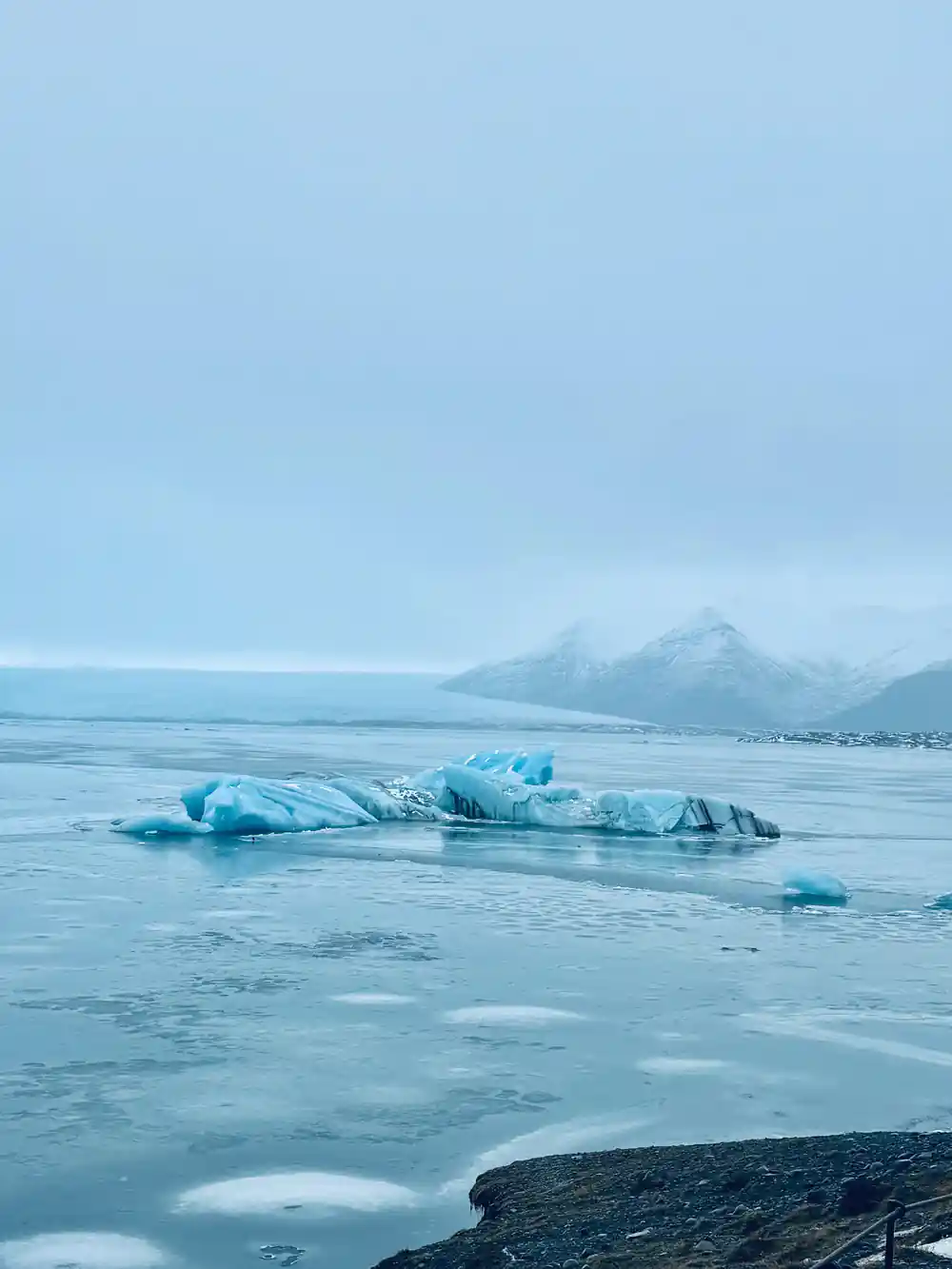
The lagoon provides an ideal environment for seals to swim and feed on fish. The most common seal species found in the area are the harbour seals.
Is this the right ice cave tour?
Know this first
Seals of the Jökulsárlón Iceberg Lagoon
The lagoon is anything but empty water. Harbour seals are the most common seal species in the area.[1] They surface between the floes with just their heads showing, hold there for a moment to look at the shore, then slide back under. On a still morning you often hear the puff of a breath before you see the animal itself, and because the water is so flat, a small ripple is easy to pick out from the shore.
Watch the edges of the ice rather than the open middle of the lagoon. Seals tend to work along the loose floes and the channels between them, and they can stay under for long stretches before surfacing again. Binoculars are worth carrying, and a zoom lens does far more for a sighting than getting close ever will. Seals are wild animals, so never walk out onto the wet flats or the ice to reach one, and give them the space they need.
The water they swim in is deep and old. Jökulsárlón lagoon is 248 meters (814 feet) deep and has quadrupled in size since the 1970s.[2] Icebergs drift across it, tide and current shuffle them about, and the surface changes from one visit to the next. In July of one record summer, around 100,000 tourists came to see it.[11] The seals, meanwhile, keep their distance.
Birdlife over Breiðamerkursandur
The flat sweep of sand and gravel on the seaward side of the lagoon is part of Breiðamerkursandur, and in summer it fills with birds. Terns wheel overhead and dive at anything that comes near their nests, waders pick along the wet sand, and gulls and skuas work the shoreline. The birds nest on the ground, and their eggs and chicks are almost invisible against the sand and stones.
Give nesting birds room. Walk on the firmer gravel and the marked paths, and if a bird starts diving at you, you are already close to a nest. That dive is a warning rather than an attack, so step away steadily and the birds will settle again. Photograph from a distance with a long lens instead of walking in for a closer frame.
The sandur itself was built by rivers and meltwater running out from under the glacier, spreading gravel and black volcanic sand in wide sheets toward the sea. Birds, seals and icebergs all share these few square kilometres, and the flats look different every time the light and the tide change. In winter the same ground is wind-scoured and often white with snow.
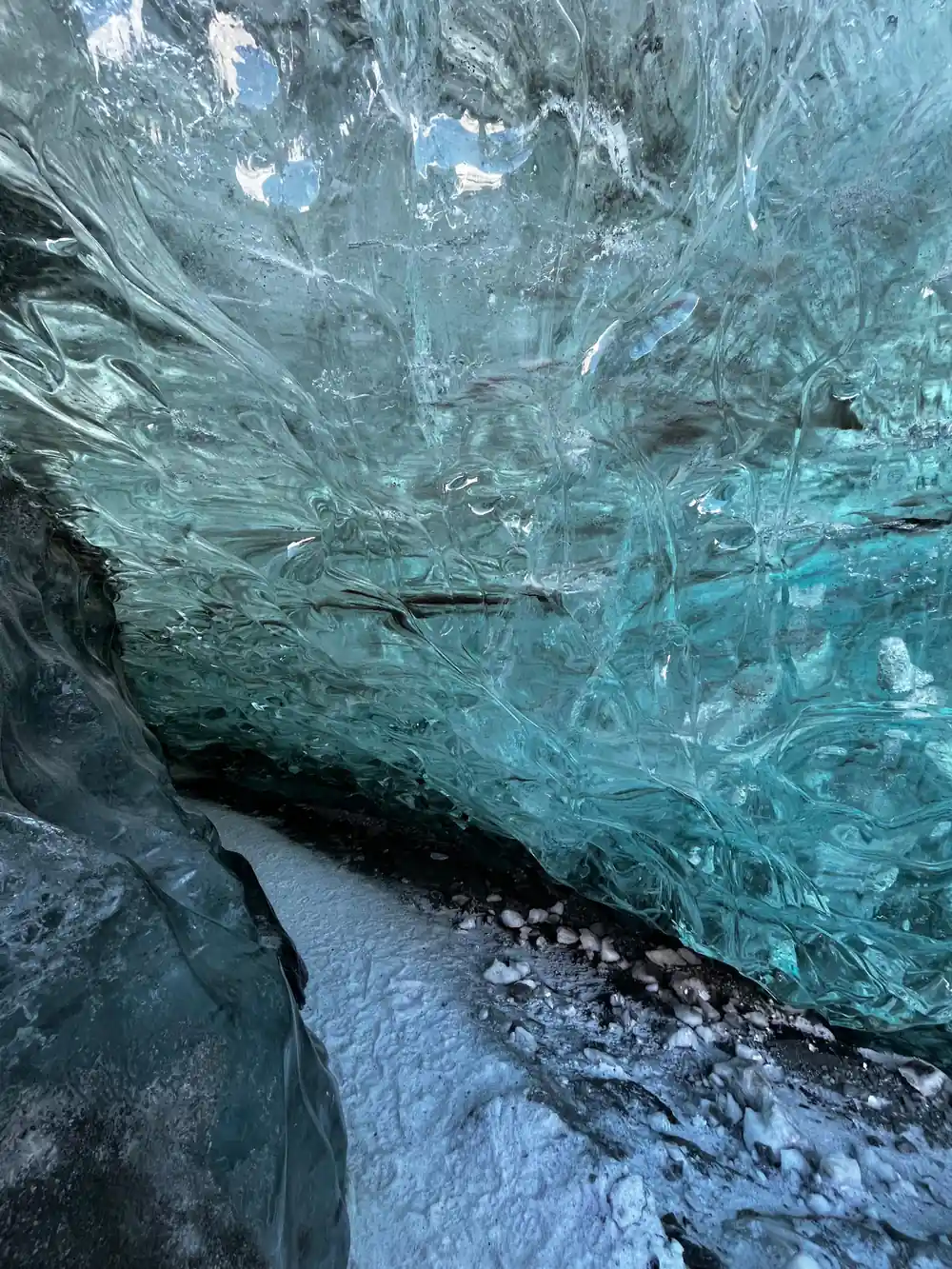
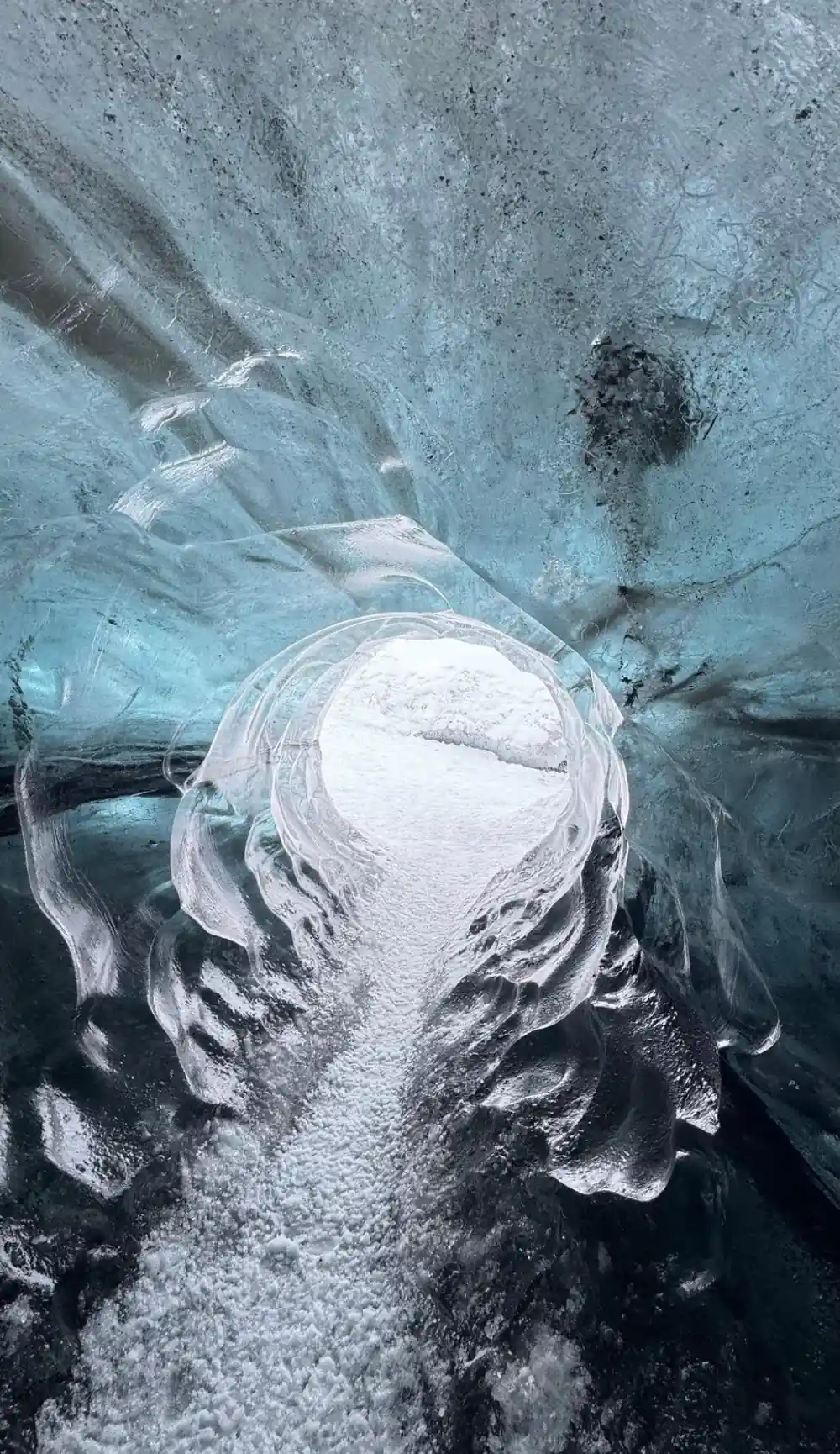
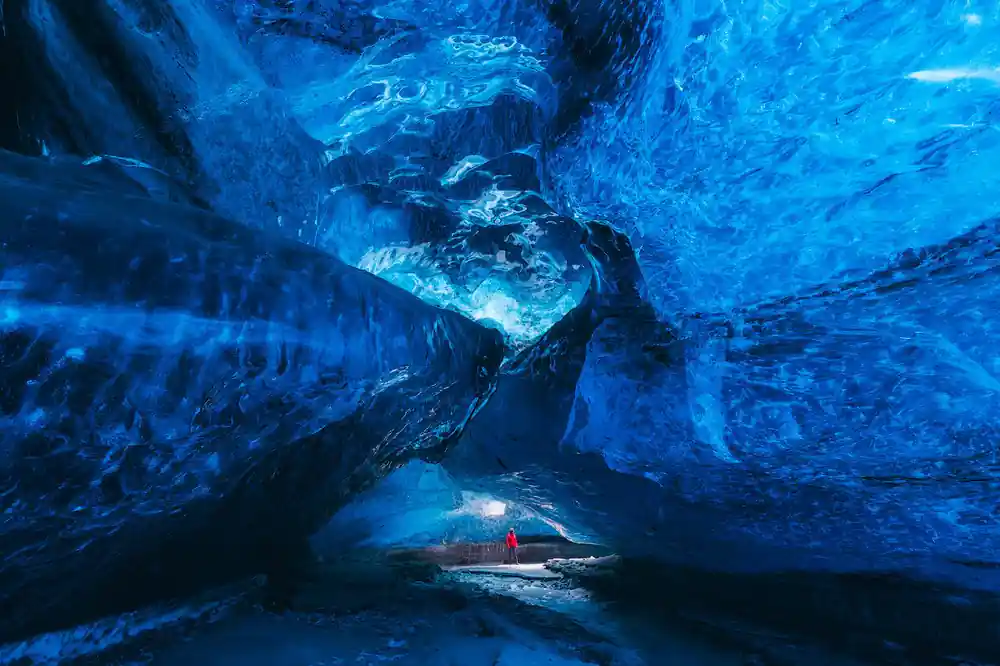
Blue ice overhead inside a Vatnajökull cave, lit through the entrance
How Icebergs Calve from Vatnajökull
Icebergs do not appear from nowhere. Breiðamerkurjökull is the outlet glacier that calves into Jökulsárlón lagoon, and it has retreated at an annual rate of up to 200-300 m in recent years.[12] The calving itself is sudden: a block tears away from the front, drops into the water with a crack and a wash of spray, then rolls and bobs until it settles.
The ice behind that front is thick. The thickest point of the Vatnajökull ice cap is 3,120 feet (950 m) deep, with an average thickness of 1,250 feet (380 m).[13] All of it began as snow that never melted, packed down year after year until the air was squeezed out and the crystals grew large and dense.
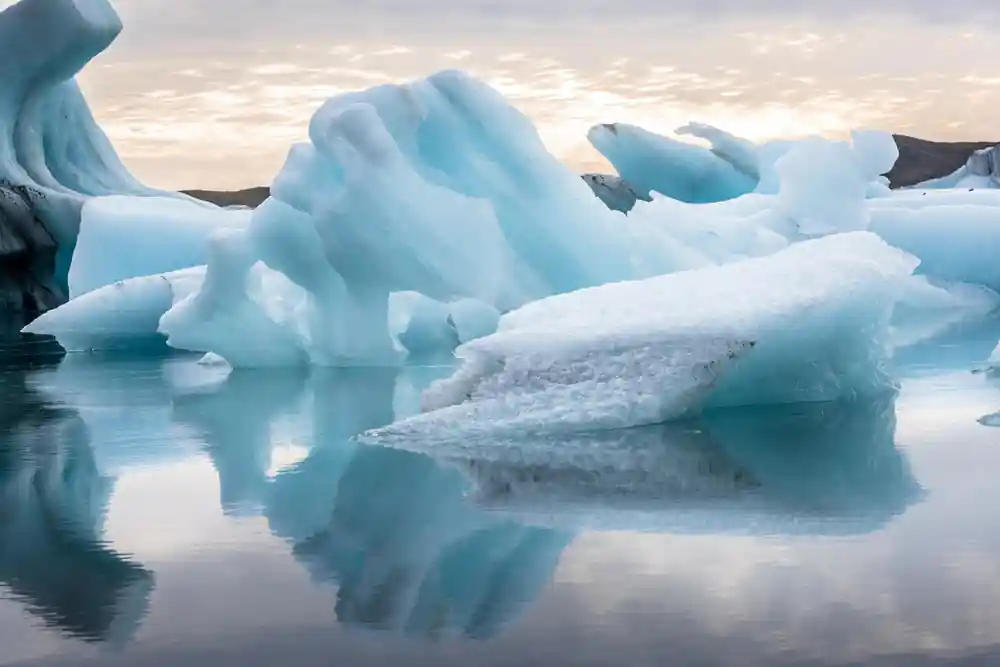
Some of what calves off is very old ice. A few of the icebergs in the lagoon are thought to be made of ice more than 1,000 years old.[2] Others are far younger, and they look much the same. Size and colour tell you almost nothing about age, and that is part of what makes watching them so strange.
Layers, Ash and Striped Ice
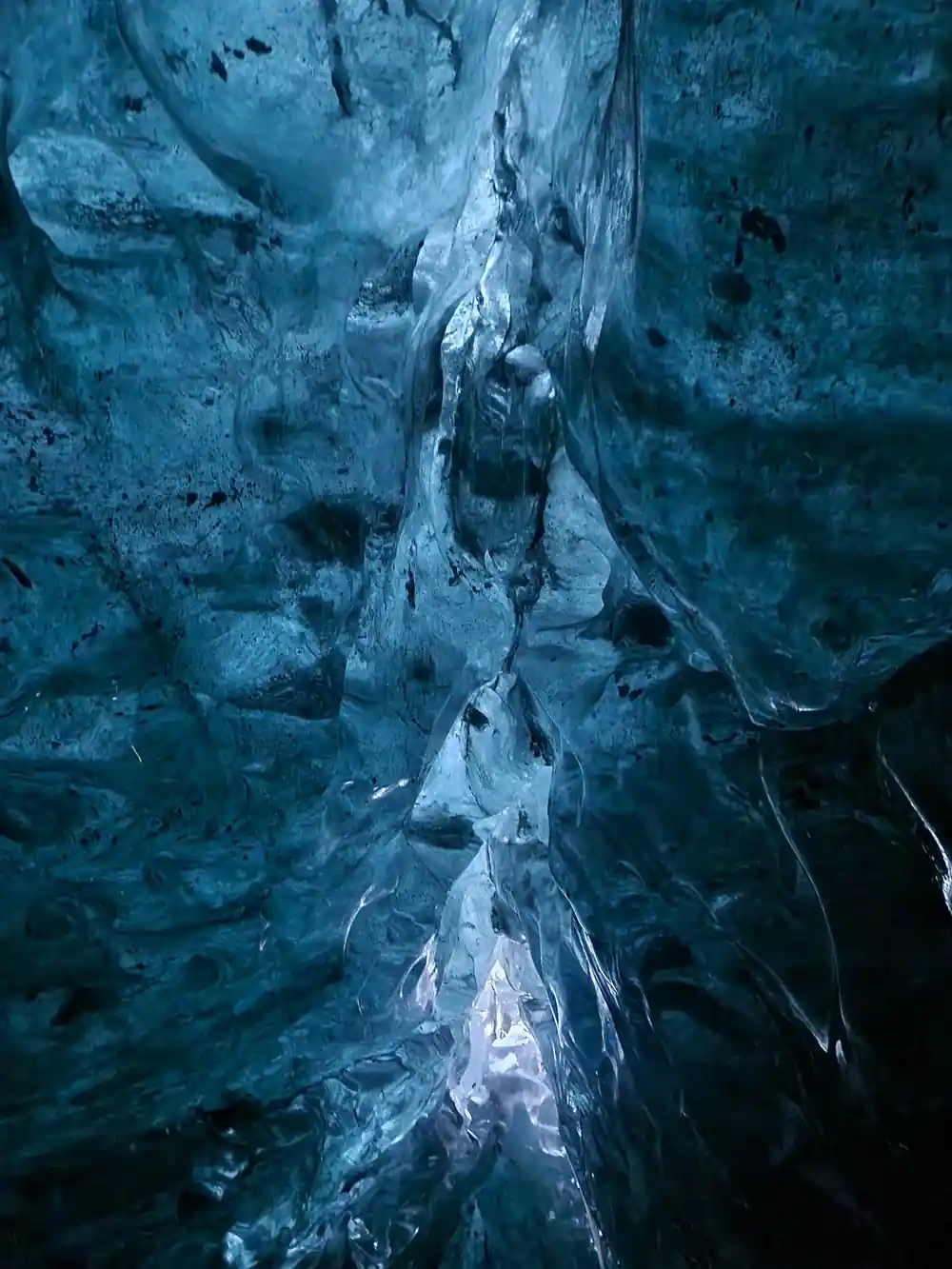
Icelandic glacier ice is rarely one flat colour. Eruptions elsewhere on the island have left ash layers that were buried by later snowfall, and where ice is cut by a crevasse or a cave wall, those thin dark bands show up as stripes. Some are sharp and grey, some brown, some almost black against the blue.
You see the same banding in stranded icebergs on the beach. A block that has rolled over shows a cross-section of the glacier, layer on layer. Each dark line marks ash that fell on snow and was buried, and the pale ice between the lines is clean snowfall from other years, squeezed into ice.
Look too for the difference between clear ice and white ice. White ice is often the top of the glacier, or a recently exposed surface, full of trapped air bubbles that scatter light in every direction. The deep, clear ice has been squeezed hard, and that is where the blue shows best.
from US$164
The Vatnajökull ice cave guided tour from Jökulsárlón runs 3 hours with a live English-speaking guide.[6]
Blue Ice and the Ice Caves
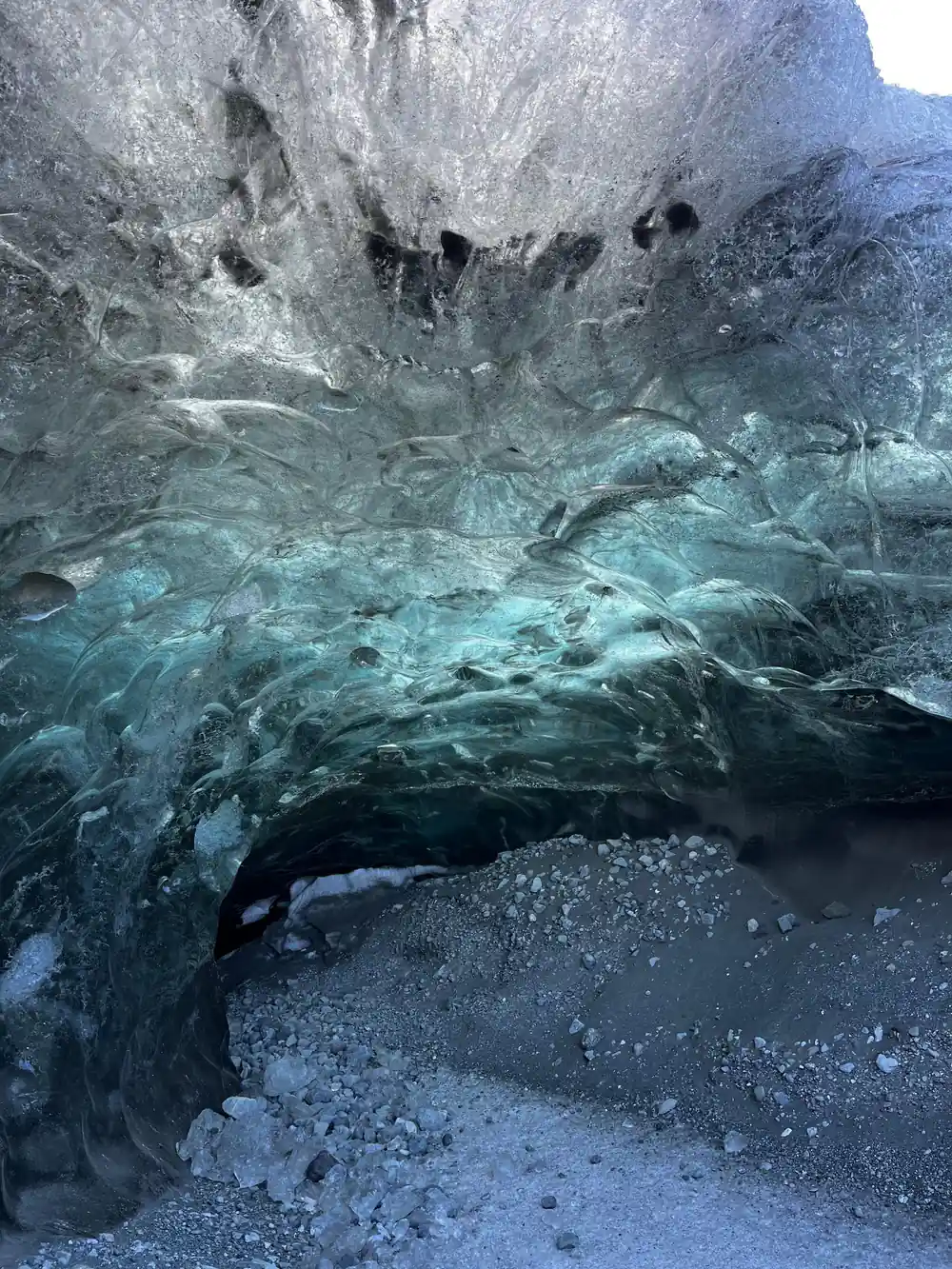
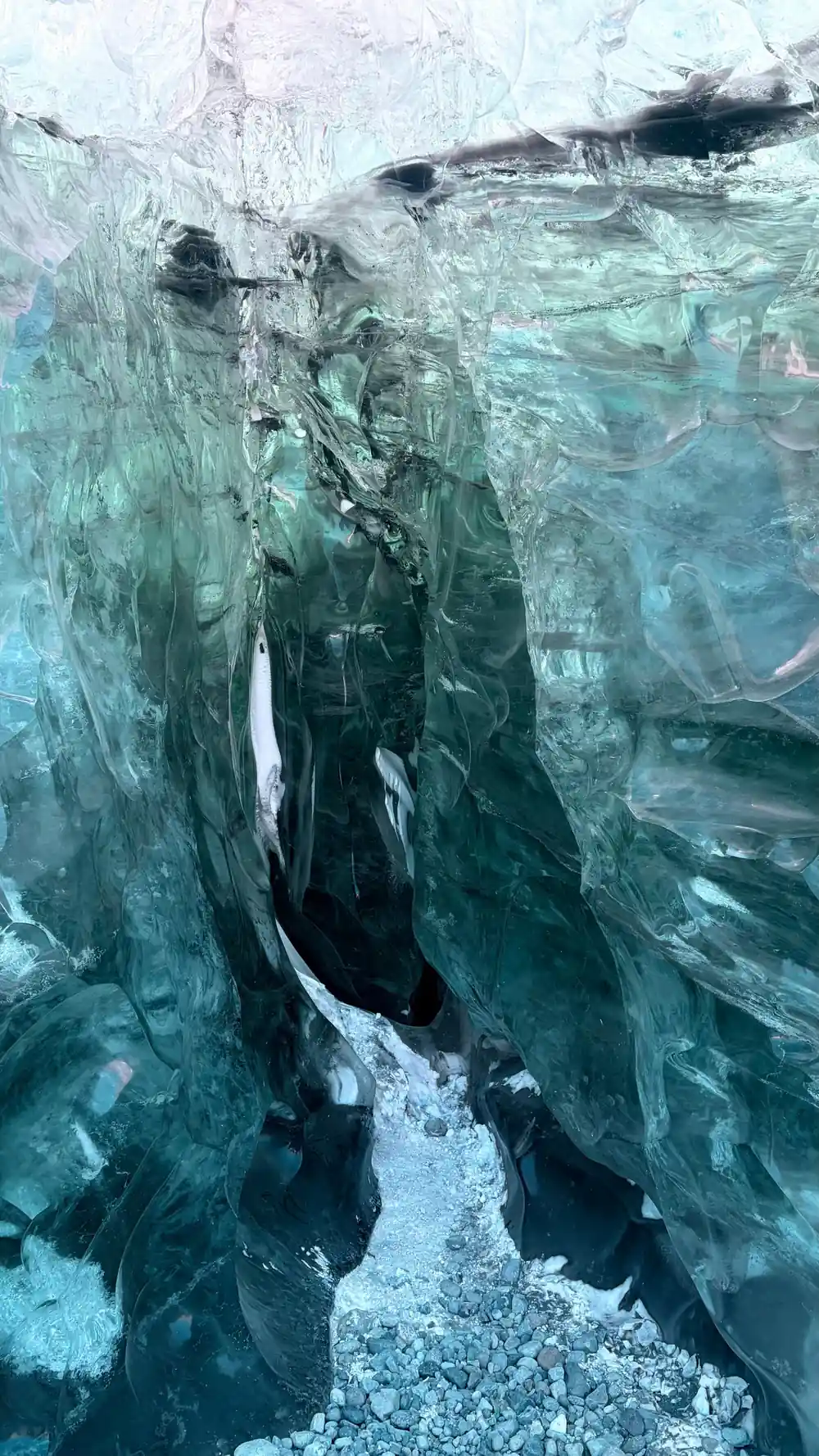
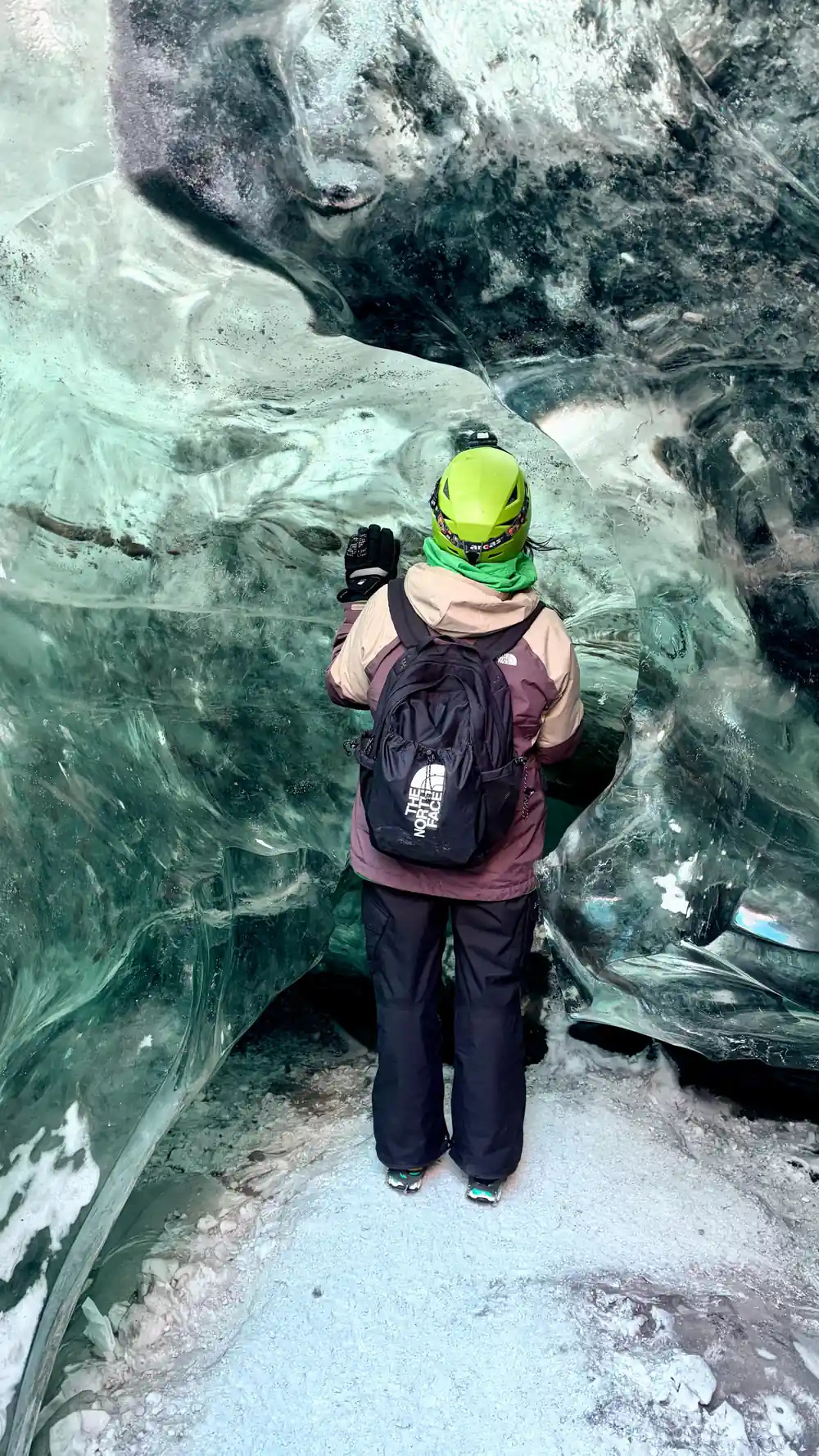
Glacier ice looks blue because when light hits the large, dense crystals in the deep ice, they absorb long wavelengths and scatter short-waved blue light.[3] A cave lit by one opening seems to glow with it, and the darker the surroundings, the more your eyes read the ice as blue.
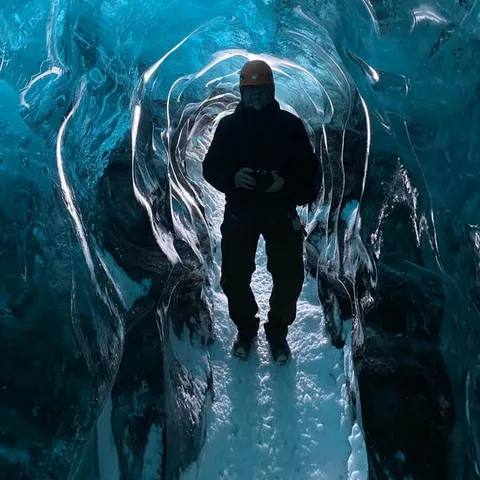
A natural ice cave in Vatnajökull lasts one winter. It forms in October, holds its coldest and bluest form through the middle of winter, ages through spring and is taken back by returning meltwater in May.[4] Each winter the meltwater finds a different route. The cave you walk into is rarely the one from last year's photographs.
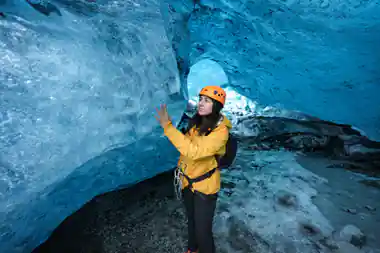
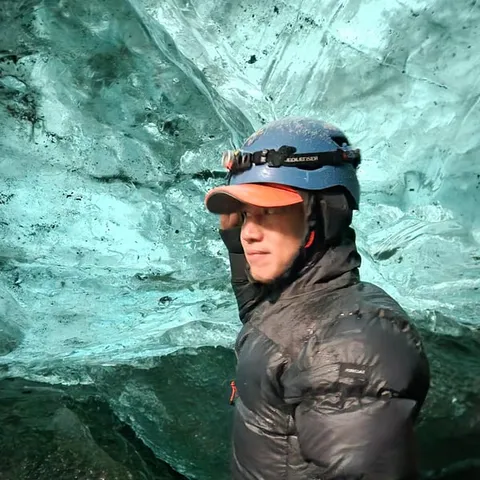
Safety is simple and mostly about your head. A sturdy helmet is essential inside an ice cave, protecting against falling ice and low-hanging ceilings, and it is generally provided by the tour operator.[9] Your own contribution is clothing: warm, waterproof layers, gloves, and boots with grip. Bring a spare pair of gloves and a hat that stays on in the wind.
When Icebergs Flip and Reshape
An iceberg in the lagoon is not a fixed object. As it melts and the weight shifts, it can roll over with a low boom that carries across the water, showing a fresh blue face that was underwater minutes before. Most of the block sits below the surface, so what you see is only the top of it.
The lagoon is older than it looks. Its tidal inlet was excavated during the last glacial advance, about 26,500 years ago.[14] What you see today is a much younger body of water, filled as the glacier pulled back and meltwater took the space the ice gave up.
The lagoon has had a film career as well. Jökulsárlón Glacier Lagoon was a filming location for A View to a Kill, Die Another Day and Lara Croft: Tomb Raider.[15] On a grey day, with white ice, black sand and a horizon of water and mountains, the place has a distinctly cinematic look.
The Walk to Diamond Beach
Diamond Beach lies in Southeast Iceland. It is formed by black volcanic sand scattered with clear glacial ice that breaks off Breiðamerkurjökull, drifts through Jökulsárlón Glacier Lagoon and washes ashore.[16] It is a short walk from the lagoon, and the ice on the sand is different with every tide: large chunks one hour, small chips the next.
Getting here takes planning. Jökulsárlón is about 370 km (230 miles) from Reykjavík, and the drive takes roughly 5 hours each way in good conditions.[5] Daylight shifts fast in Iceland, from 4 to 5 hours in late December to about 21 hours by late June.[10] The same stretch of road is a different journey at different times of year.
Check the road and the weather before setting out, and allow more time than the map suggests. Fill the tank when you can, carry food and water, and dress for wind. On bright summer mornings the car park fills early, and arriving ahead of the coaches is worth the early start.
How long ice cave tours from Jökulsárlón last
Durations as listed on these GetYourGuide tours from Jökulsárlón.[6][7][8][17]
Compare from prices for ice cave and glacier tours
US dollar from prices per person for these GetYourGuide listings; check current age bands and child rates when booking.[6][7][8][17]
When a Vatnajökull ice cave exists
Planning your visit
Book the cave tour
Reserve the ice cave guided tour from Jökulsárlón and pick a morning if you can. Free cancellation runs up to 24 hours in advance.[6]
Plan the drive
Jökulsárlón is about 370 km (230 miles) from Reykjavík, roughly 5 hours each way in good conditions, so plan the drive carefully.[5]
Dress for ice
Dress warm and waterproof; the ground is ice. A sturdy helmet is essential inside an ice cave and is generally provided by the operator.[9]
Time the light
Daylight ranges from 4 to 5 hours in late December to about 21 hours by late June, so check sunrise and sunset before you drive.[10]
Add Diamond Beach
Diamond Beach lies in Southeast Iceland, where clear glacial ice drifts through the lagoon and washes ashore on black volcanic sand.[16]
See the blue ice before the meltwater takes it back
from US$164Reserve now & pay later