The quick version
- A natural ice cave in Vatnajökull forms in October, remains through April and is taken back by returning meltwater in May.[1]
- From December to February the caves hold their coldest and bluest form, then age through March and April.[1]
- The Vatnajökull Ice Cave Guided Tour from Jökulsárlón runs 3 hours and starts from US$164, with a live guide in English.[2]
- Free cancellation with a full refund on cancellations made up to 24 hours in advance, and you can reserve now and pay later.[2]
- Jökulsárlón is about 370 km (230 miles) from Reykjavík along Route 1, and the drive takes roughly 5 hours each way in good conditions.[3]
- Top choice Vatnajökull Ice Cave Tour from US$164 Duration3 hours[2]Rating4.25 from 2,171 reviews[2]GuideLive tour guide: English[2]CancellationFree cancellation, 24 hours ahead[2] Check availability
- Crystal Ice Cave Super Jeep from US$173 Duration2.5 hours[4]Rating4.21 from 1,751 reviews[4]GuideLive tour guide: English[4]CancellationFree cancellation, 24 hours ahead[4] See this tour
- Glacier Guided Hiking Tour from US$134 Duration4.5 hours[5]Rating4.75 from 1,008 reviews[5]GuideLive tour guide: English[5]CancellationFree cancellation, 24 hours ahead[5] See this tour
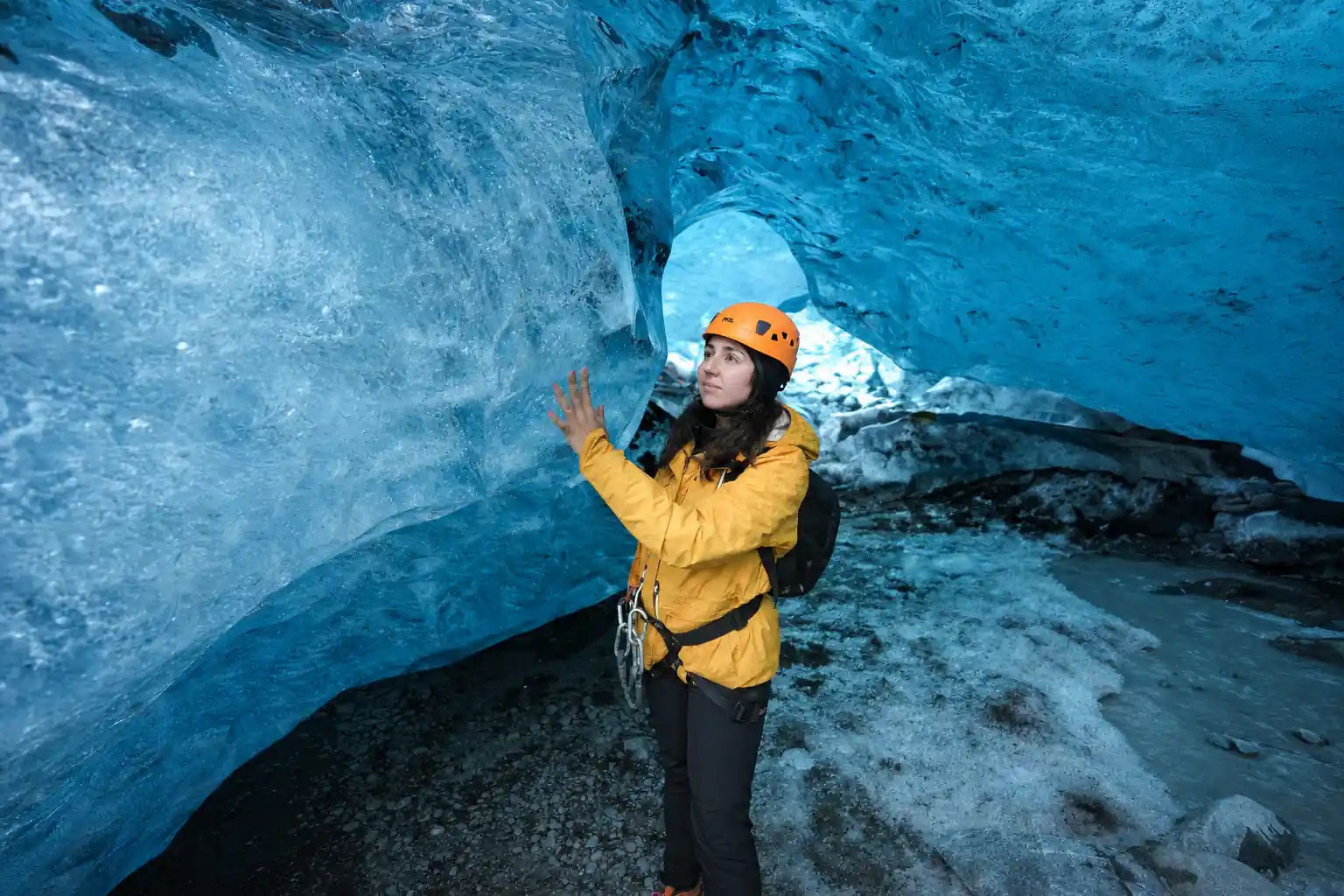
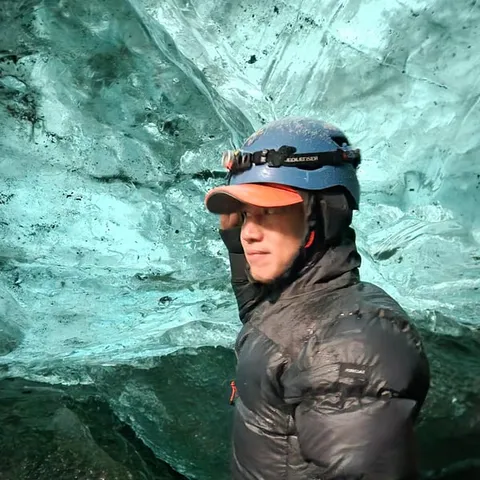
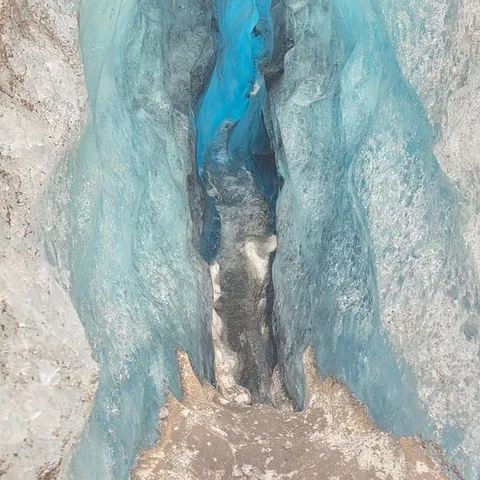
An ice cave in Vatnajökull typically lasts one winter. The summer meltwater channel that shaped it drains and firms up in October, stabilises through November, holds its coldest and bluest form from December to February, ages through March and April, and is taken back by meltwater in May.
Book inside the cave season, not around it
Know this first
Jokulsarlon winter: ice, light and the cave season
Jokulsarlon winter is a different lagoon from the one in the summer photos. Ice still calves from Breiðamerkurjökull and drifts across the water, and clear fragments wash up on the black volcanic sand of Diamond Beach in Southeast Iceland.[8] What changes around it is the light and the cold. Across Iceland, average winter temperatures sit around 32°F (0°C), and daylight ranges from 4 to 5 hours in late December to about 21 hours by late June.[6] Those short days shape everything, from when you start the drive east to how much of the lagoon you can take in before the light goes.
This is also the part of the year when the caves exist. A natural ice cave in Vatnajökull lasts one winter: it forms in October, remains through April and is taken back by returning meltwater in May.[1] Everything below sits inside that window, from the weeks worth aiming for to the days you should leave free for the drive.
Getting here is part of the trip. Jökulsárlón sits off Route 1 in the southeast, about 370 km (230 miles) from Reykjavík, and the drive takes roughly 5 hours each way in good conditions.[3] Breaking the journey with a night near Vík or around Skaftafell puts the lagoon and the glacier within easy reach on the morning of the tour. Fuel up when you can, check the road conditions before you set out, and treat the drive as part of the day rather than a chore.
How an ice cave forms, turns blue and disappears
A cave begins as a summer meltwater channel. It drains and firms up in October, stabilises through November, holds its coldest and bluest form from December to February, ages through March and April, and is taken back by meltwater in May.[1] The glacier keeps moving, and each winter the caves are found and mapped again. Breiðamerkurjökull, the outlet glacier that calves into Jökulsárlón, has retreated at an annual rate of up to 200-300 m in recent years.[9]
The blue is not paint or a trick of the camera. When light hits the large, dense crystals deep in the ice, they absorb long wavelengths and scatter short-waved blue light, which makes the ice appear blue.[10] The ice you walk past can be very old: some of the icebergs that calve into Jökulsárlón are thought to be made of ice more than 1,000 years old.[11] Inside the cave the colour deepens where the ice is thick and the light has furthest to travel.
Caves are shaped by meltwater and by the glacier's slow movement, so the ceiling, the walls and the way in can differ from the photographs you saw when you booked. That is part of the appeal. Take the guide's advice on where to stand, keep your camera warm, and let the place be what it is on the day.
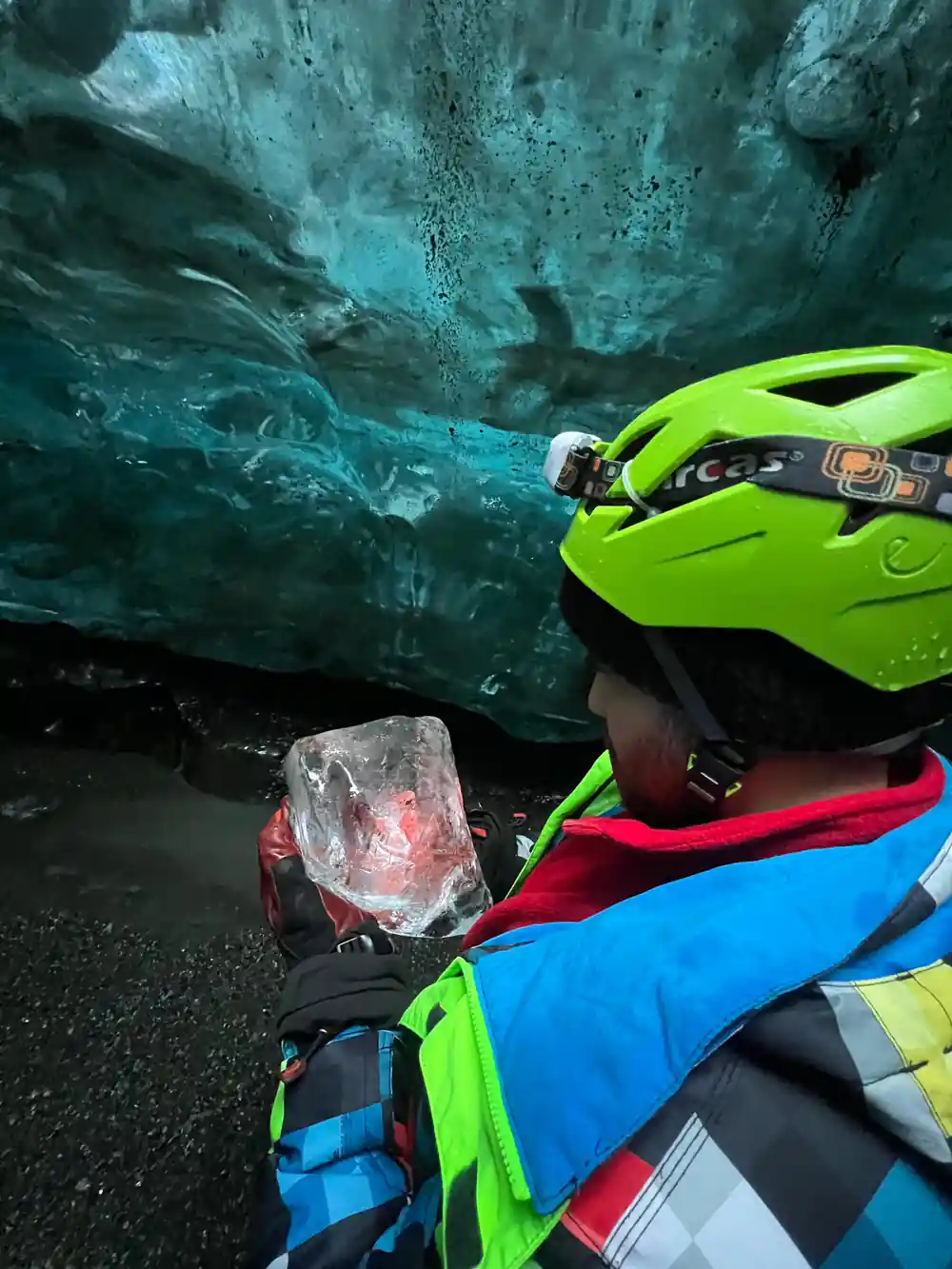
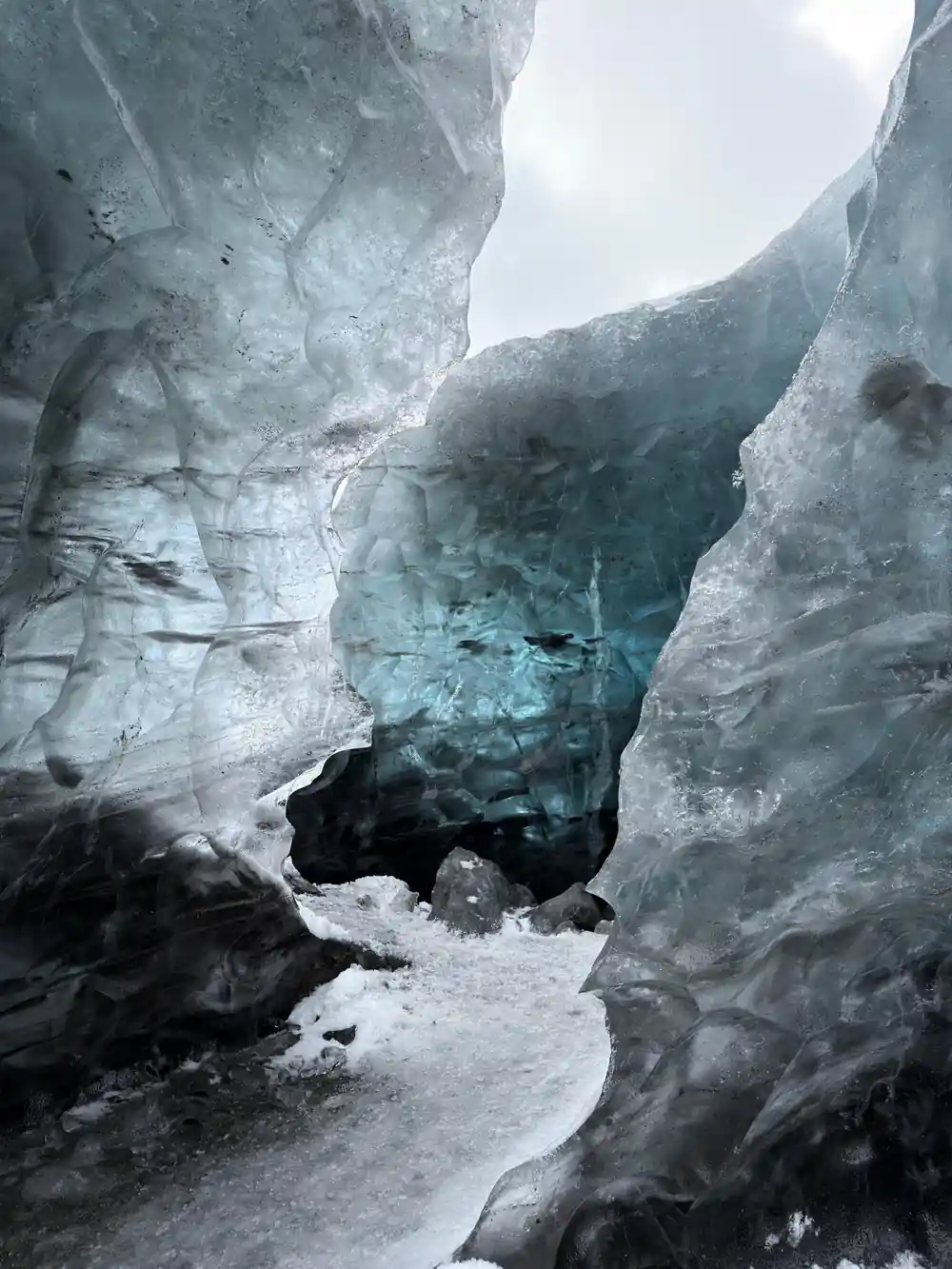
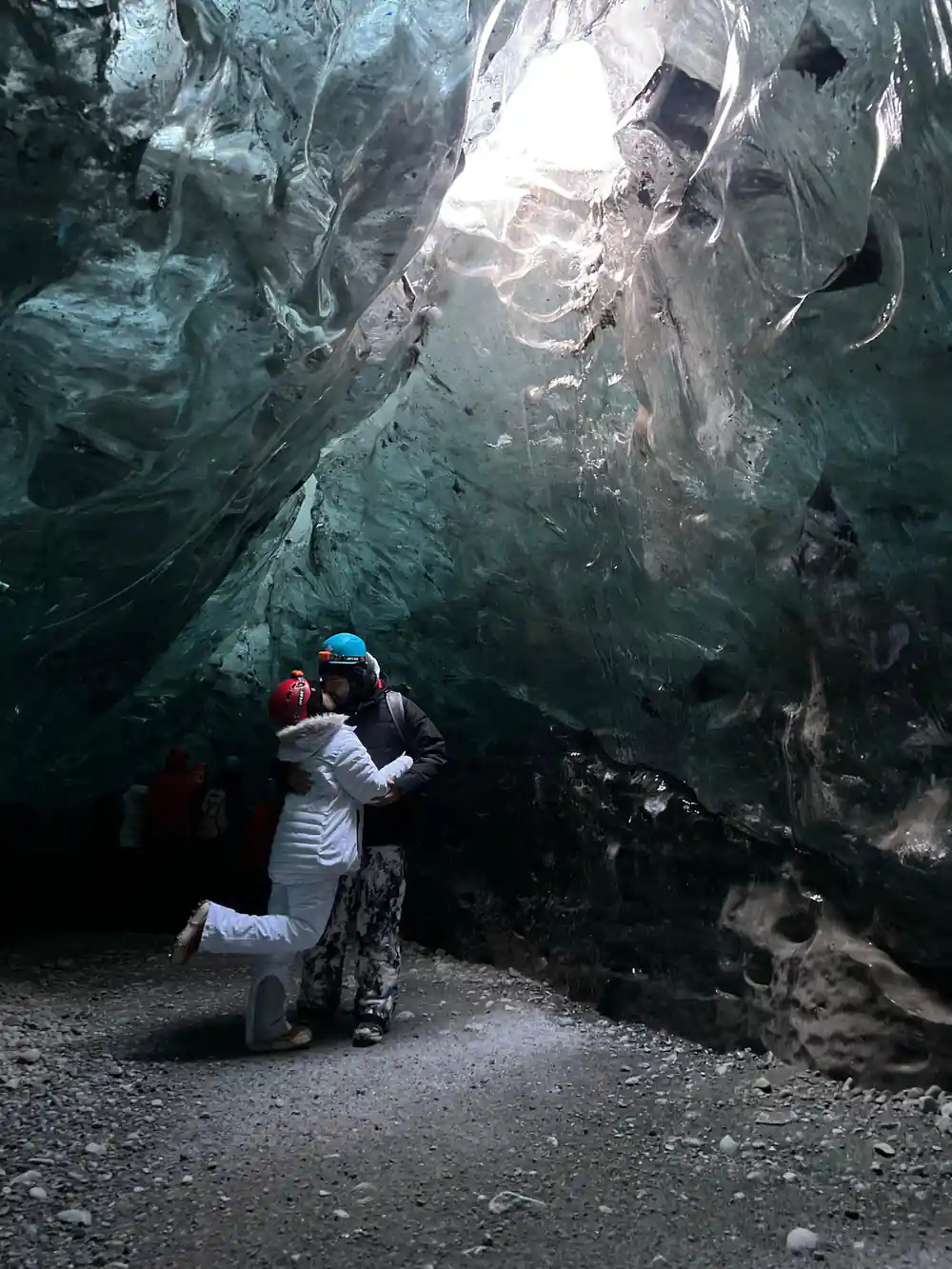
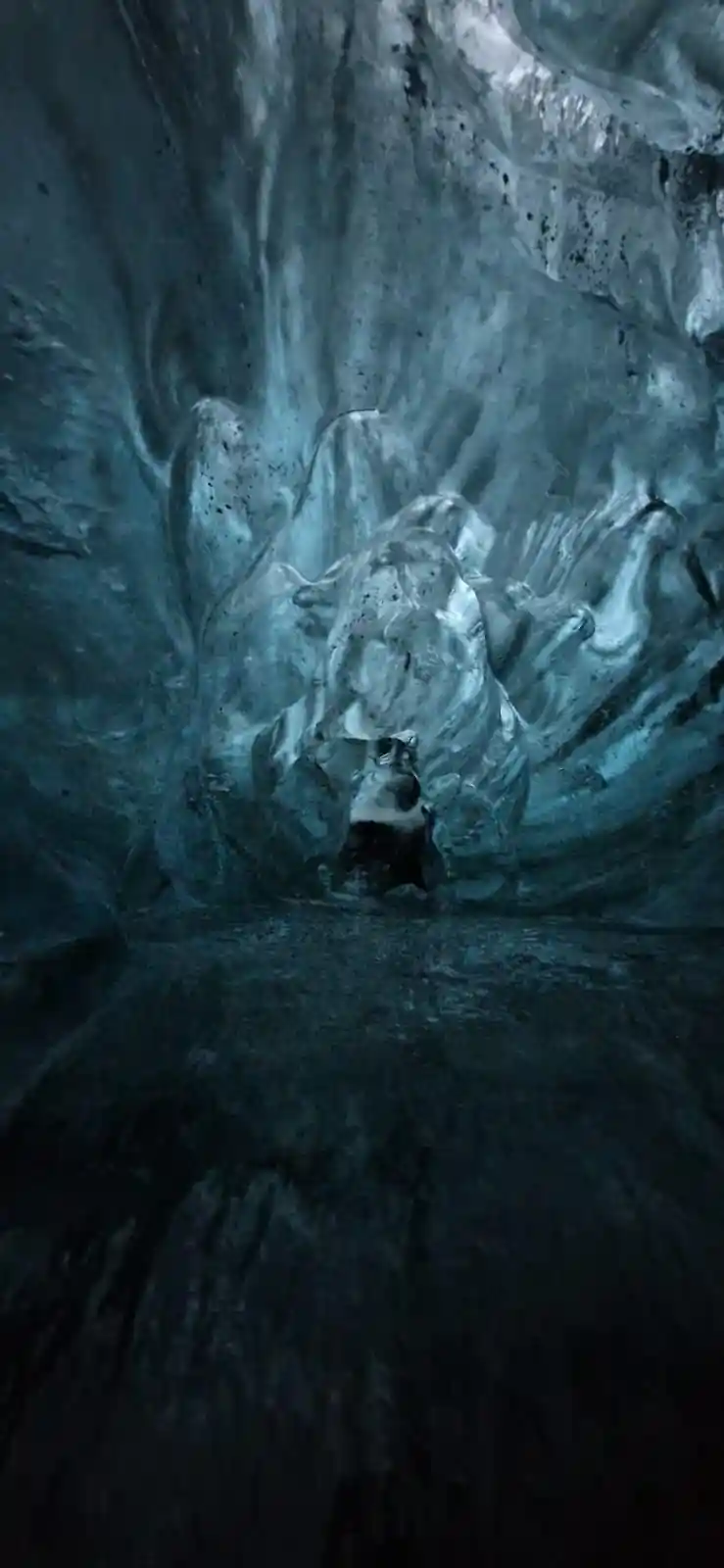
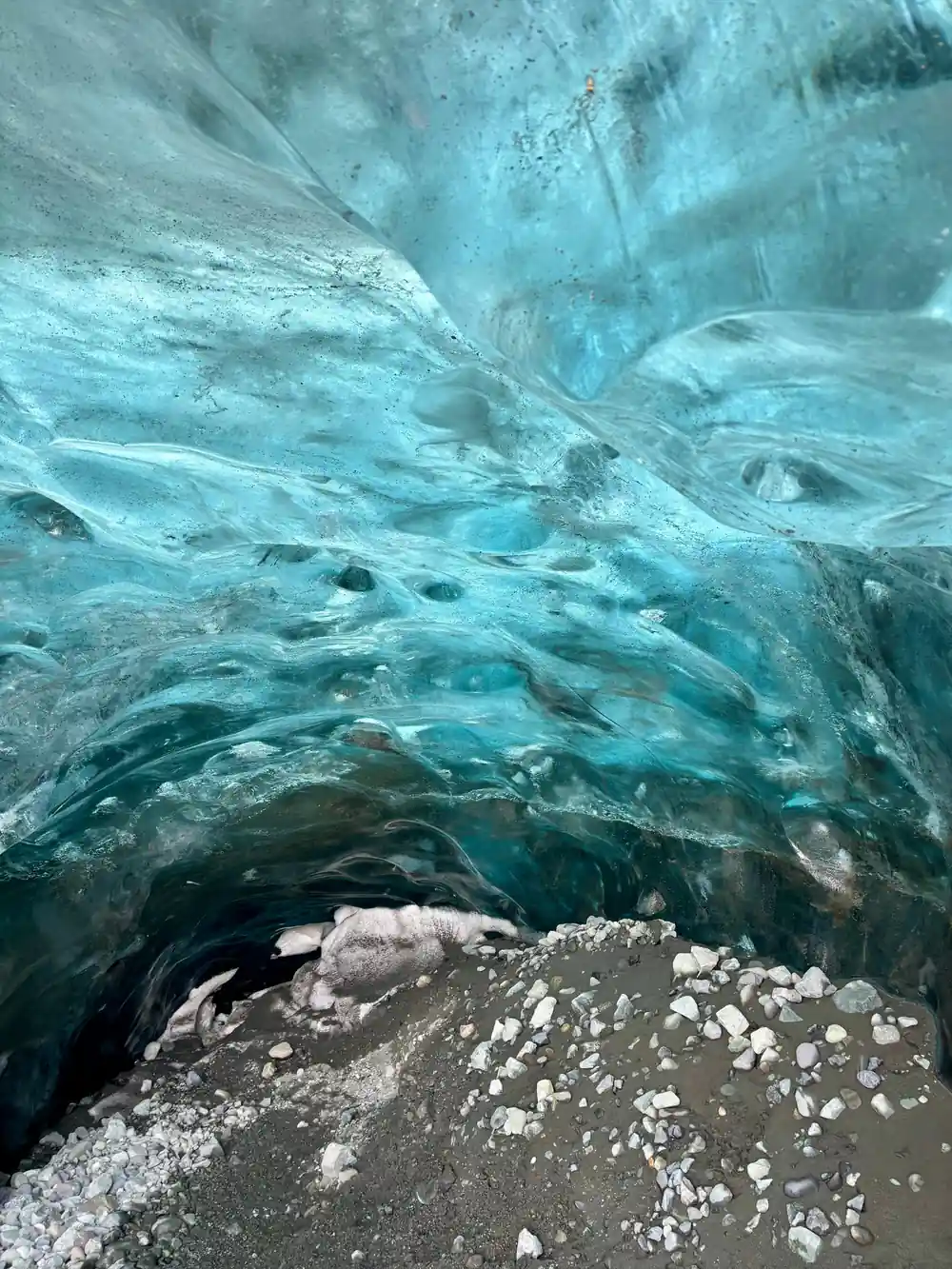
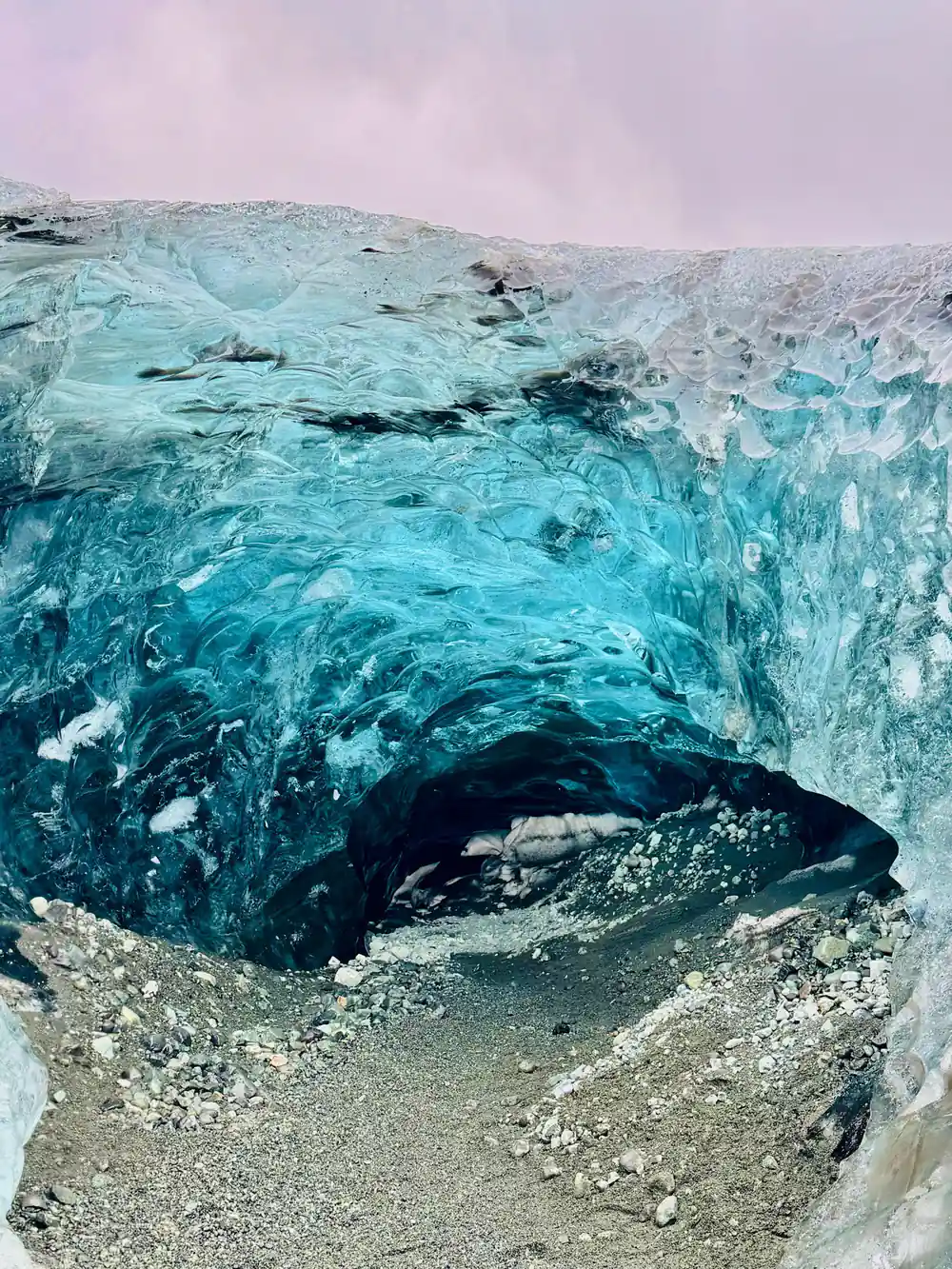
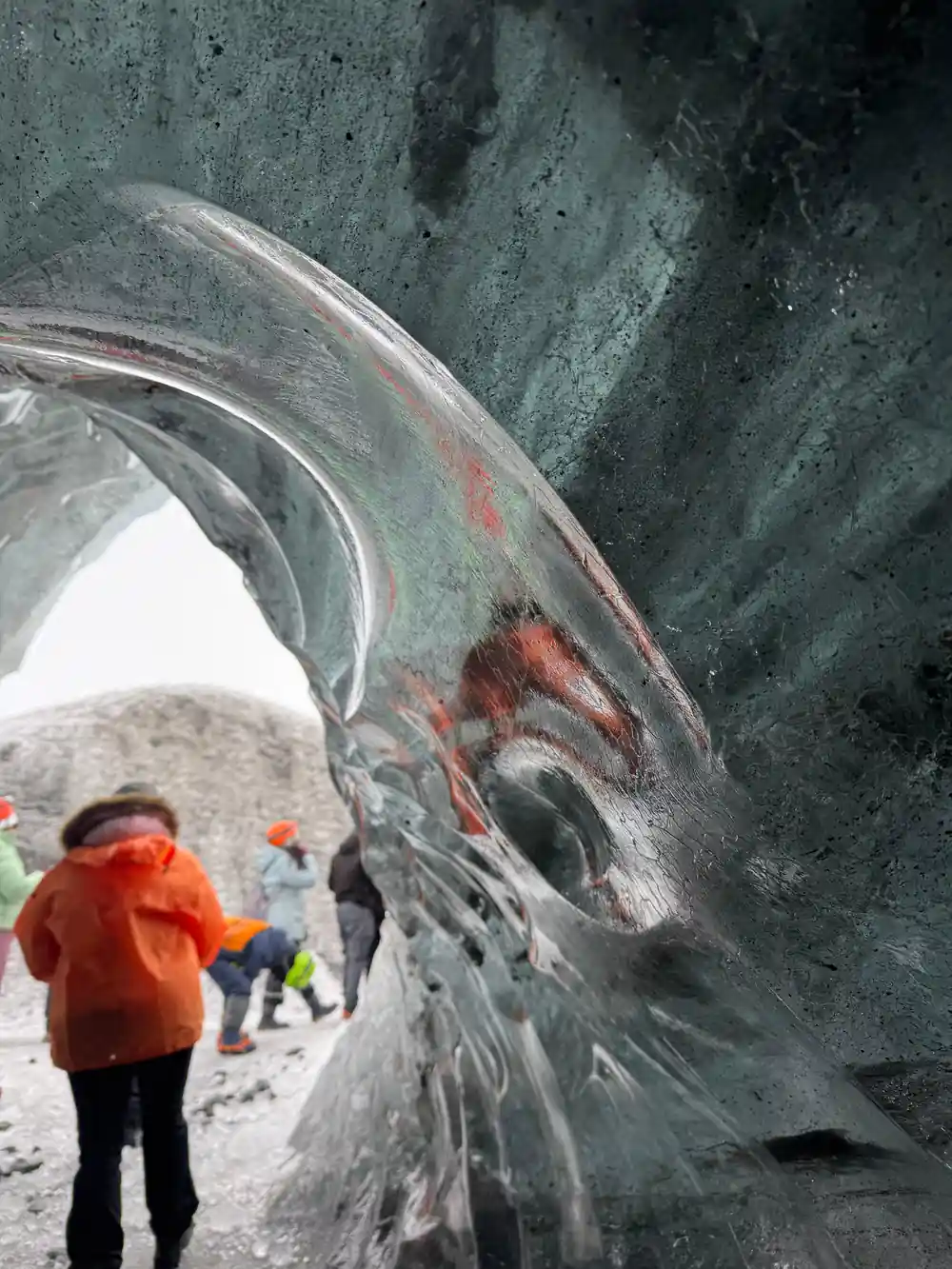
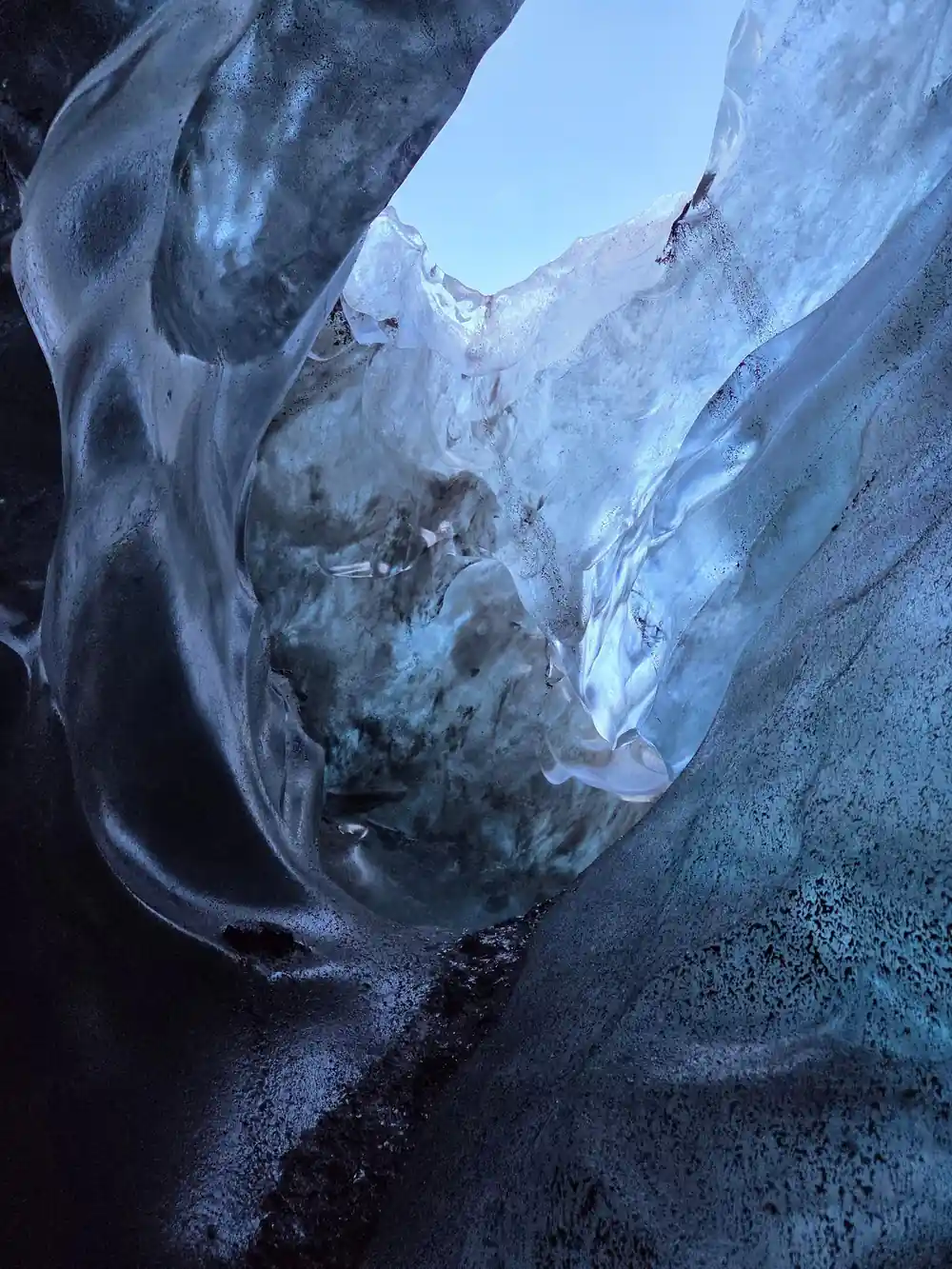
Blue ice inside a cave under Vatnajökull, shaped by meltwater and lit from above
Early season and late season ice caves
The start and the end of the season do not feel the same. In October and November you are walking into caves that are still settling into their winter shape, and from December to February the ice reaches its coldest and bluest form.[1] March and April bring ice that has aged and weathered, and in May the meltwater takes the cave back.[1] Light is the other variable: late December daylight runs just 4 to 5 hours, while late June brings about 21 hours.[6]
Midwinter is the blue season. From December to February the ice holds its coldest and bluest form,[1] and late December daylight is down to 4 to 5 hours.[6] If deep colour matters more to you than long afternoons, that stretch is the one to take. The lagoon itself is worth a slow walk whenever you visit, and the fragments on Diamond Beach come from the same glacier that feeds the caves: clear glacial ice breaks off Breiðamerkurjökull, drifts through the lagoon and washes ashore in Southeast Iceland.[8]
The landscape you are travelling through is young and restless. The tidal inlet also called Jökulsárlón Lagoon was excavated during the last glacial advance, about 26,500 years ago.[12] The lagoon is 248 m (814 ft) deep and has quadrupled in size since the 1970s,[11] while Breiðamerkurjökull has retreated at an annual rate of up to 200-300 m in recent years.[9] Winter shows you that change in a low, quiet light.
Which weeks fill first on the winter calendar
Jökulsárlón is not a secret in summer. Rangers faced one of their busiest summers on record, with around 100,000 tourists visiting in July alone.[13] Winter works differently. The hard limit is the cave season, which runs from October to April,[1] and the December to February stretch is when the ice is at its coldest and bluest.[1] If your trip is tied to school holidays, or to the days around Christmas and New Year, treat those as the dates to lock in first and build the rest of your itinerary around them.
For other dates, work backwards from the calendar. Decide which day you will be in the southeast, then choose a departure that leaves a comfortable margin for the drive and for the light. If the times shown do not suit, look at a neighbouring date rather than forcing a tight connection. The guided ice cave tour runs 3 hours with a live guide in English and leaves from Jökulsárlón.[2]
from US$164
The ice cave guided tour leaves from Jökulsárlón for Vatnajökull National Park by jeep or SUV and runs 3 hours with a live English guide.[2]
Weather changes and your cancellation cover
Winter weather on the south coast decides a lot at short notice. Jökulsárlón is about 370 km (230 miles) from Reykjavík along Route 1, and the drive takes roughly 5 hours each way in good conditions.[3] That is a long day out and back. A night somewhere in the southeast makes it gentler, and a spare day in your itinerary is the cheapest protection against a road that closes and reopens.
If a departure cannot run as planned, the terms on your booking decide what happens next. The Jökulsárlón: Vatnajökull Ice Cave Guided Tour offers free cancellation, with a full refund on cancellations made up to 24 hours in advance, and you can reserve now and pay later.[2] Read those terms on the listing before you commit, keep your phone charged and reachable on the morning of the trip, and save the meeting point details somewhere offline.
Two habits help in winter. Keep the tour day flexible, and keep a backup plan you would actually enjoy, whether that is a waterfall stop on the way back or an hour watching the ice drift across the lagoon. Then let the day itself decide the timing. Snow, wind and rain move through quickly here, and a morning that looks lost often turns into a good afternoon.
Departure times, gear and the day itself
The tour takes 3 hours, leaving Jökulsárlón for Vatnajökull National Park by jeep or SUV and returning the same way, with a live guide in English.[2] Starting times vary with the date, so open the calendar and pick a departure that fits your driving plan rather than the other way round. An earlier start leaves room for a slower drive and a stop at Diamond Beach afterwards, while a later one suits a morning spent on the road.
Clothing matters more than equipment. A sturdy helmet is essential inside a cave, protecting against falling ice and low-hanging cave ceilings, and is generally provided by the tour operator.[7] Bring warm layers you can move in, a waterproof outer shell, gloves, a hat and boots with grip, and keep a spare pair of gloves in your bag. Camera batteries fade quickly in the cold, so carry a spare somewhere warm and give your lens a moment to adjust when you step inside.
How far ahead to book a Jokulsarlon winter tour
Book as early as your travel dates allow, and earlier still if you are travelling over Christmas, New Year or a school holiday. The cave season is the hard limit: October to April is when a natural cave under Vatnajökull exists.[1] Inside that window, December to February brings the coldest and bluest ice,[1] while late December daylight is down to 4 to 5 hours.[6]
Once the tour is booked, the rest of the trip gets easier to plan. A full refund is available on cancellations made up to 24 hours in advance, and you can reserve now and pay later,[2] which makes an early booking easy to undo if plans change. Check the availability calendar again about a week before you travel and move your departure if a better time has opened up.
Longer glacier hikes and combination trips are also available if you want more time on the ice. The guided ice cave tour takes 3 hours and starts from US$164.[2] Set that against the drive and the rest of your day: if you are coming from Reykjavík, about 370 km (230 miles) and roughly 5 hours each way in good conditions,[3] a shorter tour leaves more daylight for the lagoon and the beach.
Depth in metres at Jökulsárlón and Vatnajökull
Depths and ice thickness from NASA Earth Observatory and the Global Alliance of National Parks.[11][14]
Ice cave and glacier tours from Jökulsárlón
From-prices in US dollars from GetYourGuide listings.[2][4][5][15][16] Child rates are not shown in these listings.
When to book your ice cave dates
Planning your ice cave day
Fix your season dates
Work out which weeks fall between October and April before you book flights, since that is when the natural caves under Vatnajökull exist.[1]
Book the tour early
Reserve the cave tour as soon as your dates are set; the listing offers reserve now, pay later and free cancellation.[2]
Plan the drive east
Jökulsárlón is about 370 km (230 miles) from Reykjavík and roughly 5 hours each way in good conditions, so plan a night in the southeast.[3]
Pack for cold and wet
Warm layers, a waterproof shell, gloves, a hat and boots with grip. A sturdy helmet is essential in the cave and is generally provided.[7]
Check the day before
Look at the availability calendar again and confirm your starting time for the day you are in the southeast.
Pick a date inside the Vatnajökull ice cave season
from US$164Reserve now & pay later