The quick version
- Jökulsárlón is about 370 km (230 miles) from Reykjavík along Route 1, and the drive takes roughly 5 hours each way in good conditions.[1]
- Natural ice caves in Vatnajökull form in October, remain through April and are taken back by meltwater in May.[2]
- The Vatnajökull Ice Cave Guided Tour runs 3 hours from Jökulsárlón with a live English speaking guide, from US$164.[3]
- Ice cave tours that meet at Jökulsárlón start from US$145, and the guided tour booked here starts from US$164.[3][4]
- Diamond Beach is black volcanic sand scattered with clear glacial ice that broke off Breiðamerkurjökull and drifted through the lagoon.[5]
- Top choice Vatnajökull Ice Cave Tour from US$164 Duration3 hours[3]Rating4.25 from 2,171 reviews[3]GuideLive tour guide: English[3]CancellationFree cancellation: 24 hours in advance[3]PaymentReserve now & pay later[3] Check availability
- Crystal Ice Cave Super Jeep from US$173 Duration2.5 hours[6]Rating4.21 from 1,751 reviews[6]GuideLive tour guide: English[6]CancellationFree cancellation: 24 hours in advance[6]PaymentReserve now & pay later[6] See this tour
- Original Ice Cave Tour from US$161 Duration3 hours[7]Rating4.61 from 1,129 reviews[7]GuideLive tour guide: English[7]CancellationFree cancellation: 24 hours in advance[7]PaymentReserve now & pay later[7] See this tour
The drive from Reykjavík to Jökulsárlón is about 370 km (230 miles) along Route 1, the Ring Road, and takes roughly 5 hours each way in good conditions.
Verdict: build the ice cave into a south coast trip
Know this first
- Natural ice caves form in October, hold their bluest form from December to February, and melt back in May.[2]
- Jökulsárlón is about 370 km (230 miles) from Reykjavík, roughly 5 hours each way in good conditions.[1]
- Ice cave tours that meet at Jökulsárlón start from US$145.[4]
- Daylight runs from 4 to 5 hours in late December to about 21 hours by late June.[8]
On the day
- A sturdy helmet is essential inside an ice cave and is generally provided by the operator.[9]
- Bring a waterproof outer layer, gloves and boots with grip, even on a dry forecast.
- Book ahead: the Vatnajökull Ice Cave Guided Tour can be reserved now and paid later.[3]
- Around 100,000 tourists came to Jökulsárlón in July alone.[10]
Jokulsarlon Ice Cave Tour From Reykjavik: How It Works
The blue ice caves sit inside Vatnajökull, and the tours that visit them meet at Jökulsárlón, the glacier lagoon on the south east coast. From Reykjavík that is about 370 km (230 miles) along Route 1, the Ring Road, and the drive takes roughly 5 hours each way in good conditions.[1] So an ice cave tour from Reykjavik, Jokulsarlon being the meeting point, is a big day out rather than a quick morning.
What waits at the end earns the drive. Jökulsárlón is 248 meters (814 feet) deep and has quadrupled in size since the 1970s, fed by ice calving off Breiðamerkurjökull.[11] Some of the icebergs drifting across it are thought to be made of ice more than 1,000 years old.[11]
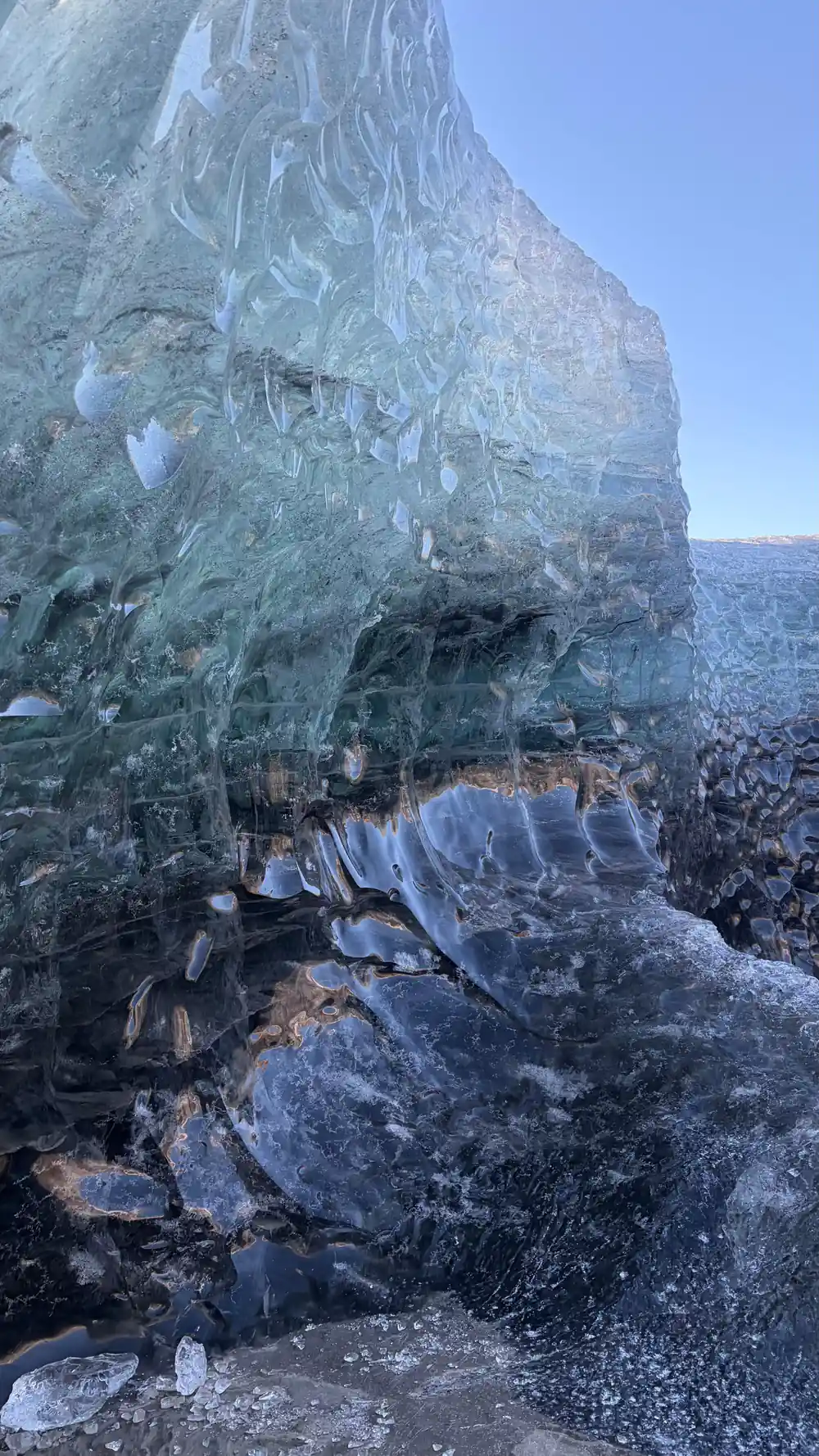
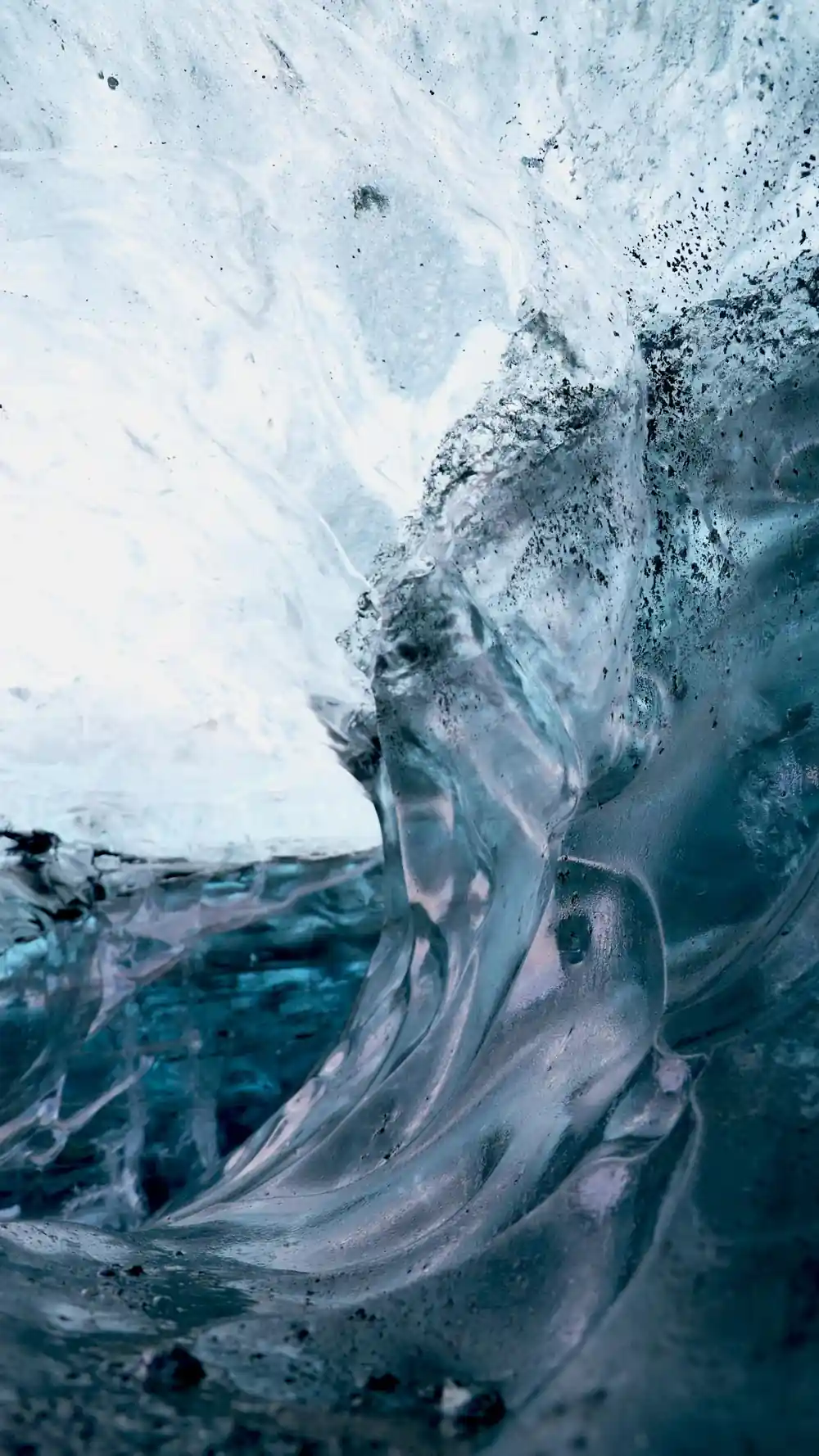
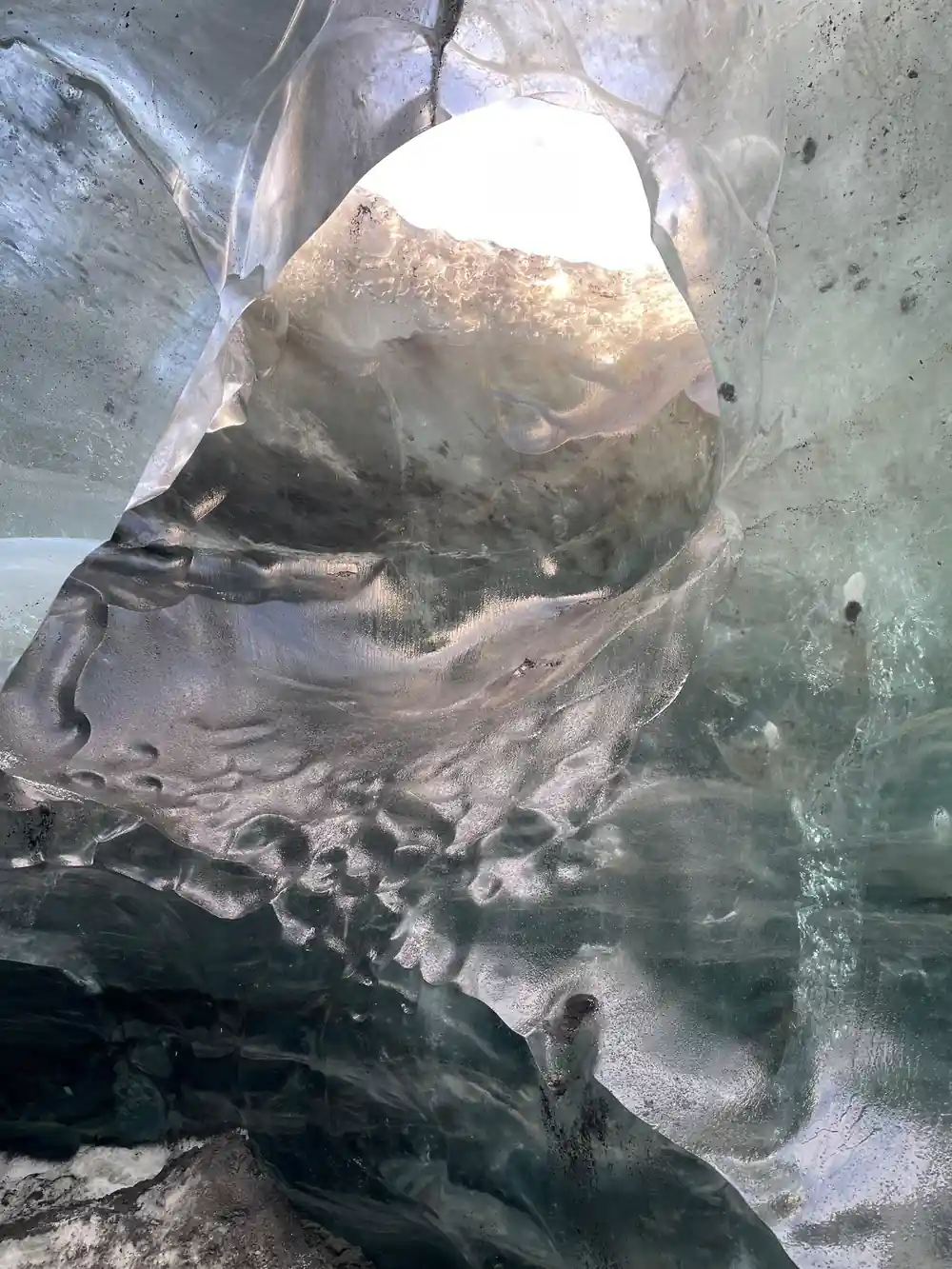
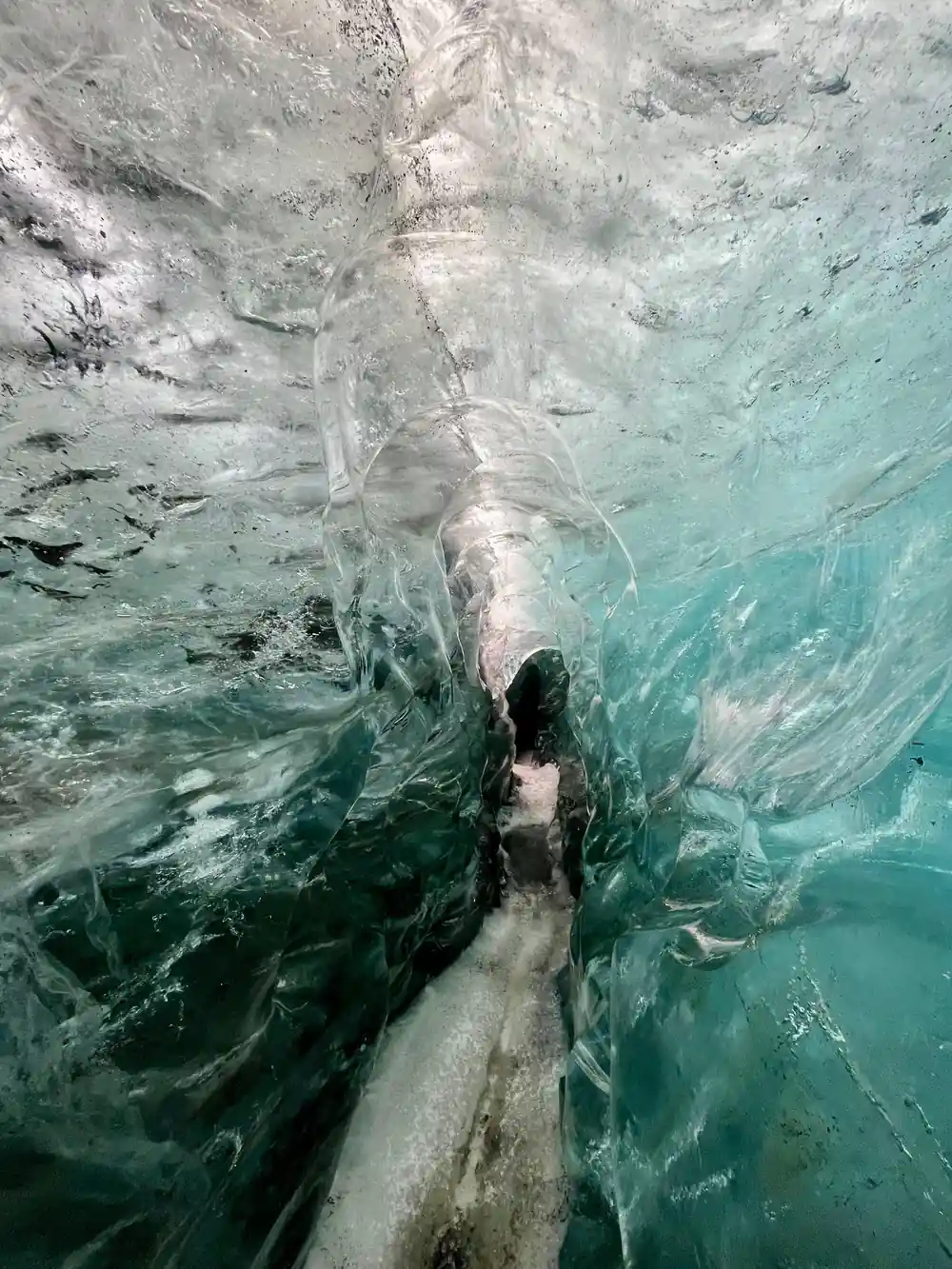
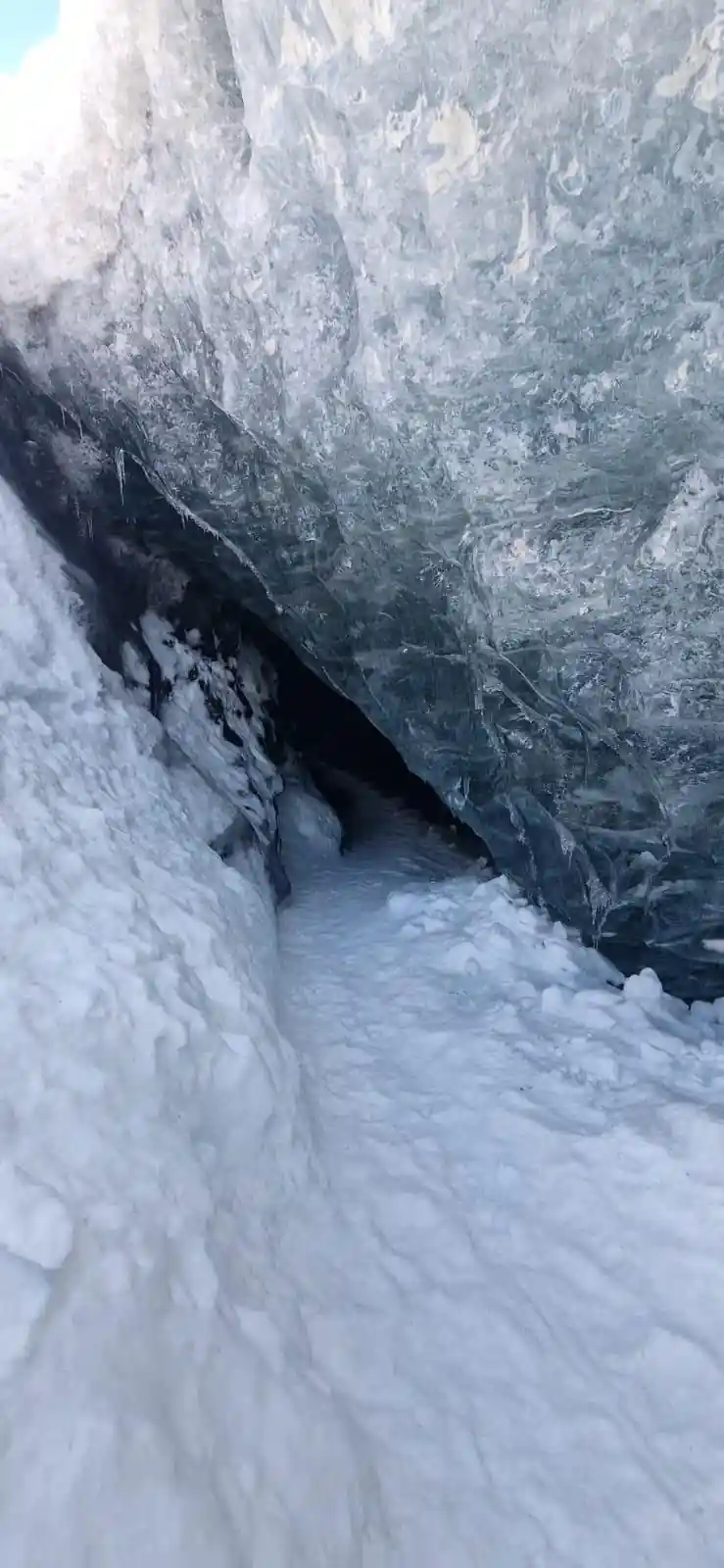
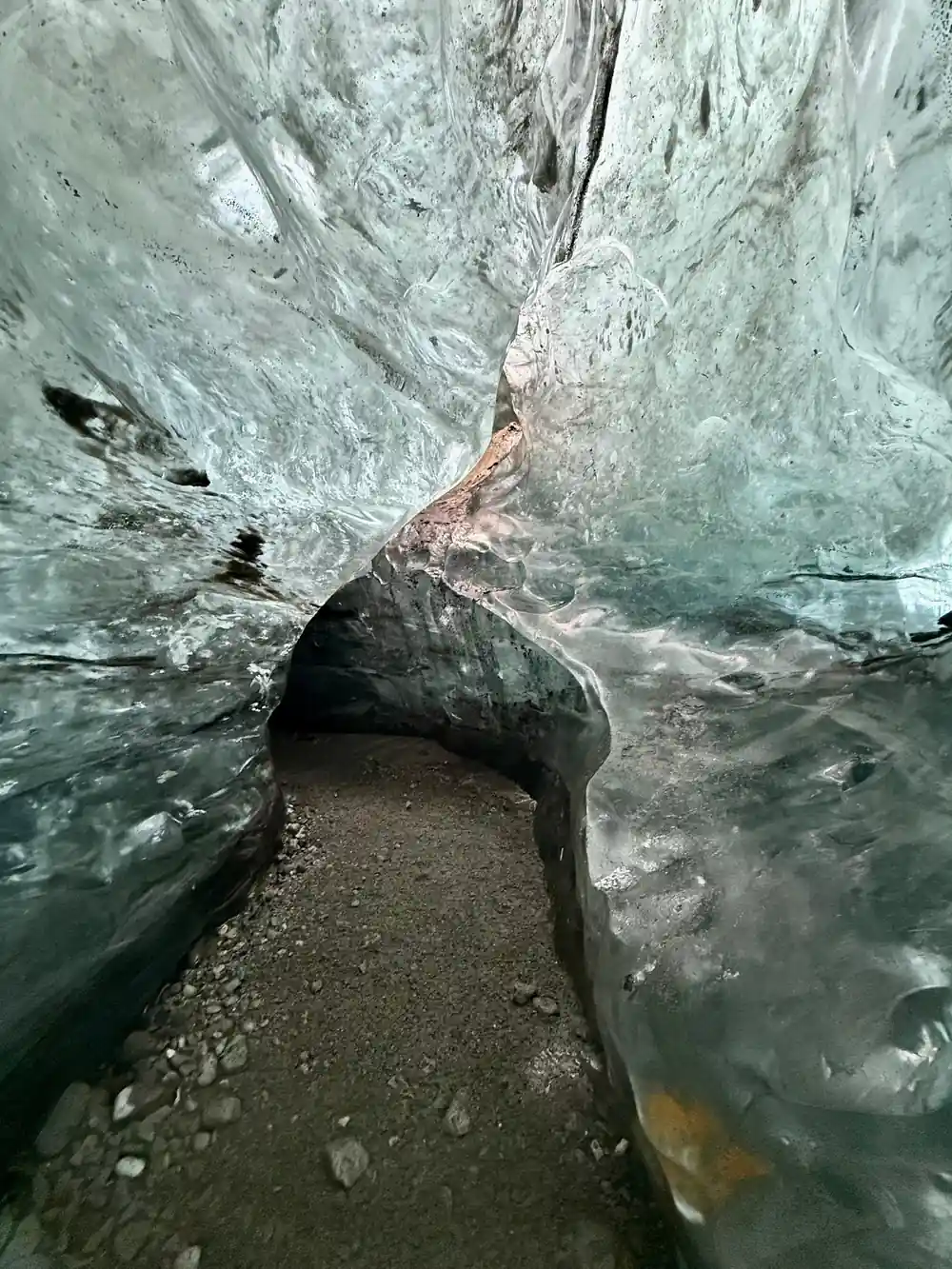
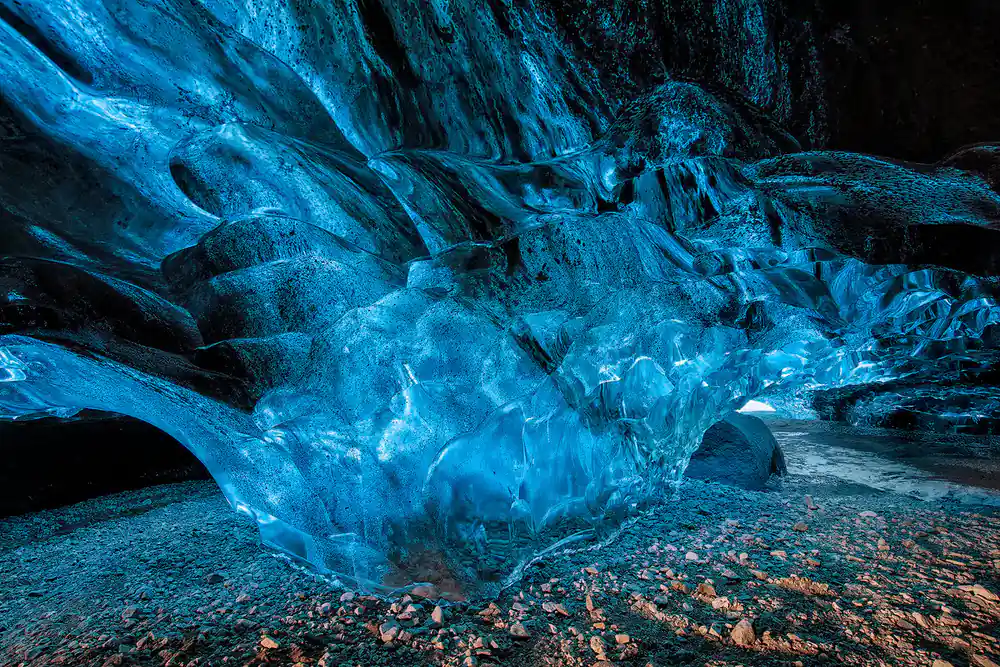
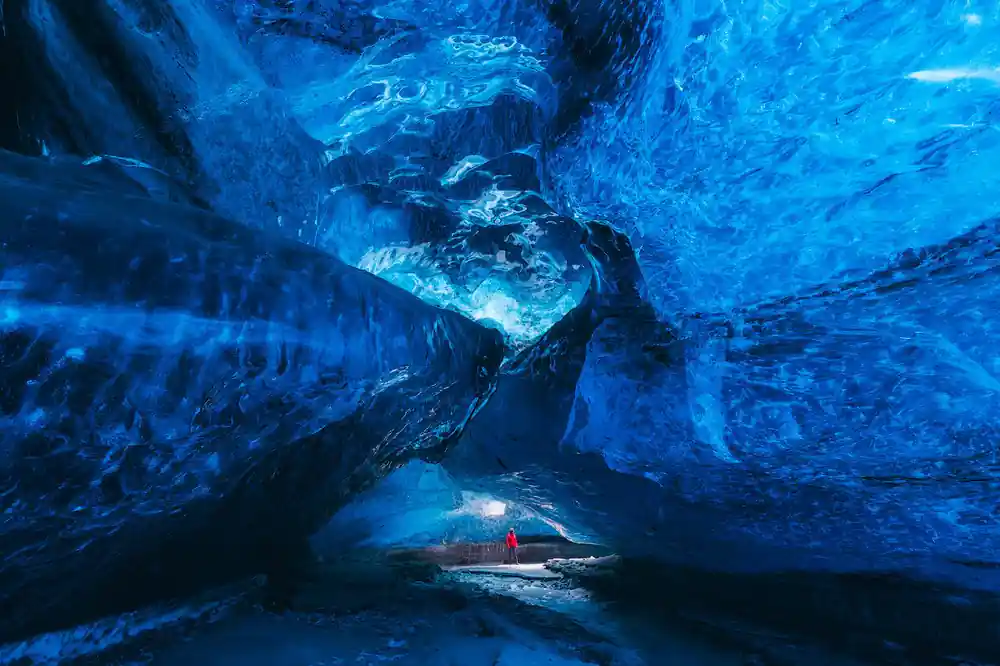
The cave you walk into is carved from the same glacier as the lagoon, and the walls carry that dense, saturated blue instead of the flat white of a snowfield. Light behaves differently in deep ice, and the colour shifts with the weather outside: bright and glowing under a clear sky, deep and glassy under cloud. Nothing inside is lit artificially, so give your eyes a minute to adjust.
Reykjavik to Jokulsarlon Ice Cave Country: The Drive
The Ring Road does the whole job. You leave Reykjavík and head east past Selfoss, over the flat farmland below Eyjafjallajökull, along the waterfalls of the south coast, across the black sand plains near Vík, and then out into the long empty stretch of lava, moss and river gravel that leads to the lagoon.
Facilities thin out sharply after Vík, so fill the tank when you can and keep water and food in the car. Winter changes the maths: average winter temperatures in Iceland sit around 32°F (0°C), and daylight runs from 4 to 5 hours in late December to about 21 hours by late June.[8] A long drive in winter darkness is a bigger undertaking than the same drive in summer.
If you would rather not drive it yourself, join a guided trip that collects you in Reykjavík and brings you east, often with stops along the south coast on the way. The day will be long, but you can watch the scenery instead of the road. Meeting points matter, because some ice cave tours start right at Jökulsárlón while others begin at Skaftafell or Vík and drive you to the ice from there.
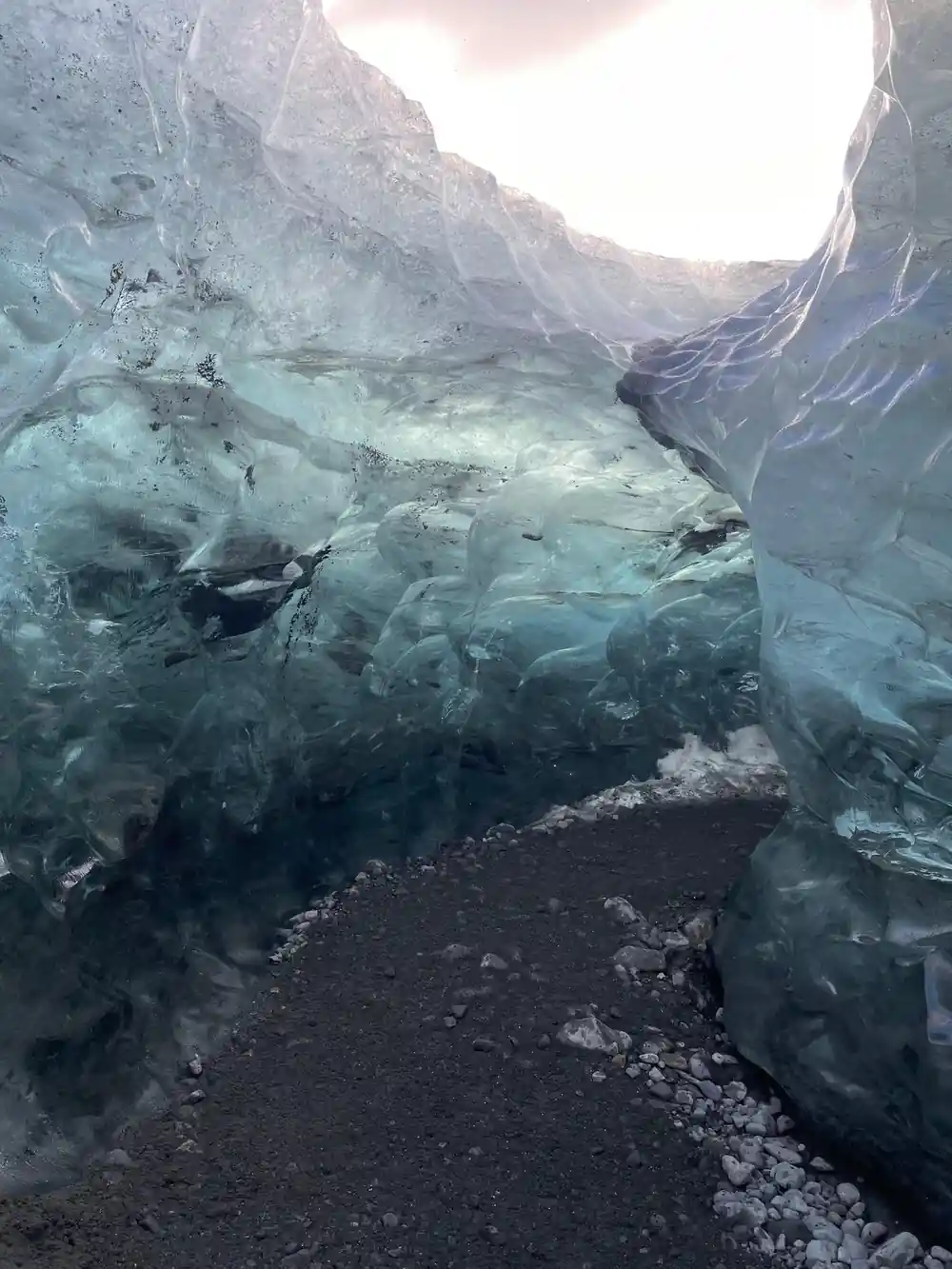
Blue ice and black sand: the south east coast in winter light.
Choosing Your Ice Cave Tour From Reykjavik
The tour booked from this site is the Jökulsárlón: Vatnajökull Ice Cave Guided Tour. It runs 3 hours, uses a jeep or SUV from Jökulsárlón out to Vatnajökull National Park and back, and has a live tour guide in English.[3] It starts from US$164, can be reserved now and paid later, and comes with free cancellation up to 24 hours in advance.[3]
You check availability to see the starting times for your date.[3] Other operators run similar trips from the same corner of the lagoon. The Crystal Ice Cave Super Jeep Tour takes 2.5 hours and starts from US$173.[6] The Original Ice Cave Tour on Vatnajökull takes 3 hours from US$161.[7] The Natural Blue Ice Cave Tour with a Glacier Guide takes 3.5 hours from US$145.[4]
If you want more ice under your feet, the Ice Cave and Glacier Exploration Tour is a 5.5 hour day from US$275.[12] The Blue Ice Cave Adventure and Glacier Hike runs 6 hours from US$299.[13] Decide first whether you want a short cave visit or a proper glacier walk with a cave at the end, because the two feel very different.
What the Ice Cave Itself Is Like
Glacier ice looks blue because when light hits the large, dense crystals deep in the ice, they absorb long wavelengths and scatter short waved blue light.[14] Inside a cave that effect is everywhere: the ceiling glows, the walls glow, and the colour deepens where the ice is thickest and the air has been pressed out of it.
You will see other things too. Grey and black bands mark layers of ash and dust from old eruptions, thin white seams show where meltwater refroze, and the floor is usually a mix of packed snow, ice and gravel. Cave light is dim, so brace a phone or camera against something solid, hold still for a moment, and skip the flash.
A natural ice cave in Vatnajökull lasts one winter: it forms in October, remains through April, and is taken back by returning meltwater in May.[2] No two seasons look the same. Guides choose the cave that is safest and best on the day, so the exact route is never fixed in advance.
from US$164
A jeep ride from Jökulsárlón, a walk into the blue ice of Vatnajökull, a live English speaking guide and free cancellation before you go.
When to Go: Winter Season, Light and Crowds
Ice cave tours run in the cold months, when the caves exist at all.[2] The bluest weeks fall between December and February, which are also the weeks with the least light: daylight in Iceland runs from 4 to 5 hours in late December.[2][8] It is a real trade off, and worth weighing before you pick a date.
Summer is a different trip. Daylight runs to about 21 hours by late June, so you can be at the lagoon late into the evening.[8] It is also busy: around 100,000 tourists visited Jökulsárlón in July alone during one of its busiest summers on record.[10] If you want the ice to yourself for photographs, go early or come in the shoulder months.
Outside the ice cave season the lagoon, the beach and the glacier walks are still there, and spring and autumn can be quieter. You can also split the journey, sleeping near Vík or Kirkjubæjarklaustur, doing the cave in the morning, and driving back with the light behind you.
What to Wear and What to Bring
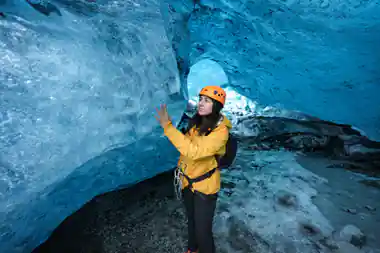
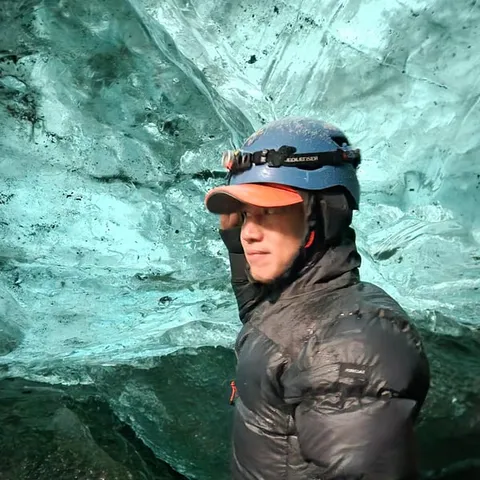
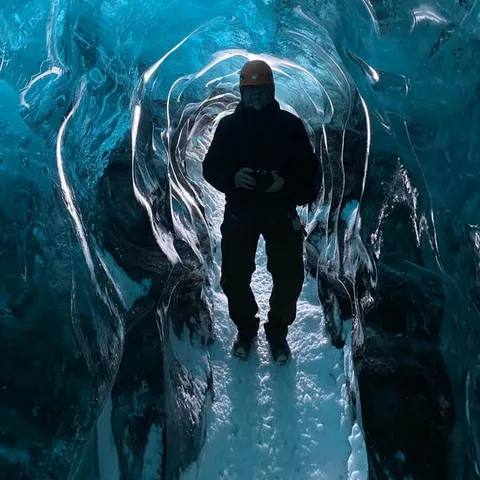
A sturdy helmet is essential inside an ice cave. It protects against falling ice and low hanging ceilings, and tour operators generally provide one.[9] The rest of the kit is up to you. Start with a warm base layer, add a fleece or light down jacket, and finish with a waterproof shell that can take spray and sleet.
Trousers should be windproof and quick drying rather than jeans, and boots need ankle support and a stiff sole for walking on ice and packed snow. Bring thin gloves you can still use a camera in, a hat, a buff, and sunglasses for the glare coming off the ice. A thermos of something hot is a small luxury at the end of the walk.
A small backpack with water and a snack is worth having in the jeep, and a dry bag keeps a spare phone and battery warm when the cold drains them. On the ice, take your time, keep your weight over your feet, and follow the route your guide sets rather than wandering off for a better angle.
Add the Lagoon, Diamond Beach and the Wider Coast
Diamond Beach is in Southeast Iceland, a strip of black volcanic sand scattered with clear glacial ice that breaks off Breiðamerkurjökull, drifts through Jökulsárlón Glacier Lagoon and washes ashore.[5] It sits close to the lagoon, and harbour seals are the most common seal species in the area, so watch the water between the icebergs.[15]
The landscape here changes fast in human terms. Breiðamerkurjökull, the outlet glacier that calves into the lagoon, has retreated at an annual rate of up to 200-300 m in recent years.[16] The Vatnajökull ice cap is 3,120 feet (950 m) thick at its thickest point, with an average thickness of 1,250 feet (380 m).[17]
The tidal inlet also called Jökulsárlón Lagoon was excavated during the last glacial advance, about 26,500 years ago.[18] Film fans may know the water already: Jökulsárlón Glacier Lagoon was a filming location for A View to a Kill, Die Another Day and Lara Croft: Tomb Raider.[19] Book a morning cave tour, then spend the afternoon between the lagoon shore and the beach.
Ice cave tour from-prices at Jökulsárlón
From-prices for ice cave tours that meet at Jökulsárlón:[3][4][6][7][20]
Ice cave tour from-prices at Jökulsárlón
Adult from-prices at Jökulsárlón:[3][4][6][7]
When the ice caves are there
How to plan the trip
Pick your season
Natural ice caves in Vatnajökull form in October, hold their bluest form from December to February, and are gone by May.[2]
Decide on driving or a tour
The drive from Reykjavík is about 370 km (230 miles) along Route 1, roughly 5 hours each way in good conditions.[1] Guided trips cover the same road with a driver.
Book the cave tour first
Winter days are short and groups are small. The Vatnajökull Ice Cave Guided Tour can be reserved now and paid later, with free cancellation up to 24 hours in advance.[3]
Plan a night on the coast
Staying near the lagoon turns a punishing round trip into a relaxed morning, and leaves time for Diamond Beach on the other side of the road.[5]
Pack for wet cold
A waterproof shell, warm layers, gloves and boots with grip matter more than style. A helmet is generally provided by the operator.[9]
Book the Vatnajökull ice cave tour from Jökulsárlón
from US$164Reserve now & pay later