The quick version
- Hotels and guesthouses sit within a short drive of the lagoon, which keeps your ice cave departure simple and your evenings quiet.
- Höfn has a wide spread of rooms, restaurants and fuel, and it works well if you are driving the Ring Road.
- Vik gives you black sand, waterfalls and a shorter run from Reykjavik, but you still face a long drive east on tour day.
- Winter camping near Vatnajokull depends on open campsites and safe roads, so treat it as a back-up in the cave season.
- Rooms near the lagoon are limited, so reserve your bed before you lock in a cave tour date in the short winter days.
- Top choice Vatnajokull Ice Cave Tour from US$164 Duration3 hours[1]Rating4.25 from 2,171 reviews[1]GuideLive guide, English[1]Well suited toA straightforward first cave visit Check availability
- Crystal Ice Cave Super Jeep from US$173 Duration2.5 hours[2]Rating4.21 from 1,751 reviews[2]GuideLive guide, English[2]Well suited toArriving by super jeep See this tour
- The Original Ice Cave Tour from US$161 Duration3 hours[3]Rating4.61 from 1,129 reviews[3]GuideLive guide, English[3]Well suited toA slightly lower from price See this tour
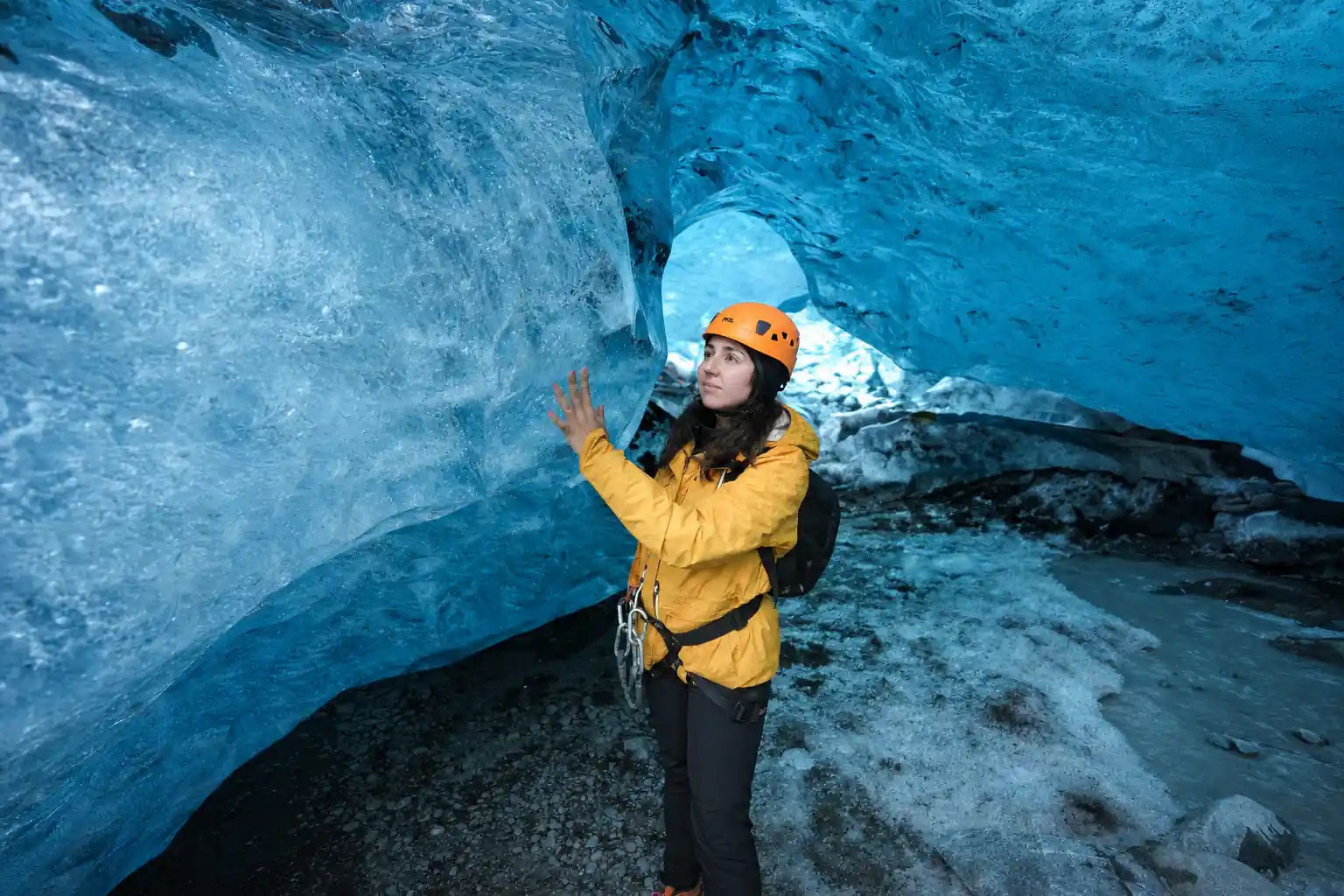
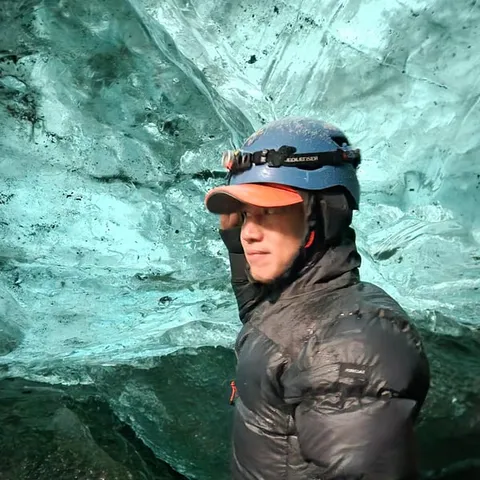
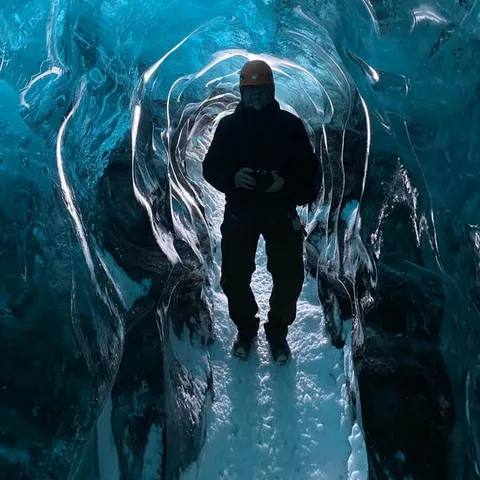
The drive from Reykjavík to Jökulsárlón is about 370 km (230 miles) along Route 1, the Ring Road, and takes roughly 5 hours each way in good conditions.
Where to stay near Jokulsarlon
Know this first
- Book your bed before you fix the tour date
- Check free cancellation terms on the tour listing
- Allow roughly 5 hours each way from Reykjavik[4]
- Sleep near the ice if you want a relaxed tour morning
Staying at the Lagoon: The Closest Rooms
The strip of land between Jökulsárlón and the sea holds a scatter of hotels, guesthouses and farm stays, with a few more sitting just off the main road within a short drive of the water. Staying here keeps your ice cave departure simple and leaves the evening free for a walk along the lagoon shore. The lagoon is the reason the area exists at all. Its tidal inlet was excavated during the last glacial advance, about 26,500 years ago, and it is 248 meters (814 feet) deep and has quadrupled in size since the 1970s.[7][8]
Across the road, Diamond Beach in Southeast Iceland is black volcanic sand scattered with clear glacial ice that breaks off Breiðamerkurjökull, drifts through the lagoon and washes ashore.[9] Icebergs calved from that same outlet glacier slide past the hotel windows, and some are thought to be made of ice more than 1,000 years old.[8] Harbour seals are the most common seal species in the area, so watch the water as well as the sky.[10] Food and fuel out here are thin on the ground, so plan an evening meal before you arrive.
Budget Beds, Hostels and Farm Stays
Choosing Jokulsarlon Glacier Lagoon accommodation on a budget usually means a hostel dorm bed, a farm guesthouse with shared bathrooms or a simple cabin beside a working farm. Expect comfort rather than luxury, quiet nights and a short drive to the ice in the morning. Beds like these go early once the cave season starts, so reserve as soon as your dates are firm, and check how far each one sits from the meeting point you have booked.
Getting here is the part people underestimate. Jökulsárlón is about 370 km (230 miles) from Reykjavík along Route 1, and the drive takes roughly 5 hours each way in good conditions.[4] Breaking the journey with a night somewhere on the south coast makes it far easier, and it also gives you slack if the weather turns. A cheap room in a south coast village plus an early start is one way to do it.
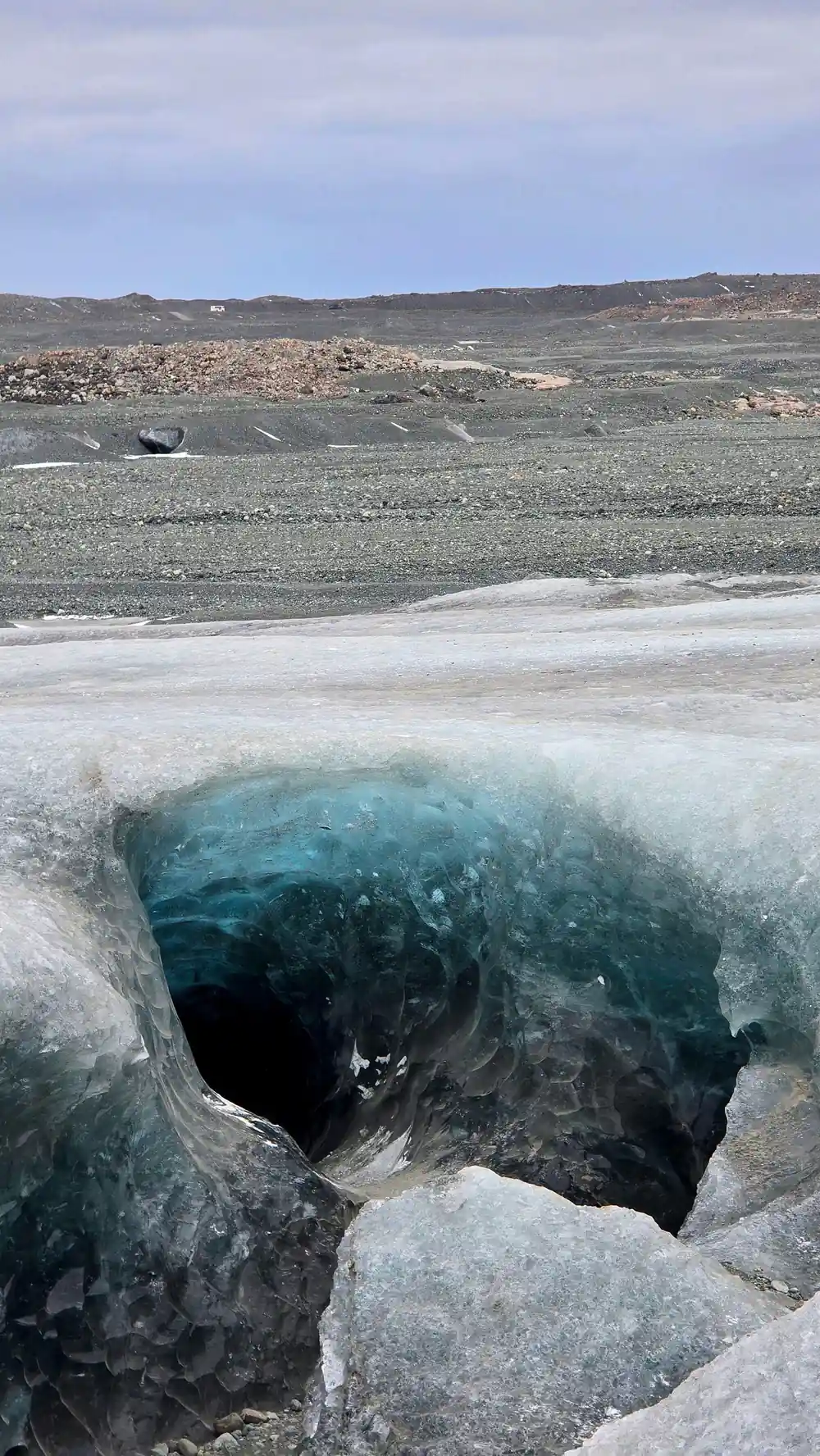
Icebergs drifting out of the lagoon towards Diamond Beach on the south coast.
Winter Camping Near Vatnajokull: What Is Possible
Camping near the glacier in winter works only when a campsite is open, the access road is clear and the wind behaves, and none of that can be taken for granted. Average winter temperatures in Iceland are around 32°F (0°C), and daylight runs from 4 to 5 hours in late December, which leaves little time to pitch a tent, cook and dry out between cave tours.[5] Facilities in the area are simple even in summer, so bring what you need with you.
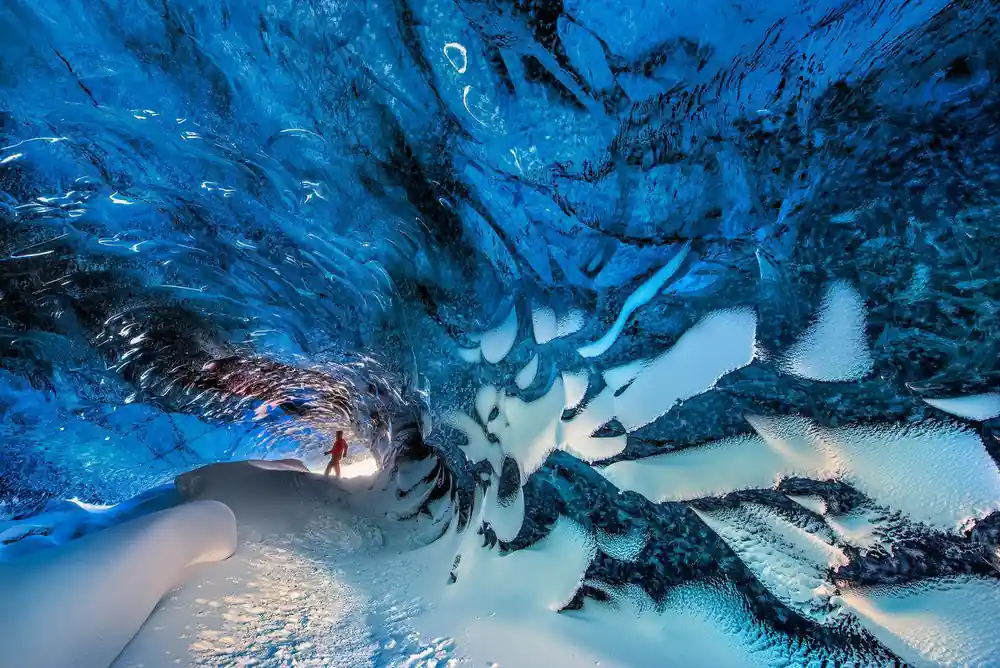
A natural ice cave in Vatnajökull lasts one winter, forming in October, holding its coldest and bluest form from December to February and being taken back by meltwater in May.[11] That is the stretch when a warm room matters most, and heavy snow can shut the camping option down entirely. If you do camp, treat it as a summer plan and keep a guesthouse name saved for the winter months. The lagoon side of the road is cold and exposed, with very little shelter once the wind picks up.
Hofn as a Base for the Ice Caves
Höfn is a fishing harbour east of the lagoon with hotels, guesthouses, fuel and a choice of places to eat. It has rooms, restaurants and shops within walking distance, and a proper town feel to come back to after a cold morning on the ice. The trade-off is a longer transfer west to the meeting points, so leave early on tour day and allow for a stop or two on the way.
Summer here is busy. Around 100,000 tourists visited Jökulsárlón Glacier Lagoon in July alone during one of its busiest summers on record, and that pressure fills the beds in the villages around it.[12] Winter is quieter but thinner on open restaurants and fuel stops, so check what is serving before you commit to a late arrival. Booking a room with a kitchen or a late check-in takes some of the guesswork out of a winter drive.
about 370km
Jökulsárlón is about 370 km (230 miles) from Reykjavík along Route 1, with roughly 5 hours of driving each way in good conditions.[4]
Vik and the Wider South Coast
Vík sits west of the lagoon on the south coast, a small village below a hill with black sand beaches at its edge and a spread of hotels and guesthouses. It is a useful position if you are driving from Reykjavík and want to split the journey. From Vík you still have a long run east to the ice caves, so treat tour day as a full day out rather than a quick errand. Guesthouses here are often easier to book than rooms right beside the lagoon.
The coast between Reykjavík and the lagoon is where most of the well-known stops sit, from waterfalls to the black beach at Reynisfjara. Jökulsárlón has had its own share of cameras too: it was a filming location for A View to a Kill, Die Another Day and Lara Croft: Tomb Raider.[13] A night on each side of the lagoon lets you see the coast without rushing, and it keeps the long driving days shorter in winter light.
Reykjavik: The Capital Base and the Long Drive
Reykjavík gives you a big choice of rooms, easy airport connections and plenty of evening life, and it works well if you would rather treat the lagoon as a day out from a city base. The catch is distance: Jökulsárlón is about 370 km (230 miles) from Reykjavík along Route 1, and the drive takes roughly 5 hours each way in good conditions.[4] Doing that return in one day is a long haul at any time of year.
Organised day tours from the capital down to the lagoon run to around 14 hours, which gives a sense of how much of a day the round trip takes.[14] Sleeping near the ice and driving back the next morning at your own pace is the gentler option, especially in winter when the light is short. If you do drive down and back in a single day, share the driving and start early.
Planning Your Stay: Timing, Booking and Preparation
Time your trip around the ice. Natural ice caves in Vatnajökull form in October, hold their coldest and bluest form from December to February and are taken back by meltwater in May.[11] Those cave months decide when a bed near the lagoon is worth paying for. The glacier behind the lagoon is hard to picture: the thickest point of the Vatnajökull ice cap is 3,120 feet (950 m) deep, with an average thickness of 1,250 feet (380 m).[15] Breiðamerkurjökull, the outlet glacier that calves into the lagoon, has retreated at an annual rate of up to 200-300 m in recent years, and the ice line keeps moving.[16]
Book the room and the tour for the same window, then sort out what you wear. A sturdy helmet is essential inside a cave for falling ice and low ceilings, and operators generally provide it, while waterproof layers, gloves and boots you can walk in are down to you.[6] The blue you came for is a trick of light: glacier ice absorbs long wavelengths and scatters short-waved blue light, and the deep interior ice looks blue.[17] Keep one day free at the end of the trip, in case weather shifts your departure.
How long ice cave and glacier tours from Jokulsarlon last
From prices per adult, by tour
From prices per adult in US dollars for these tour listings.[1][2][3][19]
When to book and when to travel
Plan your Jokulsarlon stay
Choose your base
Decide between the lagoon area, Höfn and Vík, then check how long the drive to your meeting point really is.
Match the season
Natural ice caves in Vatnajökull last one winter, forming in October and melting away by May, so plan around those months.[11]
Book both together
Reserve the room and the tour for the same window, and read the free cancellation terms before you pay.
Pack for cold and wet
Waterproof outer layers, warm mid-layers, gloves and boots you can walk in are the basics for a day on the ice.
Leave slack in the plan
Weather can close roads and change departures, so keep a spare day on the south coast and stay flexible.
Book the ice cave tour, then sort your bed nearby
from US$164Reserve now & pay later