The quick version
- A natural ice cave in Vatnajokull forms in October, holds through April and is taken back by meltwater in May.[1]
- Jokulsarlon is about 370 km (230 miles) from Reykjavik, and the drive takes roughly 5 hours each way in good conditions.[2]
- Iceland daylight runs from 4 to 5 hours in late December to about 21 hours by late June.[3]
- The guided ice cave tour from Jokulsarlon lasts 3 hours and starts from US$164, with free cancellation up to 24 hours ahead.[4]
- Diamond Beach is black volcanic sand scattered with clear glacial ice that drifts through the lagoon and washes ashore.[5]
- Top choice Ice Cave Guided Tour from US$164 Duration3 hours[4]Rating4.25 from 2,171 reviews[4]Guide languageEnglish[4]CancellationFree up to 24 hours ahead[4] Check availability
- Crystal Ice Cave Super Jeep from US$173 Duration2.5 hours[6]Rating4.21 from 1,751 reviews[6]Guide languageEnglish[6]CancellationFree up to 24 hours ahead[6] See this tour
- Original Ice Cave Tour from US$161 Duration3 hours[7]Rating4.61 from 1,129 reviews[7]Guide languageEnglish[7]CancellationFree up to 24 hours ahead[7] See this tour
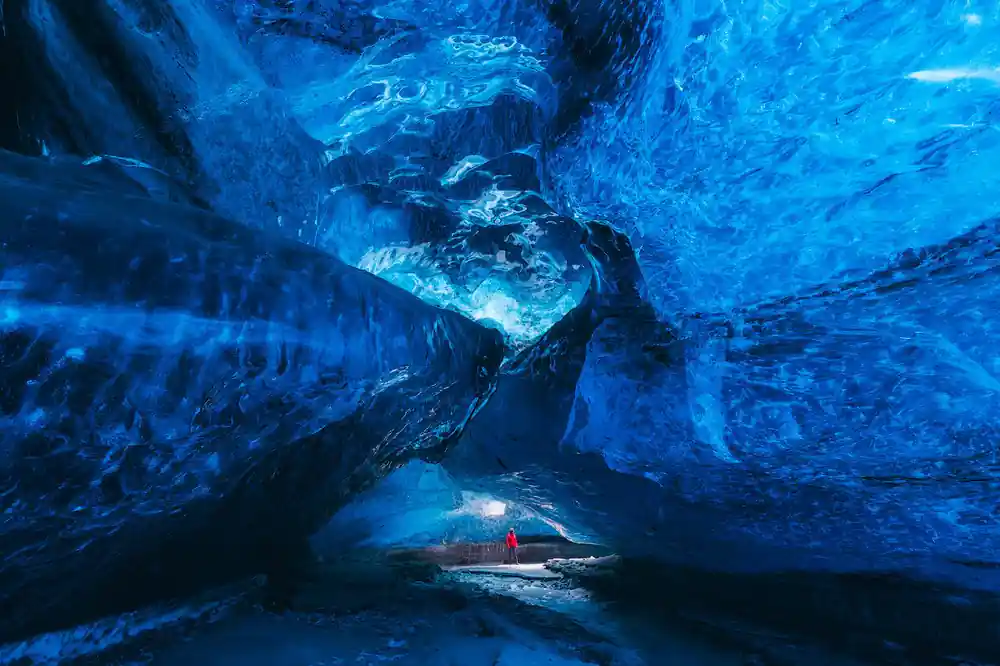
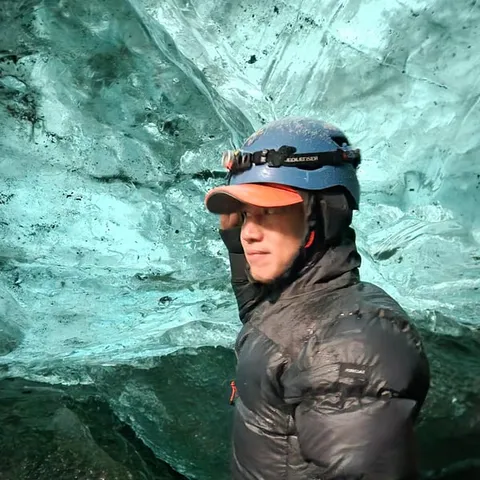
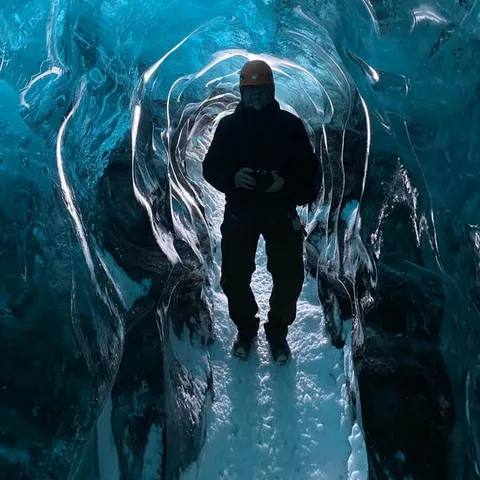
Average temperatures range from around 32°F (0°C) in winter to 52°F (11°C) in summer. Daylight shifts fast, from 4 to 5 hours in late December to about 21 hours by late June.
Worth planning a winter night for
Know this first
On the night
- Daylight in Iceland: 4 to 5 hours in late December, about 21 hours by late June.[3]
- Average winter temperatures in Iceland sit around 32°F (0°C).[3]
- Around 100,000 tourists visited the lagoon in July alone in one record summer.[9]
- Winter nights are long, so plan your hours outside and leave time to warm up.
Why aurora season and ice cave season overlap
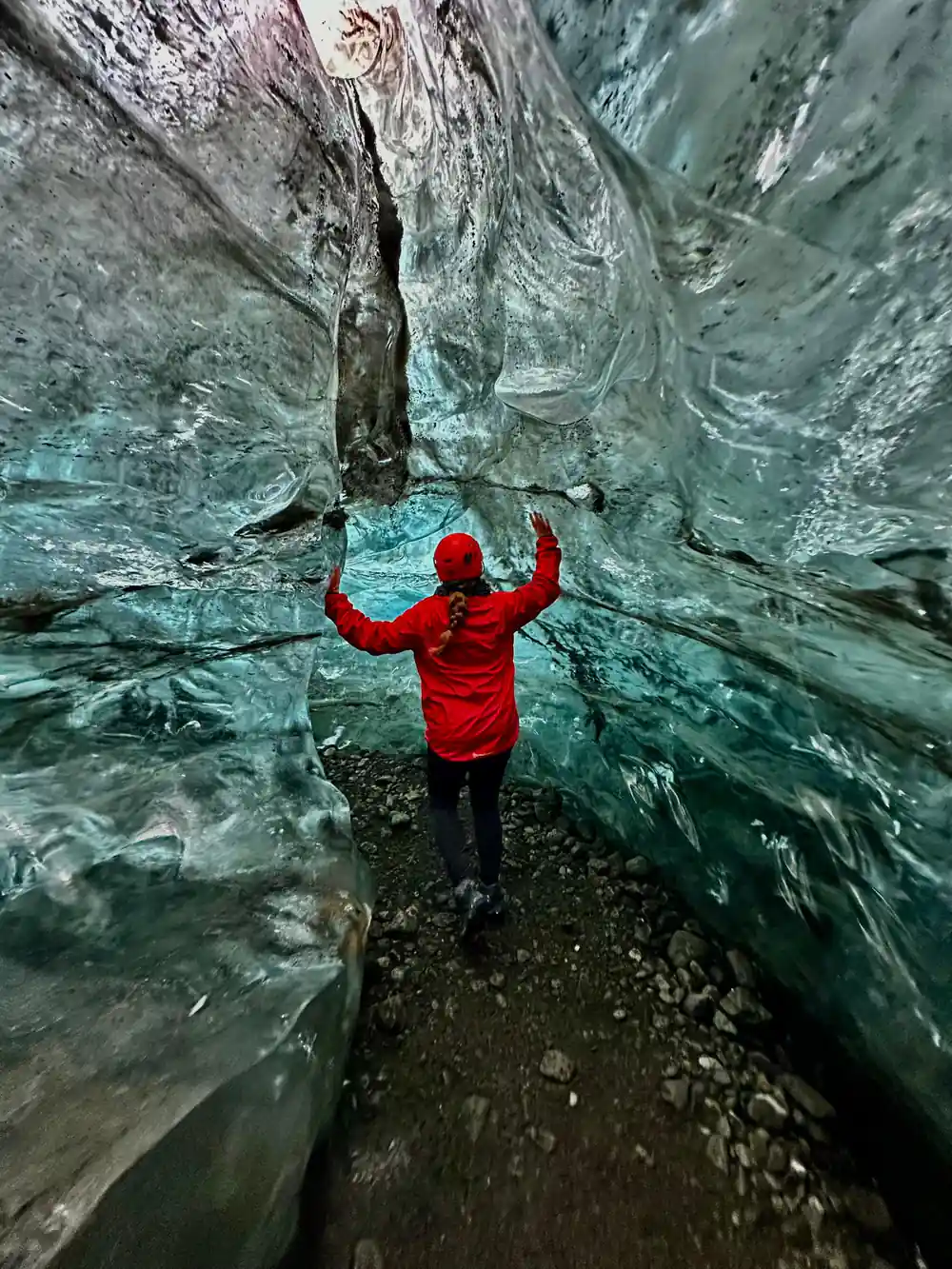
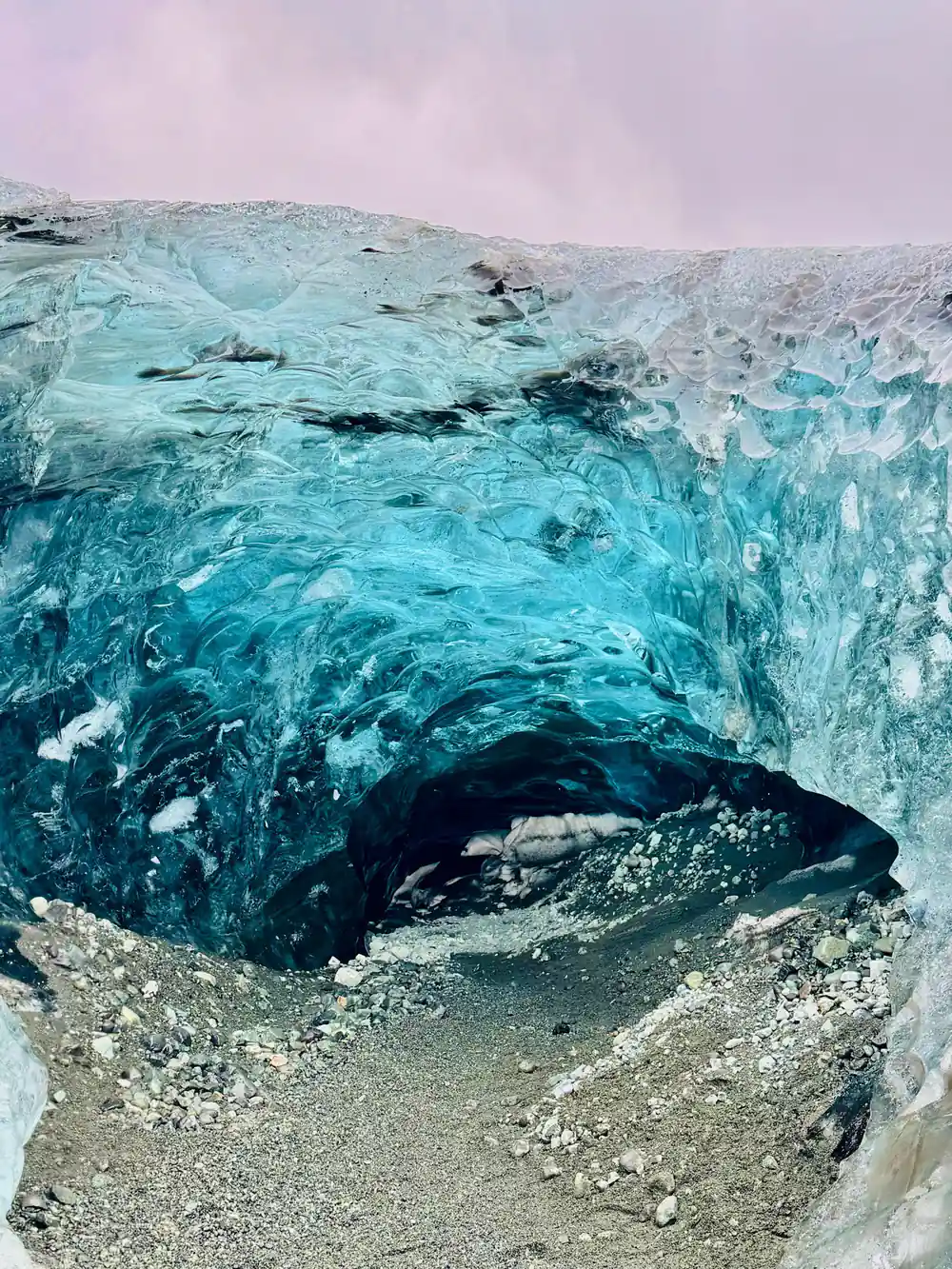
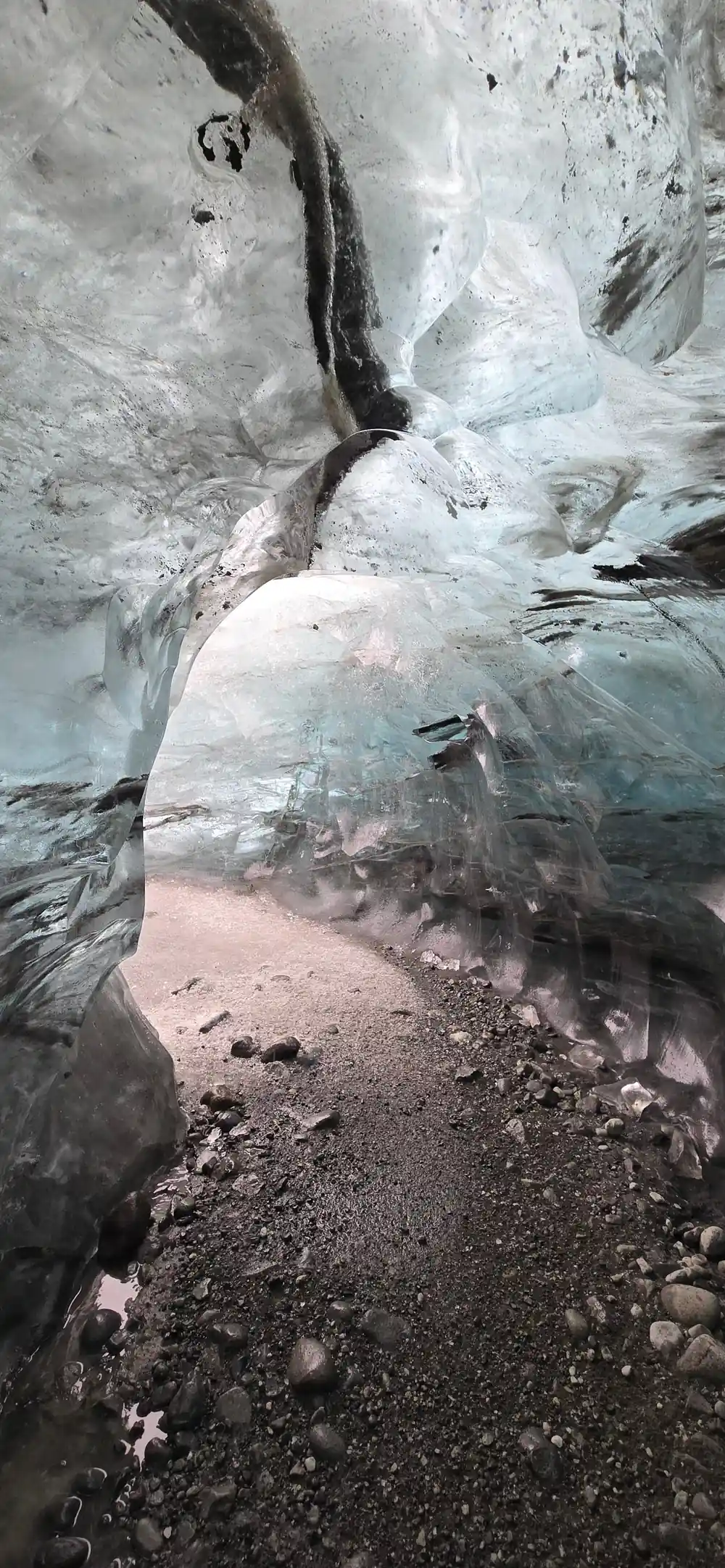
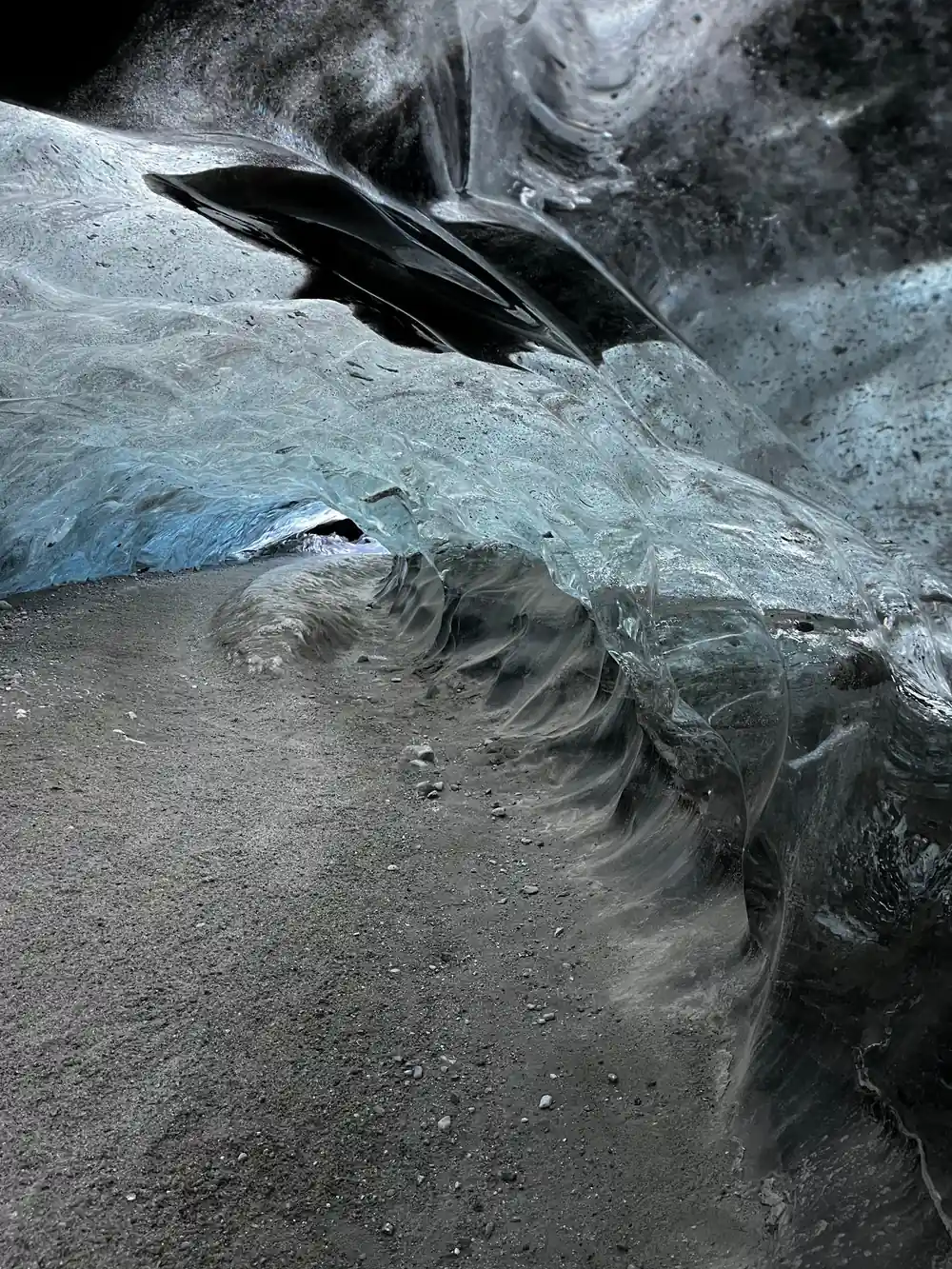
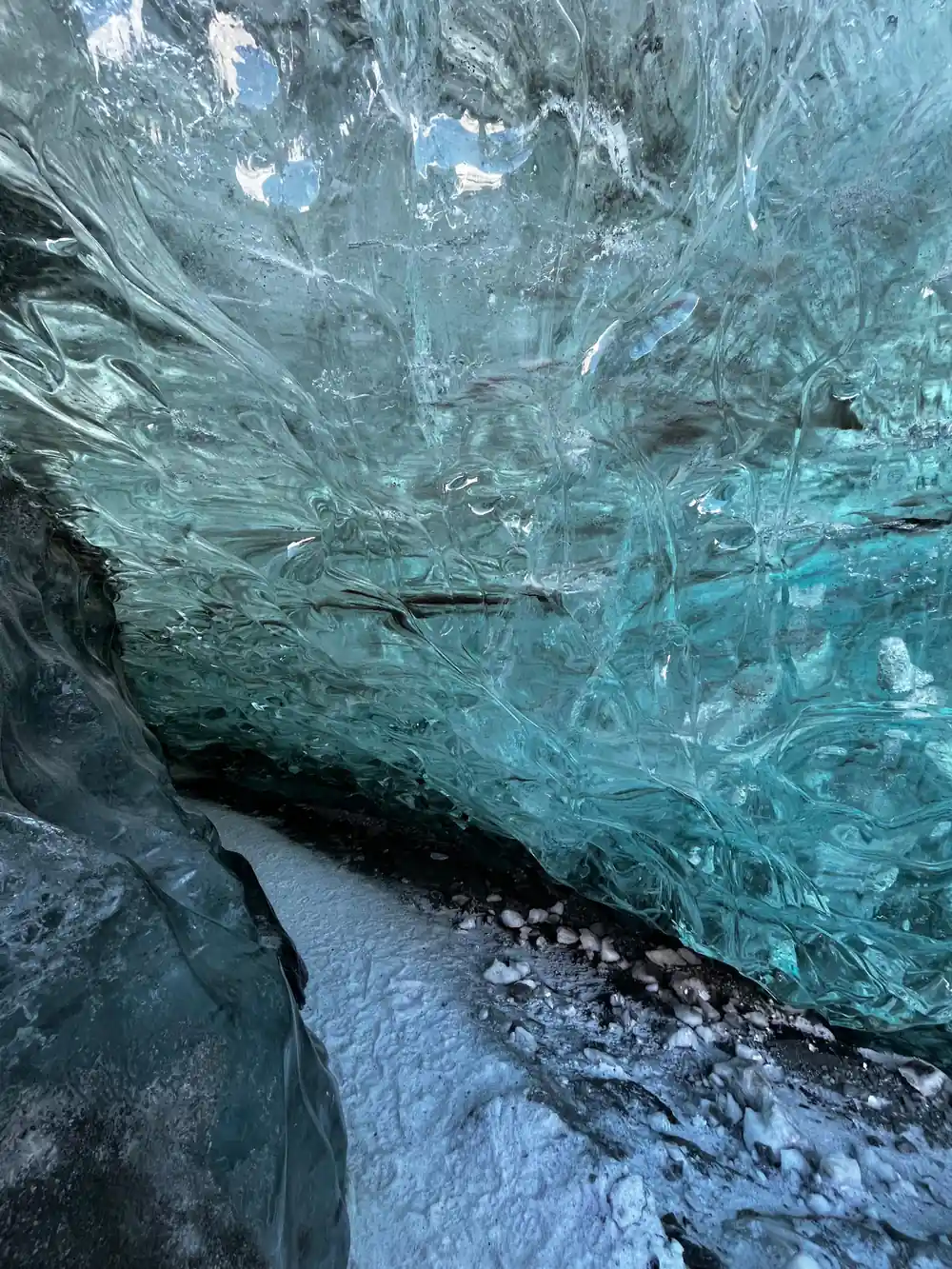
The natural ice caves under Vatnajokull are winter things. A cave forms when a summer meltwater channel drains and firms up in October, holds through April, and is taken back by returning meltwater in May.[1] Those months are also the ones with the longest nights in this part of Iceland, and one trip can cover both. Aurora trips and ice cave trips are usually sold as separate holidays, but on this stretch of coast they share a calendar. Travellers who spend the morning under blue ice often end up on a black beach after dinner, waiting for a sky that may or may not perform.
Daylight tells the other half of the story. Across Iceland, average temperatures run from around 32°F (0°C) in winter to 52°F (11°C) in summer, and daylight shifts from 4 to 5 hours in late December to about 21 hours by late June.[3] Winter nights are long, and a long night is simply more time in which a dark sky, clear weather and a little luck can come together. As the season advances, the nights shrink and real darkness becomes harder to find.
What the ice and water do with light
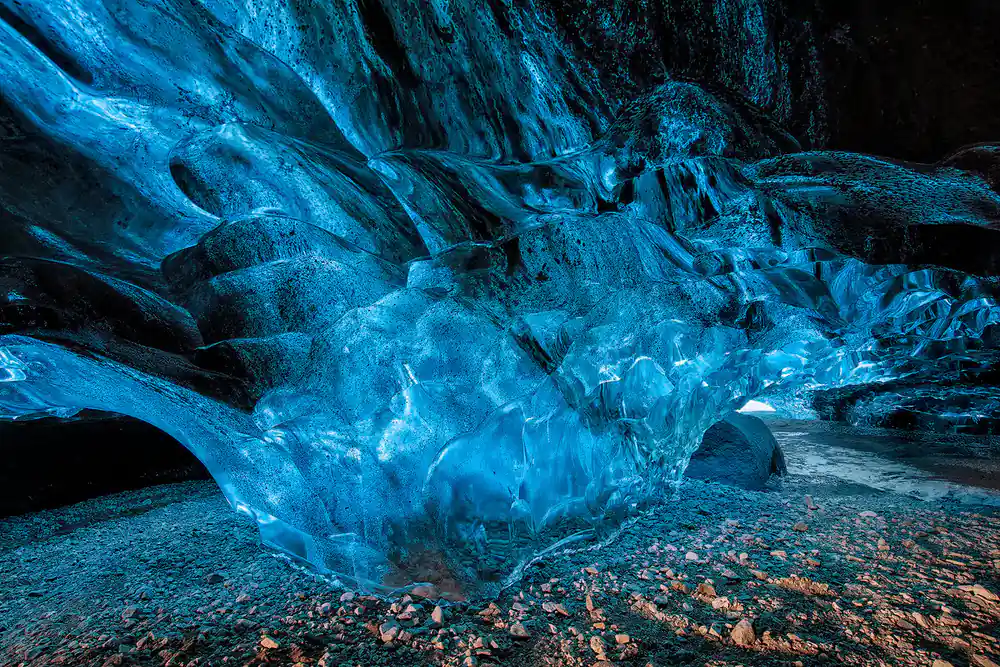
Glacier ice reads blue for a reason worth knowing before you photograph it. Deep in a glacier the air has been pressed out and large, dense crystals have formed, and when light hits those crystals they absorb long wavelengths while scattering short-waved blue light, which makes the ice appear blue.[10] You will see that colour in the cave walls in daylight. At night, with a headtorch, the same walls come back colder and dimmer, and photographs need a longer exposure than the eye does.
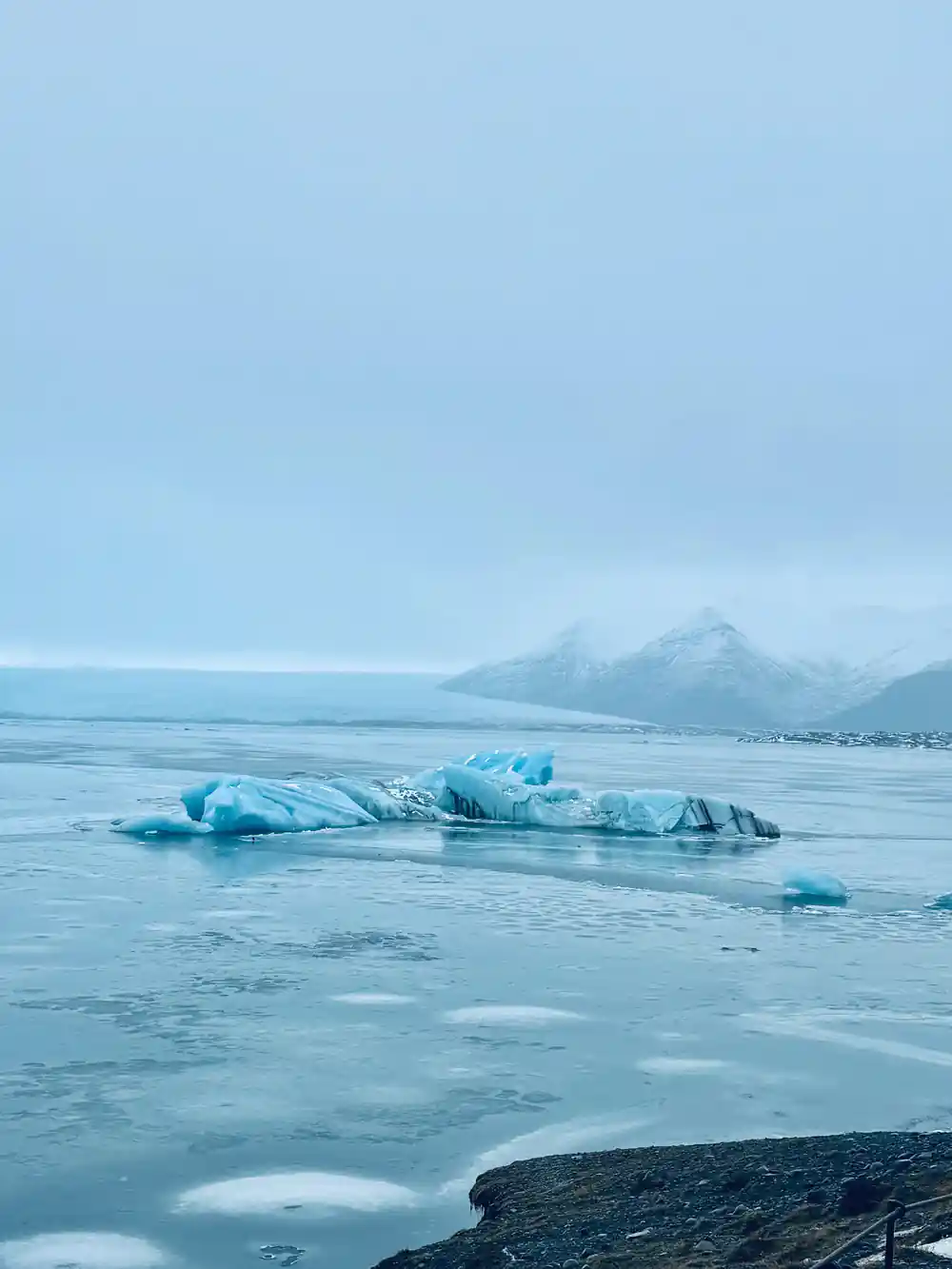
The lagoon is a strange dark mirror. It is 248 meters (814 feet) deep and has quadrupled in size since the 1970s.[11] Icebergs break off the glacier and drift across it, and some of that ice is thought to be more than 1,000 years old.[11] After dark the bergs hold whatever light is in the sky and show as pale shapes against black water, easy to frame even when there is very little light to work with.
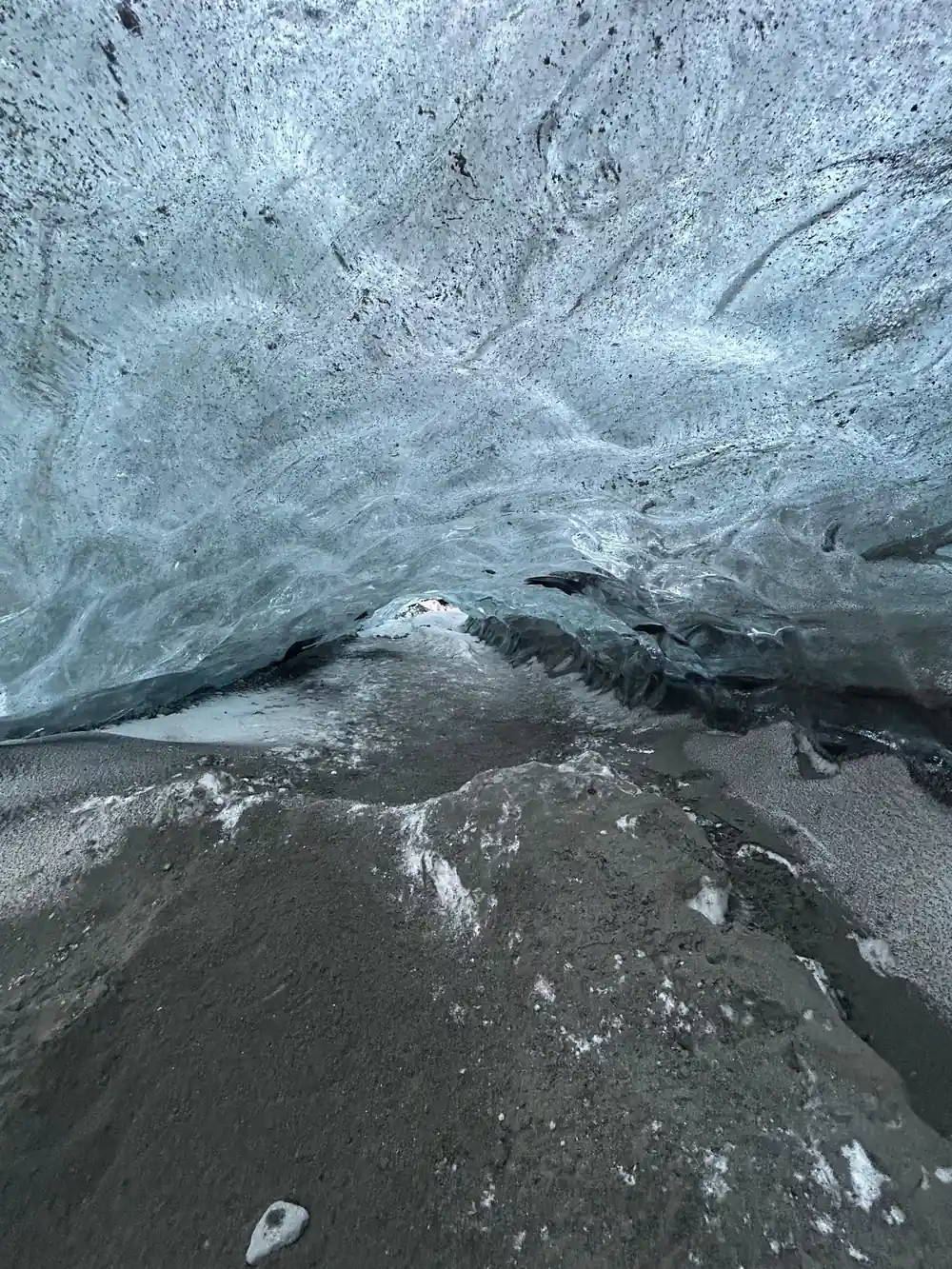
Blue ice, black sand and a long dark coast near Jokulsarlon
Finding dark spots around the lagoon
Darkness is the whole game with auroras, and around Jokulsarlon the useful dark is not hard to find. The coast east of the lagoon is thinly populated, the road is quiet at night, and there is very little lighting to compete with the sky. Park well off the carriageway, switch off interior lights before you open a door, and walk a short distance from the car so your own vehicle is not sitting in the frame. Headlights, phone screens and an open door all cost you dark adaptation, and it takes a while for your eyes to recover.
Jokulsarlon is about 370 km (230 miles) from Reykjavik, and the drive takes roughly 5 hours each way in good conditions.[2] That makes the lagoon an awkward day trip if you also want a night outside. The sensible pattern is to sleep in or near the lagoon area, spend the dark hours on the coast, and drive back in daylight the next morning. In one record summer, around 100,000 tourists visited the lagoon in July alone.[9]
Fitting aurora hours around your cave tour
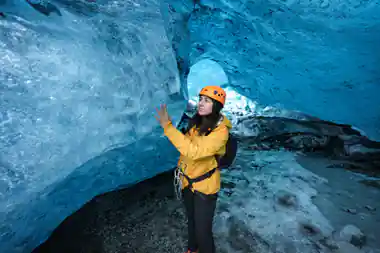
The Jokulsarlon ice cave tour lasts 3 hours and starts from US$164, with free cancellation up to 24 hours in advance for a full refund.[4] It meets at the lagoon, runs by jeep or SUV into Vatnajokull National Park, and returns the same way.[4] The tour finishes back at the lagoon, which leaves the rest of the day free for the coast road and the beach.
Sleep is the part people underestimate. In Iceland, late December brings only 4 to 5 hours of daylight.[3] That leaves a great deal of night to fill, and standing around in it is more tiring than most people expect. An early dinner, a nap and a plan to be outside after dark works better than one long push from morning to midnight. If you have spare nights, keep one in reserve and decide in advance which is the aurora night.
from US$164
The tour lasts 3 hours, runs by jeep or SUV into Vatnajokull National Park and back, and is rated 4.25 from 2,171 reviews.[4]
Reading the sky before you commit to a night out
Aurora watching is mostly an exercise in patience and cloud watching. A clear sky matters more than anything else, and a forecast that looks poor early in the evening can turn around later. Give one spot a decent stretch of time before moving on, dress for standing still rather than walking, and accept that some nights end with nothing but stars. Seasoned aurora hunters treat a night out as a picnic with a view: something hot to drink, a chair or a blanket, and no expectation that anything will happen. When the aurora does arrive, it often builds slowly, fades, and returns several times.
Two things shape a winter night here more than anything else: temperature and light. Average winter temperatures in Iceland sit around 32°F (0°C),[3] which is not extreme, but it is cold enough to matter when you are standing still in wind beside ice. And with only 4 to 5 hours of daylight in late December,[3] the hours in which you can drive and see the landscape are limited, while the hours in which you can watch the sky are long.
Diamond Beach after dark
Diamond Beach is in Southeast Iceland, where black volcanic sand is scattered with clear glacial ice that breaks off Breiðamerkurjökull, drifts through Jokulsarlon Glacier Lagoon, and washes ashore.[5] At night the contrast works in your favour: pale ice on black sand registers in very low light, and a long exposure turns the surf into a soft grey blur behind it.
Treat the beach with care after dark. Surf arrives here without much warning, wet sand near the waterline is slippery, and the ice that has washed up is not a platform to stand on. Check the tide and the swell before you commit to a spot close to the water. Keep back from the edge, keep an eye on the sea rather than only on the sky, and use a dim red light if you need one, both to protect your night vision and to leave other people's photographs alone.
Solo aurora watching or a guided night out
You can look for auroras here on your own, with a car, a flask and patience, or join an organised night trip and let someone else handle the driving and the watching. The lagoon coast is open landscape rather than a built attraction, and the practical difference between the two approaches is mostly about who is still awake in the small hours and who is driving home. If you are based near the lagoon, your viewing spot is a short drive away, and you can try again the next night without rearranging your whole trip.
Going solo keeps things flexible: you can leave when the cloud moves in and stay when it clears. Organised trips take the driving and the navigation off your hands, and they usually come with local knowledge about which stretch of coast is clearest tonight. Whichever you choose, the cave tour and the night sky sit inside the same short winter day, and booking the cave tour first gives the rest of the plan a fixed point to hang on.
How deep the ice and water go
Depths and thicknesses: lagoon 248 m[11]; ice cap average 380 m[12] and thickest 950 m[12].
Ice cave tours from Jokulsarlon, from-prices
From-prices: US$164[4], US$173[6], US$161[7], US$145[13].
When to go for auroras and ice caves
Plan your aurora night
Book the cave tour
Winter departures fill up, and the guided tour from Jokulsarlon starts from US$164 with free cancellation up to 24 hours ahead.[4]
Sleep near the lagoon
The drive from Reykjavik is about 370 km (230 miles) and takes roughly 5 hours each way in good conditions.[2]
Check the sky twice
Clear sky matters more than anything, so look at conditions in the afternoon and again after dinner.
Dress for standing still
Average winter temperatures sit around 32°F (0°C), and standing still in wind feels colder.[3]
Give it an hour
Arrive while there is still light to see the ground, then stay put and let your eyes adjust.
Keep a spare night
Caves hold through April, so a spare night in the area gives you another chance at clear sky.[1]
Pair your ice cave day with a dark-sky night
from US$164Reserve now & pay later