The quick version
- Jökulsárlón Glacier Lagoon Kayaking Tour runs 1.5 hours from US$159, with a live English-speaking guide on the water.[1]
- A Vatnajökull National Park lagoon kayak from US$167 is limited to 6 participants and lasts 1.5 hours.[2]
- The Vatnajökull glacier kayaking tour from US$184 lasts 3 hours and is rated 4.88 from 6 reviews.[3]
- The lagoon is 248 meters (814 feet) deep and has quadrupled in size since the 1970s.[4]
- The Vatnajökull Ice Cave Guided Tour booked from this site takes 3 hours, from US$164, and is rated 4.25 from 2,171 reviews.[5]
| Jökulsárlón lagoon kayak | Lagoon kayak in the park | Glacier kayak, Vatnajökull | |
|---|---|---|---|
| From | from US$159[1] | from US$167[2] | from US$184[3] |
| Duration | 1.5 hours[1] | 1.5 hours[2] | 3 hours[3] |
| Traveller score | 4.66 from 325 reviews[1] | 5.00 from 1 reviews[2] | 4.88 from 6 reviews[3] |
| Group size | Not stated in the listing | Limited to 6 participants[2] | Not stated in the listing |
| Cancellation | Cancel up to 24 hours ahead[1] | Cancel up to 24 hours ahead[2] | Cancel up to 24 hours ahead[3] |
Since the 1970s, Jökulsárlón has quadrupled in size and now measures around 11 square kilometers (7 miles) wide.
Is a Jökulsárlón kayak worth it?
Book and time it
Why kayak the lagoon instead of watching from shore
From the bank, Jökulsárlón is a view: grey-blue water, white ice, a strip of black sand and mountains standing behind it. From a kayak it becomes a place with a temperature and a sound. You sit almost at water level, so the icebergs that looked like a distant skyline turn into slow walls of ice drifting past within arm's reach. The water is flat, the pace is gentle, and the reward is the quiet.
The water under you is deep and it keeps changing shape. Jokulsarlon glacier lagoon kayaking puts you on a lagoon that is 248 meters (814 feet) deep and has quadrupled in size since the 1970s.[4] Most of the ice you pass has calved from Breiðamerkurjökull, the outlet glacier that feeds the lagoon, and that glacier has retreated at an annual rate of up to 200-300 m in recent years.[9] What you paddle past in one morning is a landscape in the middle of change.
The other advantage of a kayak is scale. On foot you see the lagoon's edge; from the water you cross it, and you notice how different two icebergs can be, one clear and glassy, the next white and rough, both floating in water dark enough to make the ice look bright. Take your time, look down as well as up, and you will see more than you expected.
Choosing a glacier lagoon kayak tour
Every paddle here is guided, and the listings differ mainly in how long you are out and how many people share the guide. For the lagoon itself there is a kayak tour from US$159 that lasts 1.5 hours with a live English-speaking guide.[1] A second option inside Vatnajökull National Park starts from US$167, also runs 1.5 hours, and is limited to 6 participants.[2] Further into the park, a glacier kayaking tour from US$184 runs for 3 hours.[3]
Read the meeting point carefully before you choose: a trip listed as starting from Jökulsárlón and one listed from Vatnajökull National Park can mean different car parks and different drive times. A glacier lagoon kayak tour booked for the morning leaves the rest of the day free for Diamond Beach, the lagoon overlook or a short glacier walk. If you only have one day on the south coast, the shorter paddle is the easier fit.
Solo travellers and couples often do better on the small-group departure, where you can hear the guide without a headset and the boats stay close together. Families usually prefer the shorter lagoon paddle, which keeps time on the water brief and the return to the car park simple. Anyone wanting a longer day on the ice should look at the 3 hour glacier kayaking option[3], and anyone carrying a camera should ask about dry storage before booking.
Icebergs drift past the kayak line on Jökulsárlón, white above and blue below.
What the ice and the water actually are
Vatnajökull is an ice cap, not a single glacier tongue, and there is an enormous amount of ice above you: its thickest point is 3,120 feet (950 m) deep, with an average thickness of 1,250 feet (380 m).[10] The lagoon forms at its edge, where meltwater and calved ice collect behind the coastal strip before some of it drifts out to sea.
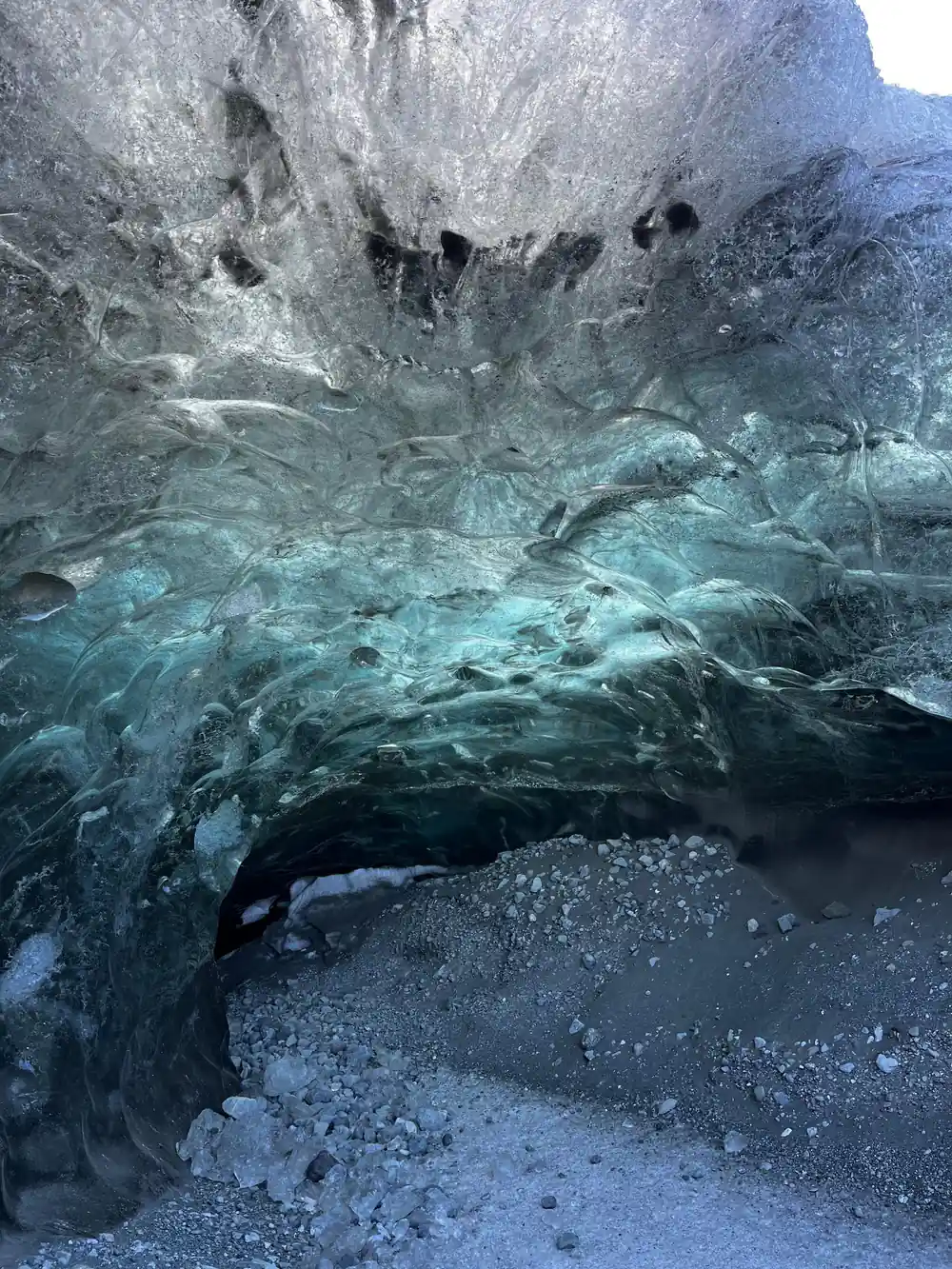
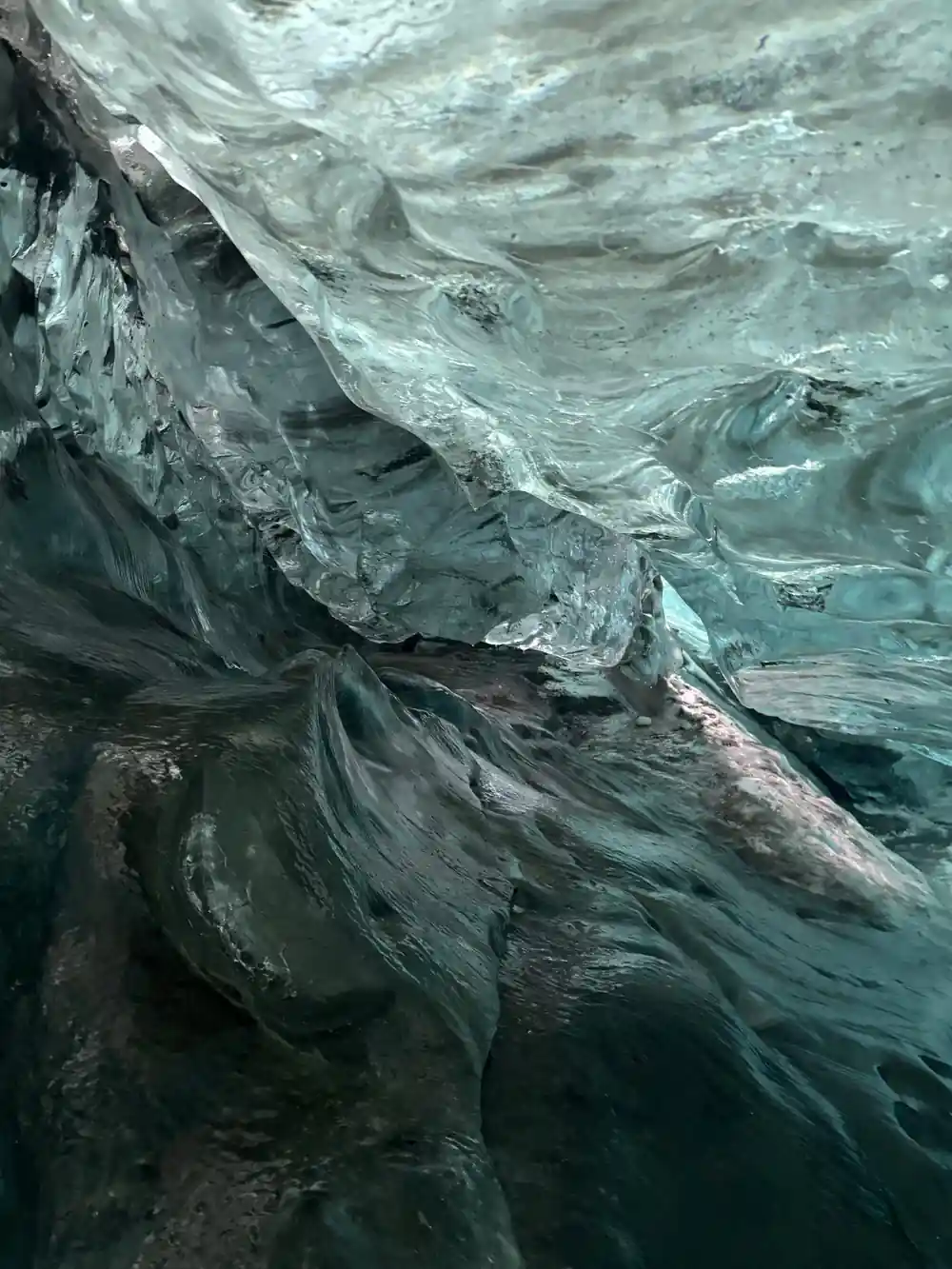
The blue is a matter of light, not pigment. Glacier ice appears blue because large, dense crystals in the deep ice absorb long wavelengths of light and scatter short-waved blue light back out.[11] In practice, an overcast day can show the colour better than bright sun, and ice that has rolled over in the water often reads paler and whiter than the ice still attached to the glacier.
Even the location has a long history. The tidal inlet also called Jökulsárlón Lagoon was excavated during the last glacial advance, about 26,500 years ago.[12] The lagoon you paddle today sits in that same inlet, fed by ice that is still moving seaward.
Getting there: the drive from Reykjavík
Jökulsárlón is about 370 km (230 miles) from Reykjavík along Route 1, and the drive takes roughly 5 hours each way in good conditions.[7] That is a long out-and-back in a single day. Many travellers instead overnight near the lagoon, in Höfn or around Skaftafell, or join a guided trip that does the driving.
If you drive yourself, treat the lagoon as the far end of the day and build the return leg around short stops rather than long ones. Winter changes the maths: daylight ranges from 4 to 5 hours in late December to about 21 hours by late June, so a December paddle and a June paddle call for very different plans.[8] Fuel, food and a weather check are all worth sorting in Kirkjubæjarklaustur or Höfn before the last stretch.
Guided day trips from Reykjavík cover the same road, with a Jökulsárlón Glacier Lagoon and Diamond Beach tour from US$232 that runs 14 - 15 hours.[13] It is a long day, but it removes the winter driving question entirely.
from US$159
The Jökulsárlón Glacier Lagoon Kayaking Tour runs 1.5 hours from this price, with a live English-speaking guide.[1]
What to wear on the water
Glacial meltwater is cold all year, and the wind on the lagoon does most of the work on how it feels. Dress in layers you can move in: a thermal base, a fleece or wool mid layer, and a windproof and waterproof shell on top. Gloves, a hat and a dry bag for your phone make a big difference, and trainers are easier in a kayak than heavy boots. Iceland averages around 32°F (0°C) in winter.[8]
Expect a briefing before you launch and follow the guide's line once you are moving. Icebergs drift, and a piece of ice above the waterline always has more below it, so keep a little distance, paddle steadily rather than fast, and let the guide handle the route. A waterproof phone pouch, a spare pair of socks and sunglasses for the glare off the water are all worth packing.
Book your paddle for the part of the day with the best light rather than the warmest hour; the difference in temperature is smaller than the difference in what you can see. If the wind picks up, guides may adjust the route or the timing, so keep the afternoon free and stay flexible.
Seals, film locations and nearby stops
Keep an eye on the open water as well as the ice. The most common seal species in the area are harbour seals, and you may spot one surfacing quietly between the bergs.[14] Down at the coast, Diamond Beach in Southeast Iceland is the black volcanic sand shore where clear glacial ice washes up after drifting through Jökulsárlón Glacier Lagoon.[15]
The lagoon has had a long screen career too: it was a filming location for A View to a Kill, Die Another Day and Lara Croft: Tomb Raider.[16] On busy summer days you will not be alone, with around 100,000 tourists visiting Jökulsárlón in July alone during one of its busiest summers on record.[17] Early mornings and late afternoons tend to be calmer on the water and on the shore.
Most travellers base themselves in Höfn or near Skaftafell for a night, which turns the lagoon, the beach and a cave into a comfortable day rather than a race. If you are driving the Ring Road clockwise, Jökulsárlón is a natural overnight stop before the long empty stretch east.
Pairing your paddle with an ice cave
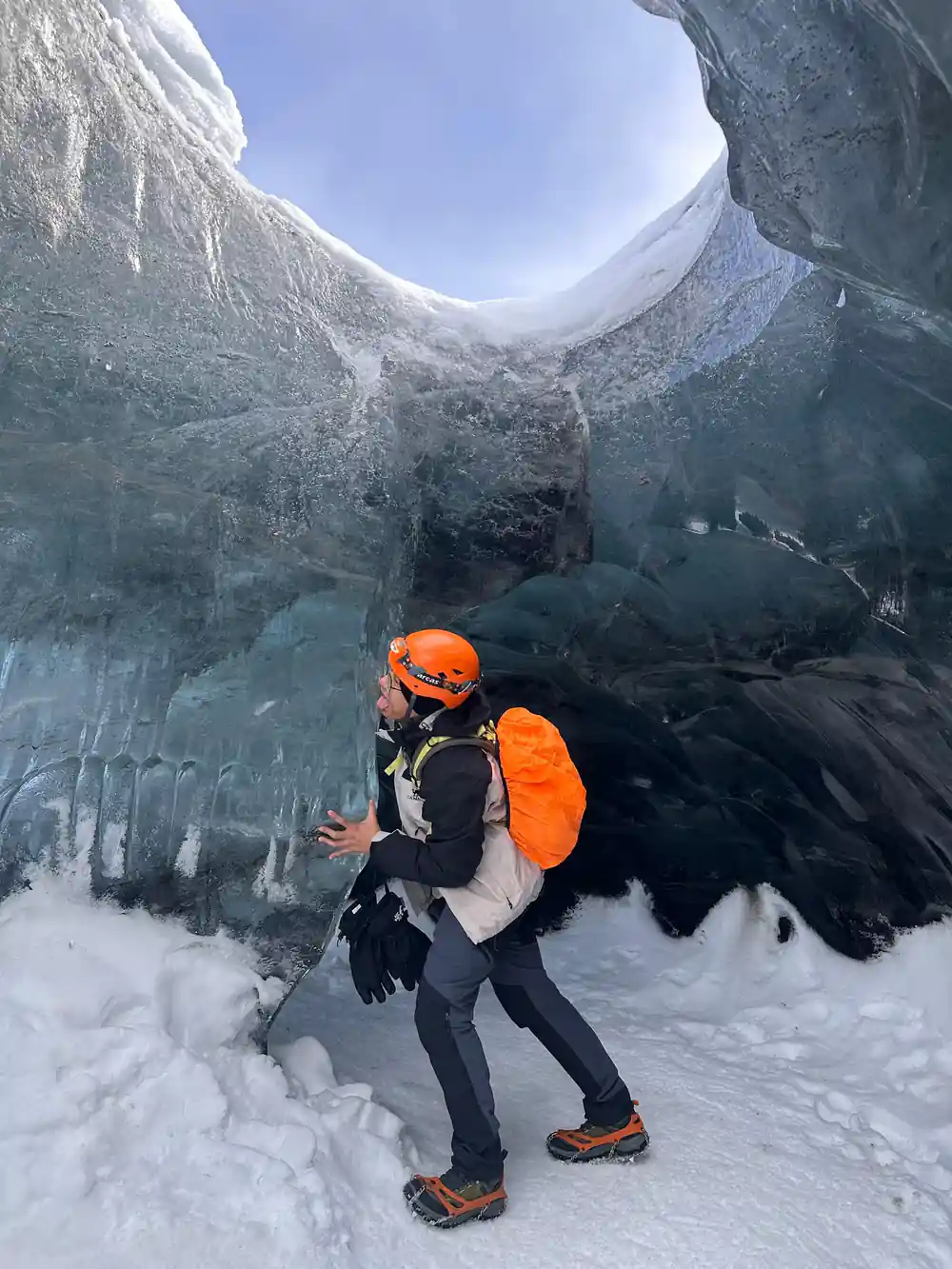
The obvious second half of a Jökulsárlón day is under the ice rather than on it. The tour booked from this site, Jökulsárlón: Vatnajökull Ice Cave Guided Tour, takes 3 hours, starts from US$164, runs with a live English-speaking guide and is rated 4.25 from 2,171 reviews.[5] Its category scores are Guide 4.6, Transportation 4.4 and Value for money 3.8.[5]
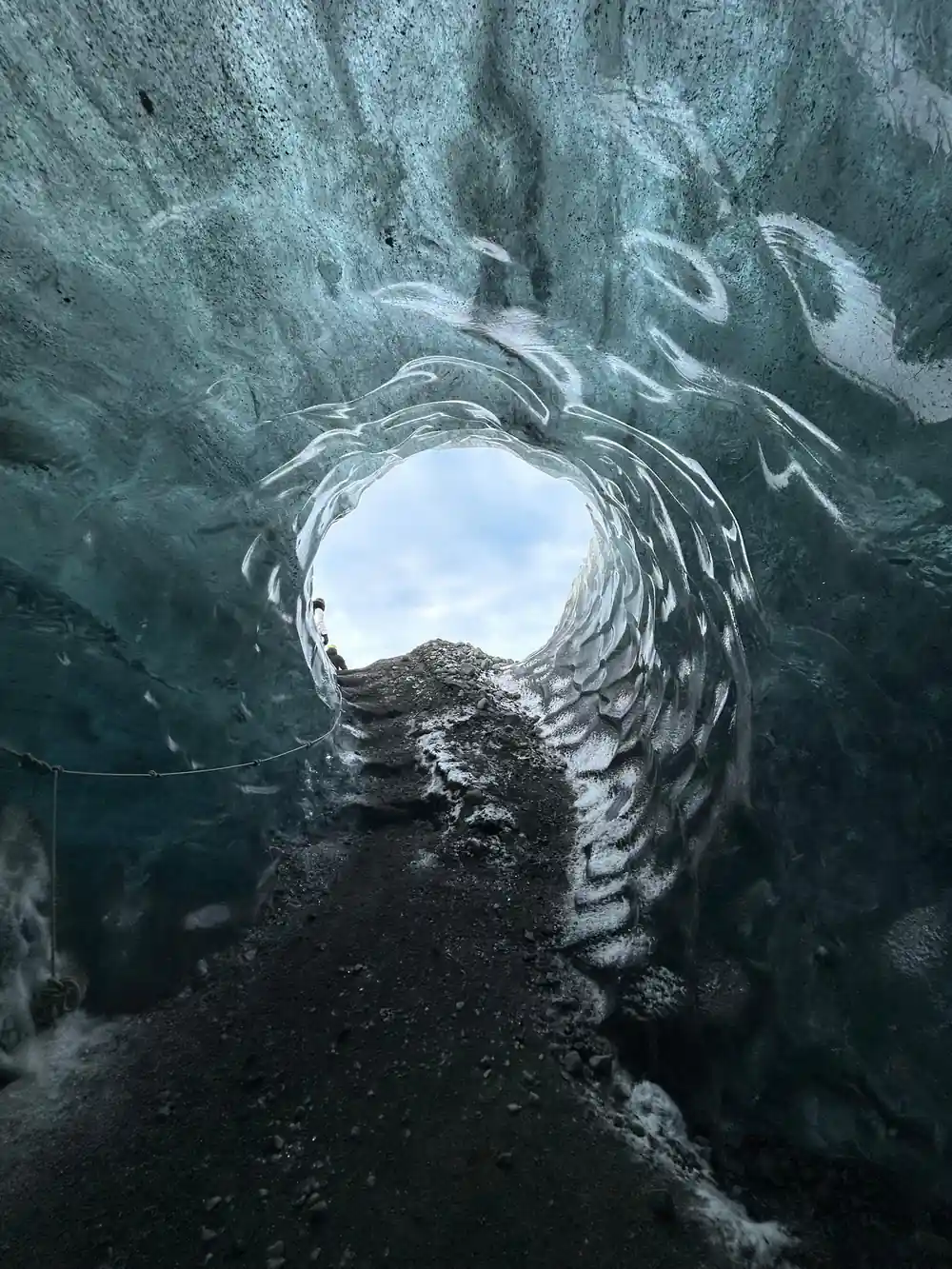
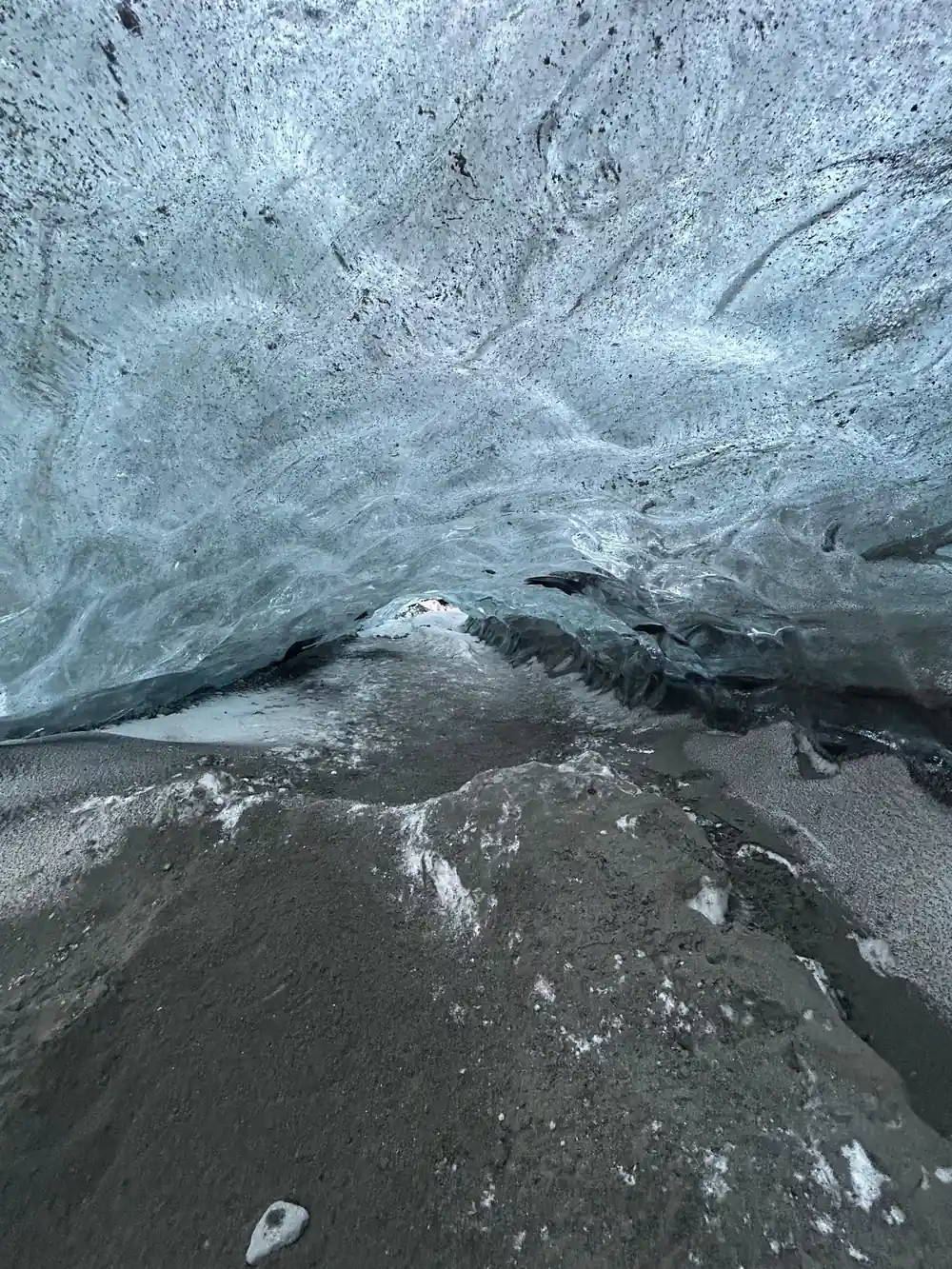
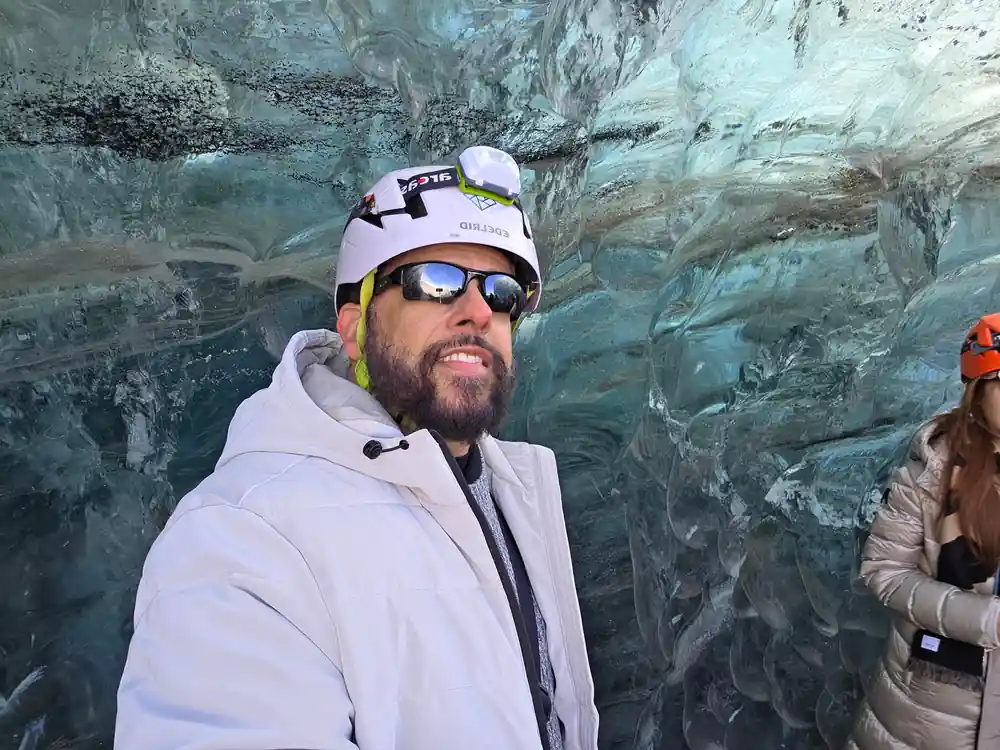
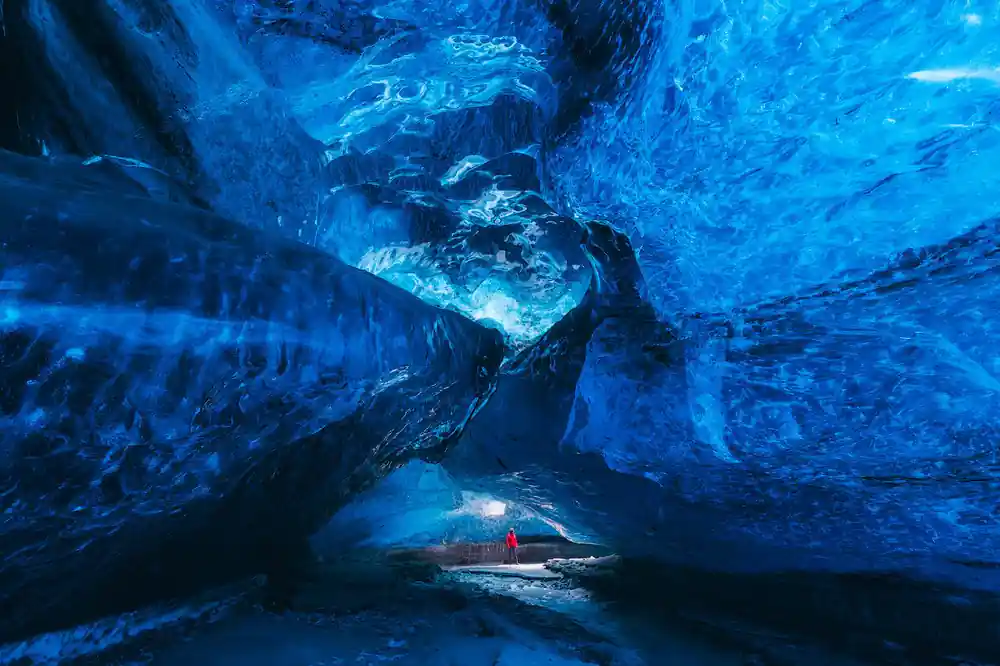
Ice caves are seasonal things. A natural ice cave in Vatnajökull lasts one winter, forming in October, holding through April and being taken back by returning meltwater in May.[6] Inside, a sturdy helmet is essential safety equipment against falling ice and low ceilings, and operators generally supply it.[18] Booking both experiences for the same day is easiest if you stay overnight near the lagoon rather than driving from Reykjavík.
Kayak tour prices from Jökulsárlón
One quantity only: from prices per person in US dollars for the three kayaking tours above.[1][2][3]
Kayak tour prices at a glance
From prices per adult in US dollars, taken from the tour listings:[1][2][3][5]
When to plan your Jökulsárlón paddle
Planning your kayak day
Pick your paddle
A 1.5 hour lagoon kayak from US$159 or a 3 hour glacier kayaking tour from US$184.[1][3]
Sort your base
Jökulsárlón is about 370 km (230 miles) from Reykjavík, roughly 5 hours each way in good conditions.[7]
Dress for cold water
Windproof layers, gloves and a hat: Iceland averages around 32°F (0°C) in winter.[8]
Check your daylight
Daylight ranges from 4 to 5 hours in late December to about 21 hours by late June.[8]
Add an ice cave
The ice cave tour booked from this site takes 3 hours and starts from US$164.[5]
Ready to paddle Jökulsárlón and step inside Vatnajökull?
from US$164Reserve now & pay later