The quick version
- Jökulsárlón sits beside Route 1 in Southeast Iceland, about 370 km (230 miles) from Reykjavík, roughly 5 hours each way in good conditions.[1]
- Route 1, the Ring Road, runs past the lagoon from Reykjavík, about 370 km (230 miles), about 5 hours each way in good conditions.[1] Break the drive with a night in Vík, Skaftafell or Höfn if one long day feels too much.
- Ice cave tours meet at Jökulsárlón and transfer into Vatnajökull National Park by Jeep or SUV, with starting times shown at checkout.[2]
- Natural ice caves in Vatnajökull form in October, hold through April, and are taken back by returning meltwater in May.[3]
- Iceland winter temperatures average around 32°F (0°C), and daylight in late December runs just 4 to 5 hours.[4]
- Top choice Vatnajökull Ice Cave Tour from US$164 Duration3 hours[2]Ratingrated 4.25 from 2,171 reviews[2]GuideLive tour guide: English[2]CancellationFree cancellation up to 24 hours[2] Check availability
- Crystal Ice Cave Super Jeep from US$173 Duration2.5 hours[5]Ratingrated 4.21 from 1,751 reviews[5]GuideLive tour guide: English[5]CancellationFree cancellation up to 24 hours[5] See this tour
- Original Ice Cave Tour from US$161 Duration3 hours[6]Ratingrated 4.61 from 1,129 reviews[6]GuideLive tour guide: English[6]CancellationFree cancellation up to 24 hours[6] See this tour
The drive from Reykjavík to Jökulsárlón is about 370 km (230 miles) along Route 1, the Ring Road, and takes roughly 5 hours each way in good conditions.
Getting to Jökulsárlón: how to plan the day
On the road
- Route 1, the Ring Road, links Reykjavík to Jökulsárlón, about 370 km (230 miles).[1]
- Allow a full day for the return drive from Reykjavík, or overnight on the coast
- Fill the tank and buy supplies before the last stretch east of Vík
- Start early in winter to fit the drive into the short daylight
At the lagoon
- Book your ice cave tour before you set out, then plan the drive around it
- Wear the helmet your operator provides inside the cave
- Dress for wind and rain, even on a bright morning
- Wear boots with grip for gravel paths and icy ground
Where Jökulsárlón Glacier Lagoon Is
Jökulsárlón sits in Southeast Iceland, beside Route 1, the Ring Road that runs from Reykjavík to the lagoon, about 370 km (230 miles).[1][7] Ice breaks off from Breiðamerkurjökull, an outlet glacier of the Vatnajökull ice cap, drifts through the lagoon, and washes ashore on black volcanic sand at Diamond Beach, in Southeast Iceland.[7] Arriving is simple: park beside the water and walk a few steps to the shoreline.
The scale surprises people. The tidal inlet that became this lagoon was excavated during the last glacial advance, about 26,500 years ago.[8] Since the 1970s, the lagoon has quadrupled in size, and it measures 248 meters (814 feet) at its deepest point.[9] The glacier that feeds it is still losing ground: where Breiðamerkurjökull calves into the lagoon, it has retreated at an annual rate of up to 200-300 m in recent years.[10] A few of the icebergs drifting here are thought to be made of ice more than 1,000 years old.[9]
Driving from Reykjavík to Jökulsárlón
The drive from Reykjavík to Jökulsárlón is about 370 km (230 miles) along Route 1, the Ring Road, and takes roughly 5 hours each way in good conditions.[1] That is a long day in the car once you add fuel stops, photographs and the waterfalls along the south coast. Splitting it into two days, with a night in Vík or further east, turns the drive into part of the trip rather than a chore.
From the capital, Route 1, the Ring Road, runs south and east through Selfoss, then along the coast beneath Eyjafjallajökull and Mýrdalsjökull to Vík, across the black plains beyond the village, and on past Kirkjubæjarklaustur to the lagoon, about 370 km (230 miles) from Reykjavík.[1] West of the lagoon the road crosses the flat outwash plain left by Breiðamerkurjökull, and then the bridge over the lagoon outflow is in front of you. Fuel and food are easiest to find on the western half of the route, so plan the last stretch before you leave the larger villages.
Time your arrival with the light in mind. In winter that can mean leaving Reykjavík in the dark and reaching the lagoon around the middle of the day, when the low sun catches the ice. In summer the opposite is true: with long daylight you can leave later, stop more often, and still have hours of light for the drive back. Whichever season you choose, keep the return leg in mind. Driving home tired on an unfamiliar road in the dark is the part of the trip most people underestimate.
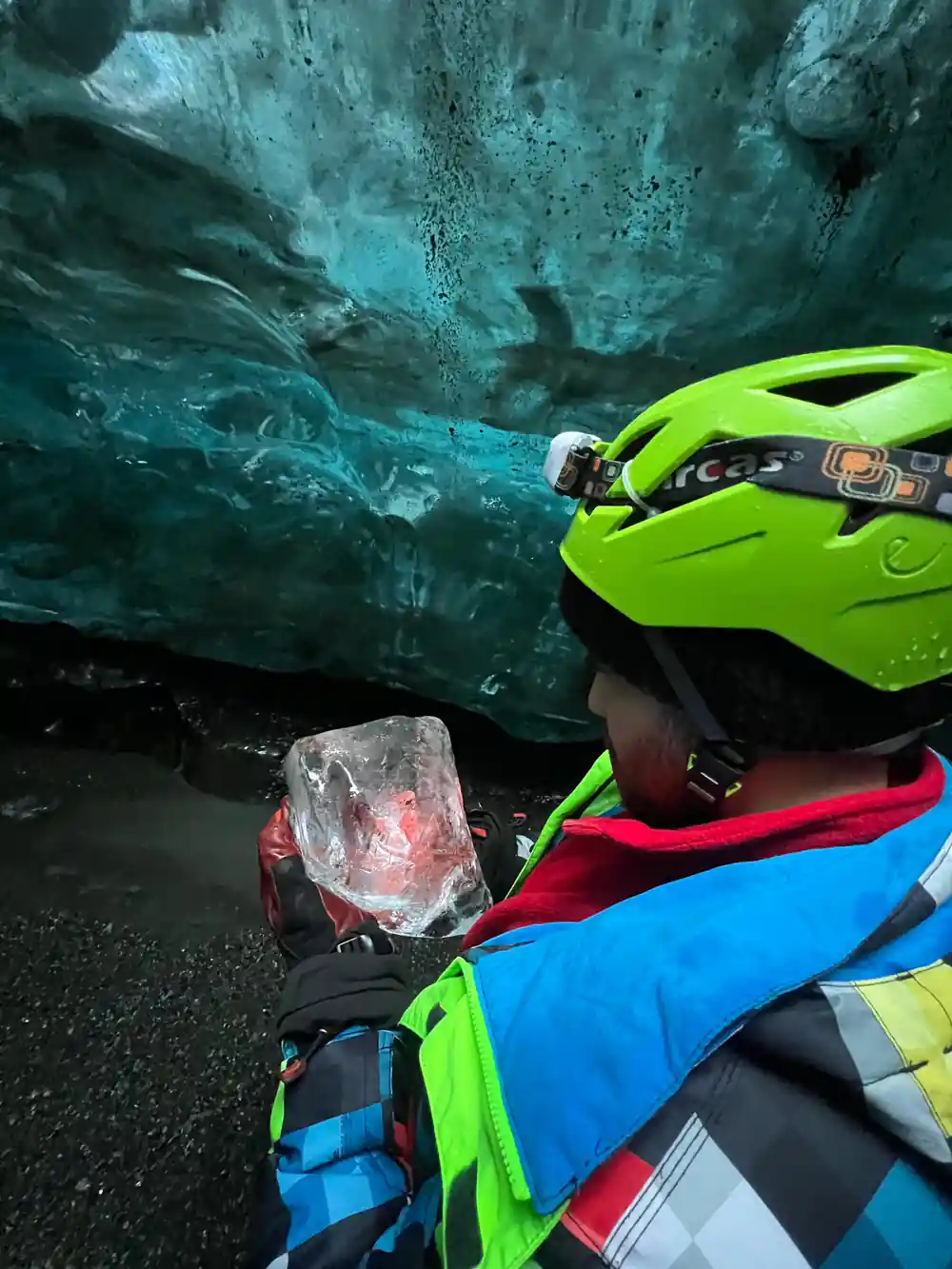
Icebergs drift out of Jökulsárlón and wash up as clear shards on the black sand of Diamond Beach.
Shorter Approaches from Vík and Skaftafell
If you are already on the south coast, the run to the lagoon is much shorter. From Vík you continue east along Route 1, the Ring Road that links Reykjavík and Jökulsárlón, about 370 km (230 miles).[1] From Skaftafell, the lagoon is an easy onward drive with Vatnajökull filling the sky on your left. The stretch from Vík eastwards is some of the emptiest country on the whole Ring Road, with long views, few buildings and plenty of places to pull over.
Skaftafell is also a starting point for glacier walks, and the ice cave tours that run from the lagoon itself usually meet beside the water before a short Jeep or SUV transfer into Vatnajökull National Park.[2] If you are staying near Skaftafell, check the meeting details on your booking and allow time for the transfer; the national park area is large, and the meeting point is not always the visitor centre.
Coming from Höfn and the East
Approaching from the east, Höfn is the last town before the lagoon, and the road runs west with the ice cap on your right and the sea on your left. This is the quieter side of the journey. You pass the turning for the fjords, cross flat gravel plains, and watch the glacier tongues reach down towards the road long before you reach the water.
Diamond Beach sits just east of the lagoon bridge, where clear glacial ice from Breiðamerkurjökull drifts through Jökulsárlón and washes ashore on black volcanic sand.[7] Seals are often in the water here, and harbour seals are the most common species in the area.[11] Tours from this side of the country often use the lagoon car park as the meeting point before heading onto the ice, so an early arrival from Höfn leaves room for a walk on the beach first.
The Vatnajökull region is generous with stops. Between Höfn and the lagoon you have the fjord turnings, glacier viewpoints and long stretches of open gravel plain, and the ice cap itself stays visible from the road for most of the way. If time allows, drive a little past the lagoon to see the coast from the other side of the bridge. Many travellers photograph Diamond Beach in the morning and the lagoon in the afternoon, or the other way round, depending on where the sun is.
from US$164
The Vatnajökull Ice Cave Guided Tour from Jökulsárlón runs 3 hours with a live guide in English.[2]
Parking, Meeting Points and Arriving Early
Parking sits beside the lagoon, a short walk from the water and from the bridge, with a small service building nearby for coffee and toilets. Walk down to the shoreline, watch the ice move with the tide, and cross to Diamond Beach if the light and the waves allow. The lagoon changes constantly: bergs that were out in the middle in the morning may be piled against the shore by the afternoon.
The lagoon is busy in high summer. Rangers there faced one of their busiest summers on record, with around 100,000 tourists visiting in July alone.[12] Early morning and late evening are calmer, and the coaches have usually moved on by then. If you have booked an ice cave tour, the meeting point is at Jökulsárlón, and the tour listing shows starting times at checkout.[2]
Give yourself a buffer around your tour. Ice cave departures travel by Jeep or SUV from the lagoon into Vatnajökull National Park, and the tour itself is listed at 3 hours.[2] Arriving with time to park, use the facilities and find your guide takes the stress out of the start. If you are driving from far away, aim to be at the lagoon well before your slot, and keep an eye on the weather on the way.
Reaching Jökulsárlón Without a Car
Public transport this far east is limited, and a guided tour is the usual answer. Day tours from Reykjavík pack the south coast waterfalls, the lagoon and Diamond Beach into one long push: the Jökulsárlón Glacier Lagoon and Diamond Beach tour runs 14 to 15 hours from US$232, with pickup available.[13] Another Reykjavik departure covers similar ground in 14 hours from US$232.[14] Check the pickup details on the listing when you book, because departure points vary between operators.
Multi-day options remove the driving altogether. A two-day South Iceland, Glacier Lagoon and Blue Ice Cave tour from Reykjavík takes 2 days from US$704, with pickup included.[15] A three-day winter version from Reykjavík runs 3 days from US$956 and covers the lagoon, an ice caving expedition and a stop in Vík.[16] Both leave the fuel stops, the weather watching and the route finding to a driver who knows the road.
Winter Roads, Weather and Ice Cave Safety
Winter changes the journey rather than closing it. In Iceland, average temperatures sit around 32°F (0°C) in winter, and daylight runs from 4 to 5 hours in late December.[4] That is enough to drive in, but not enough to waste. Leave early, check the road and weather information before you set out, and be ready to change plans if a pass closes or the wind picks up on the open plains.
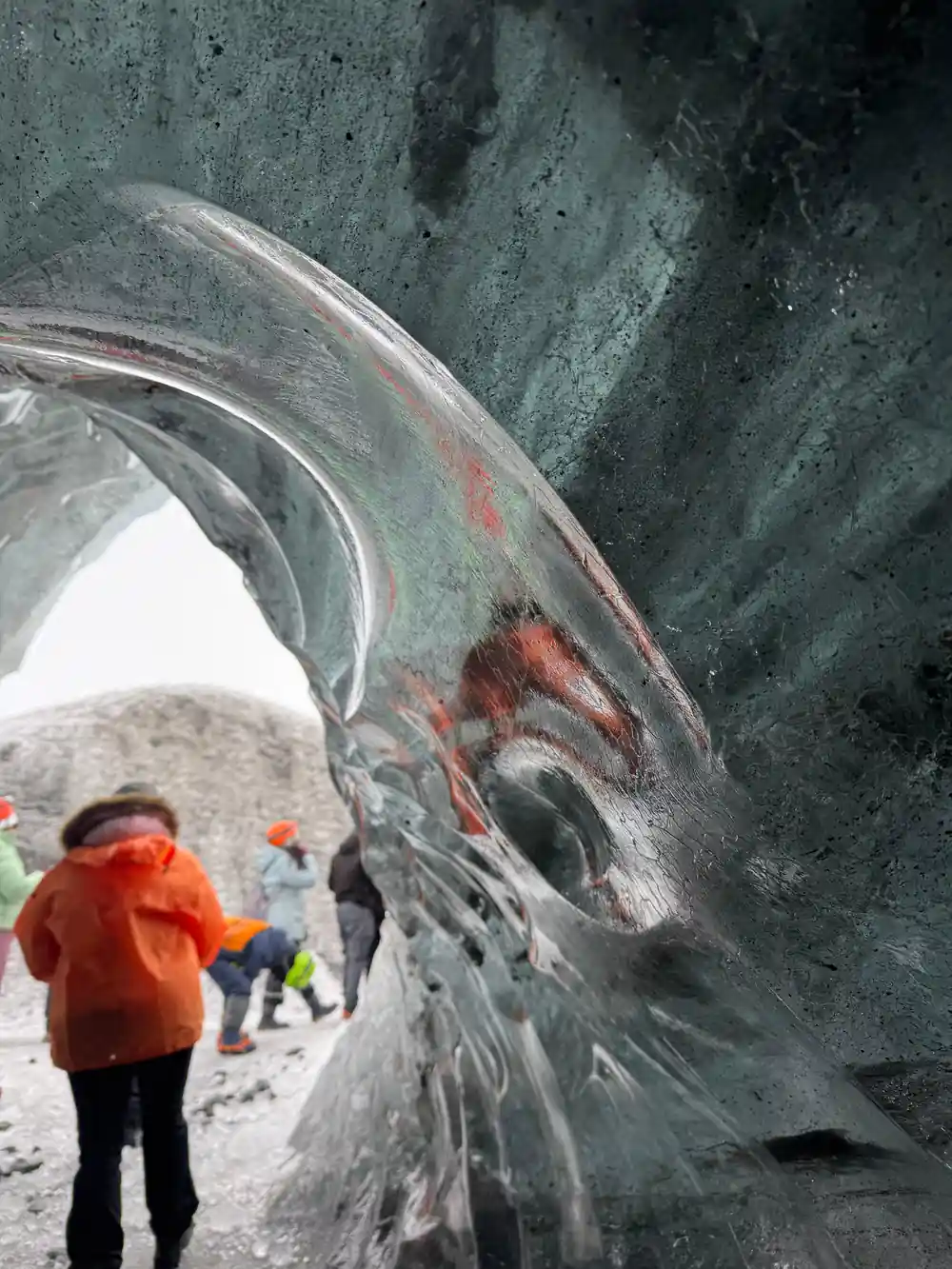
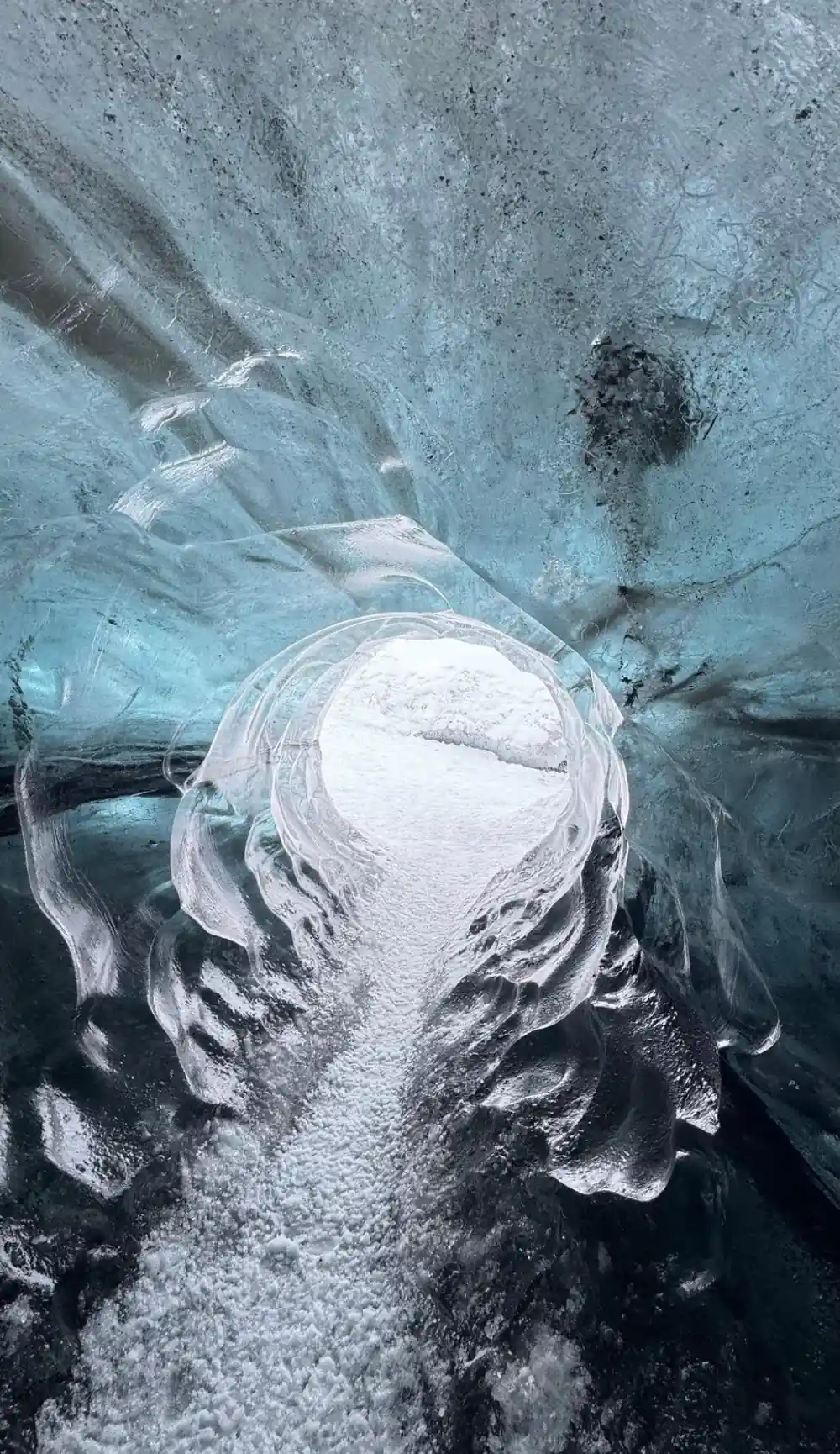
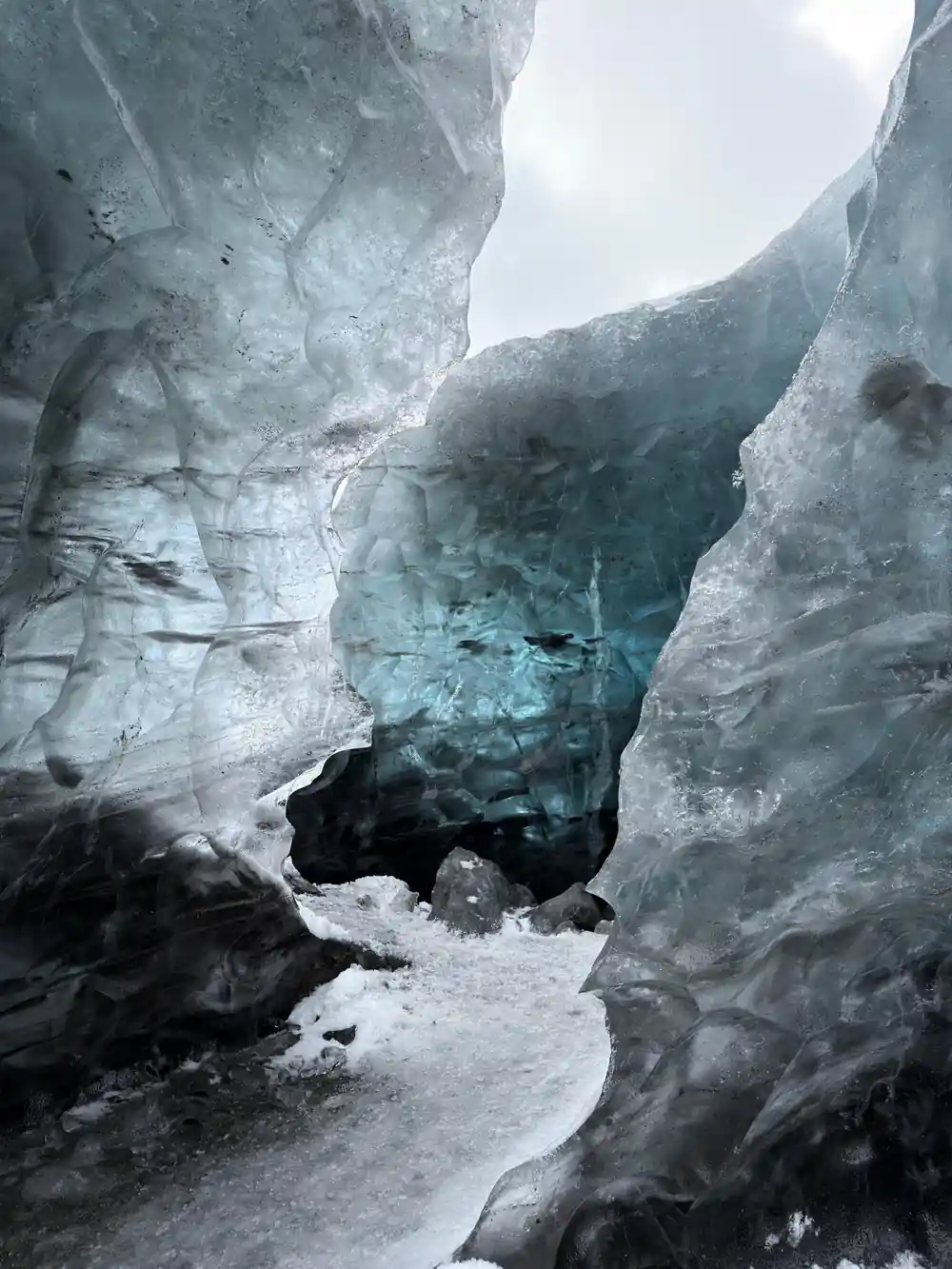
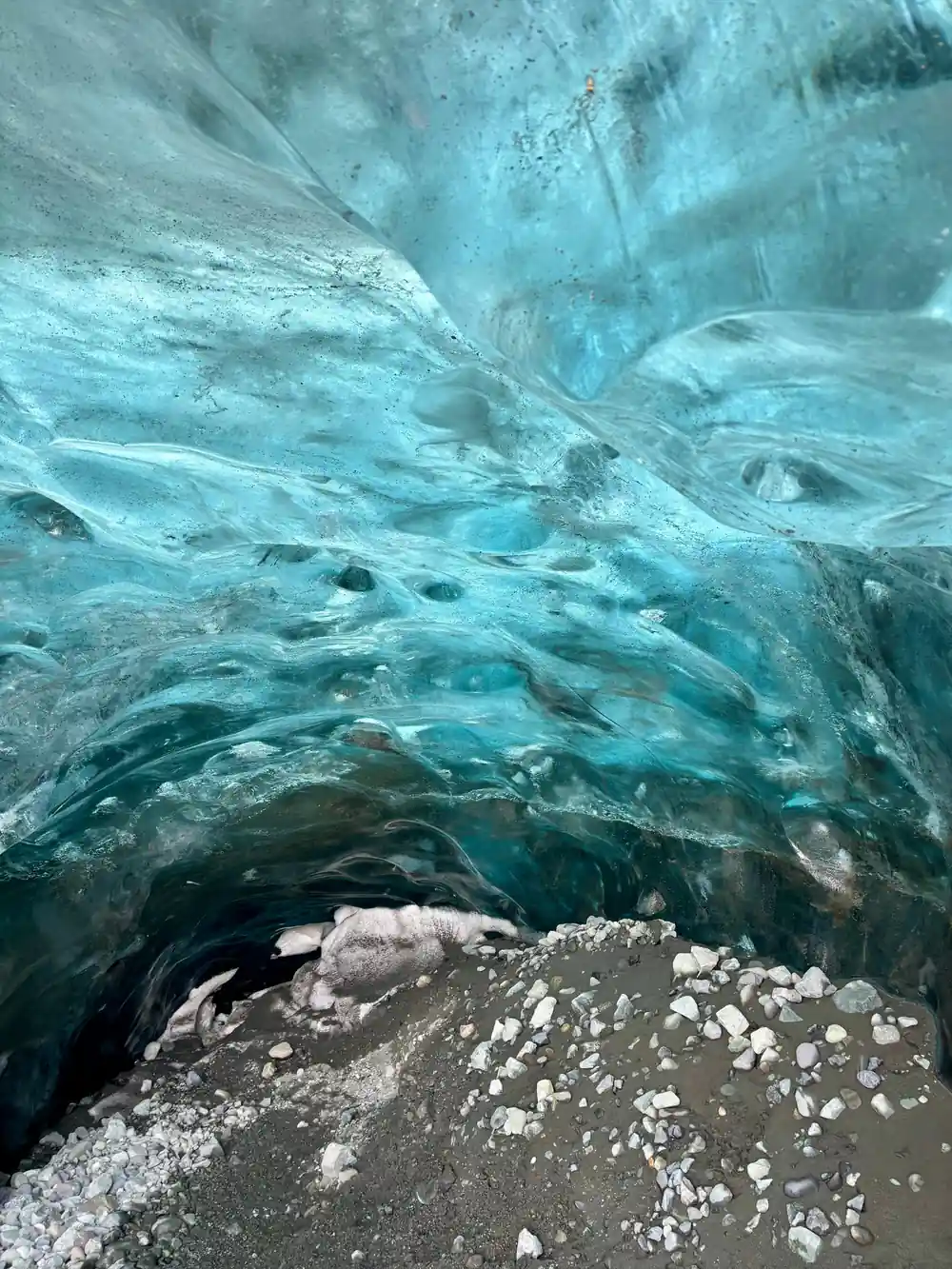
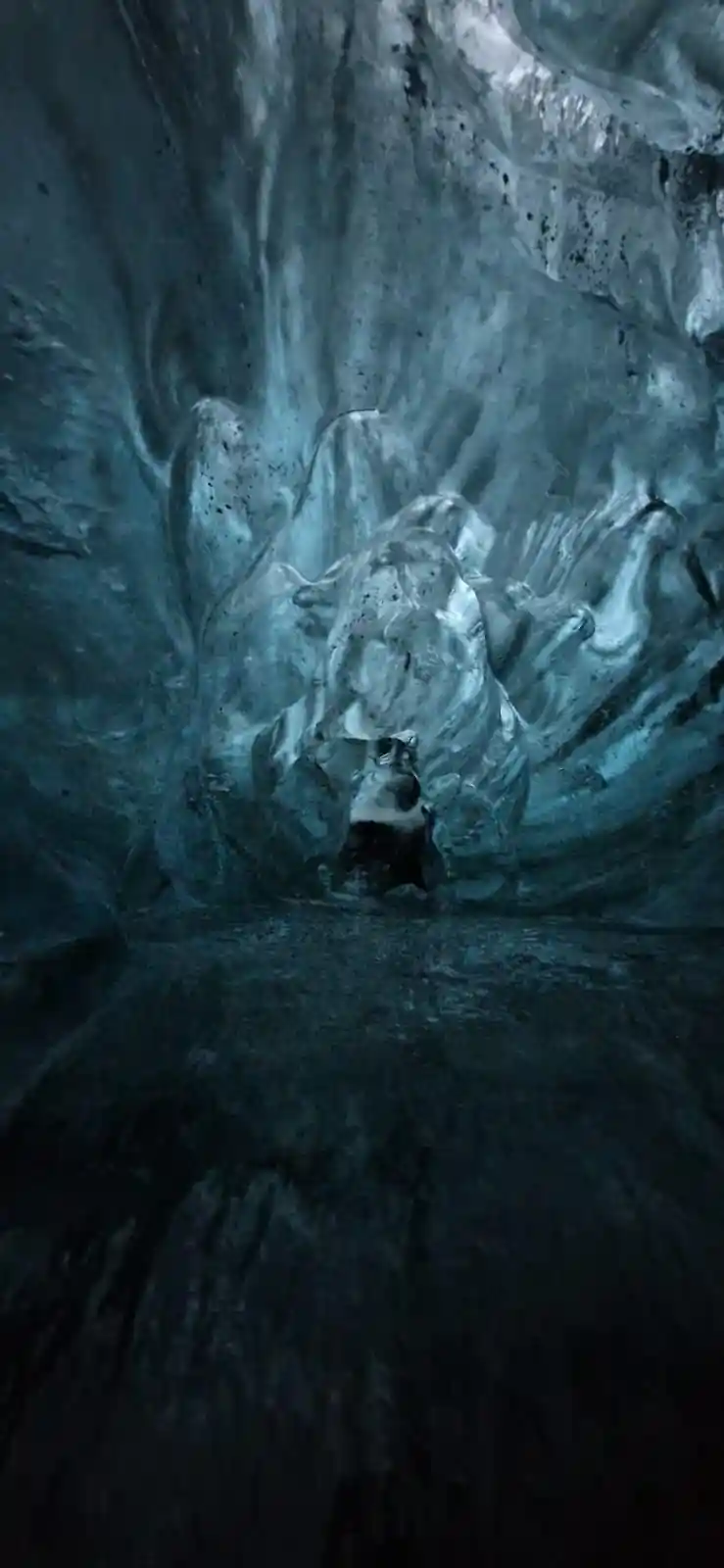
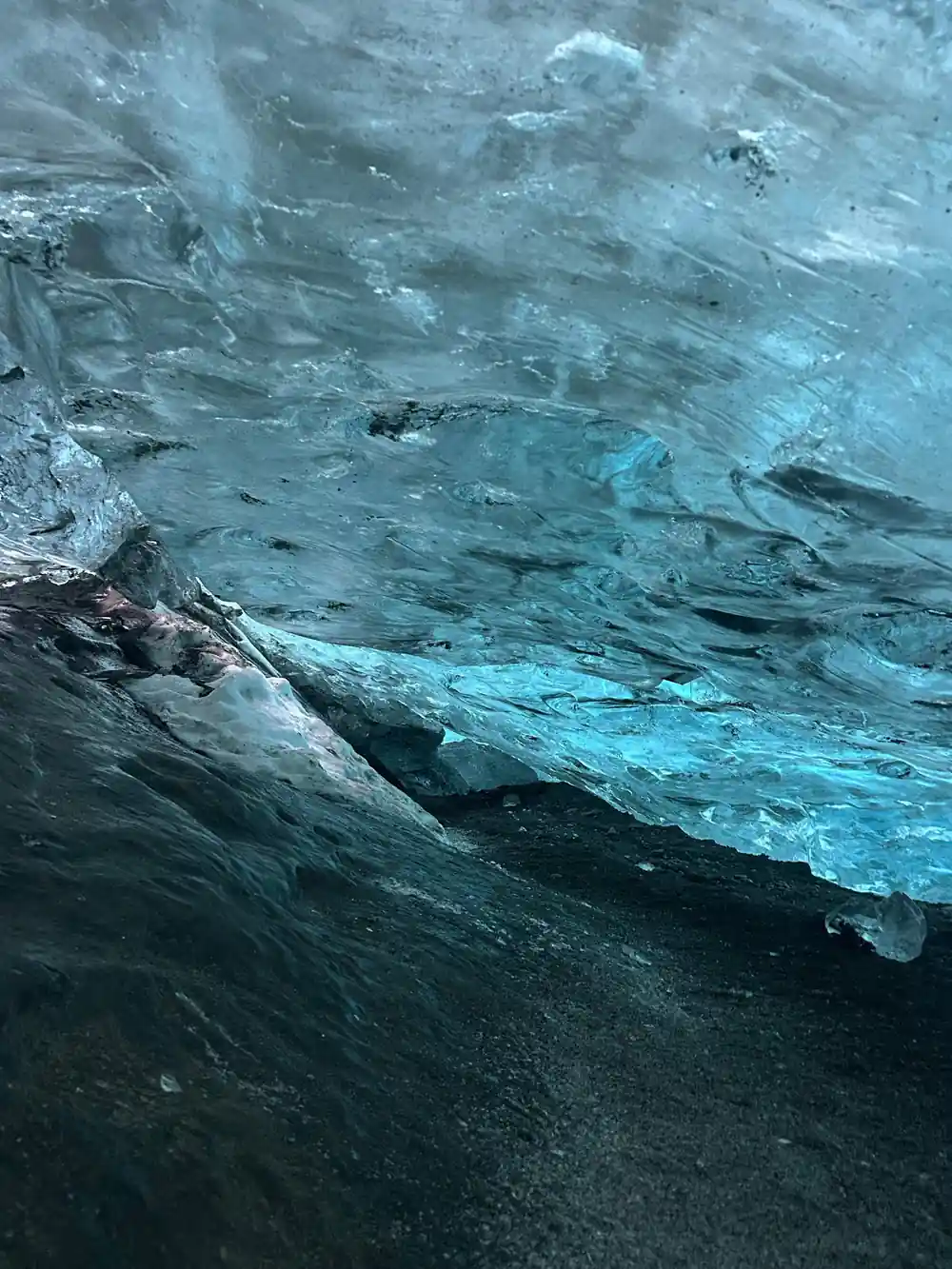
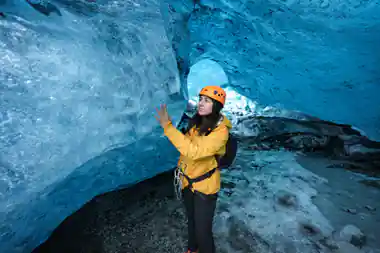
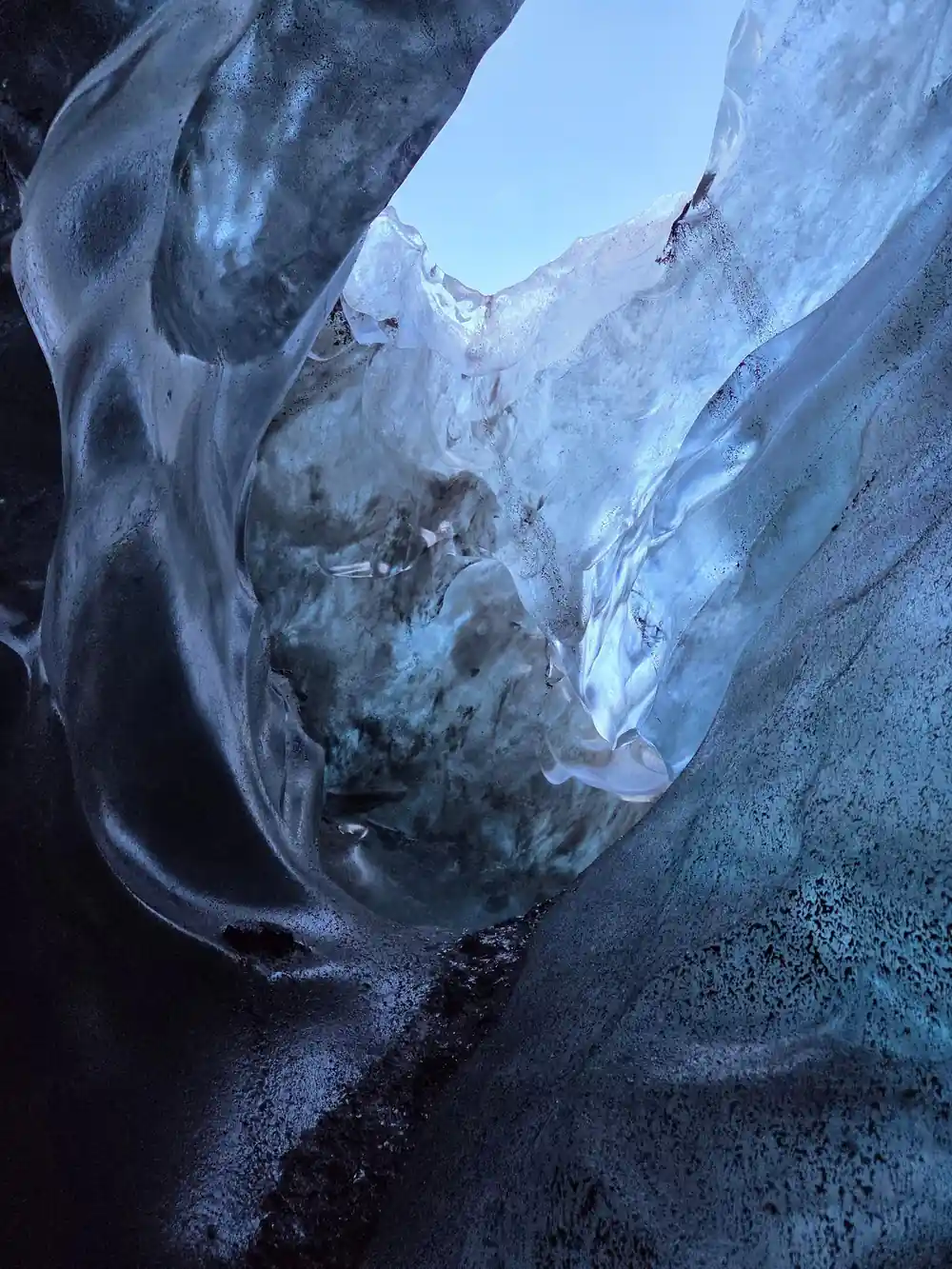
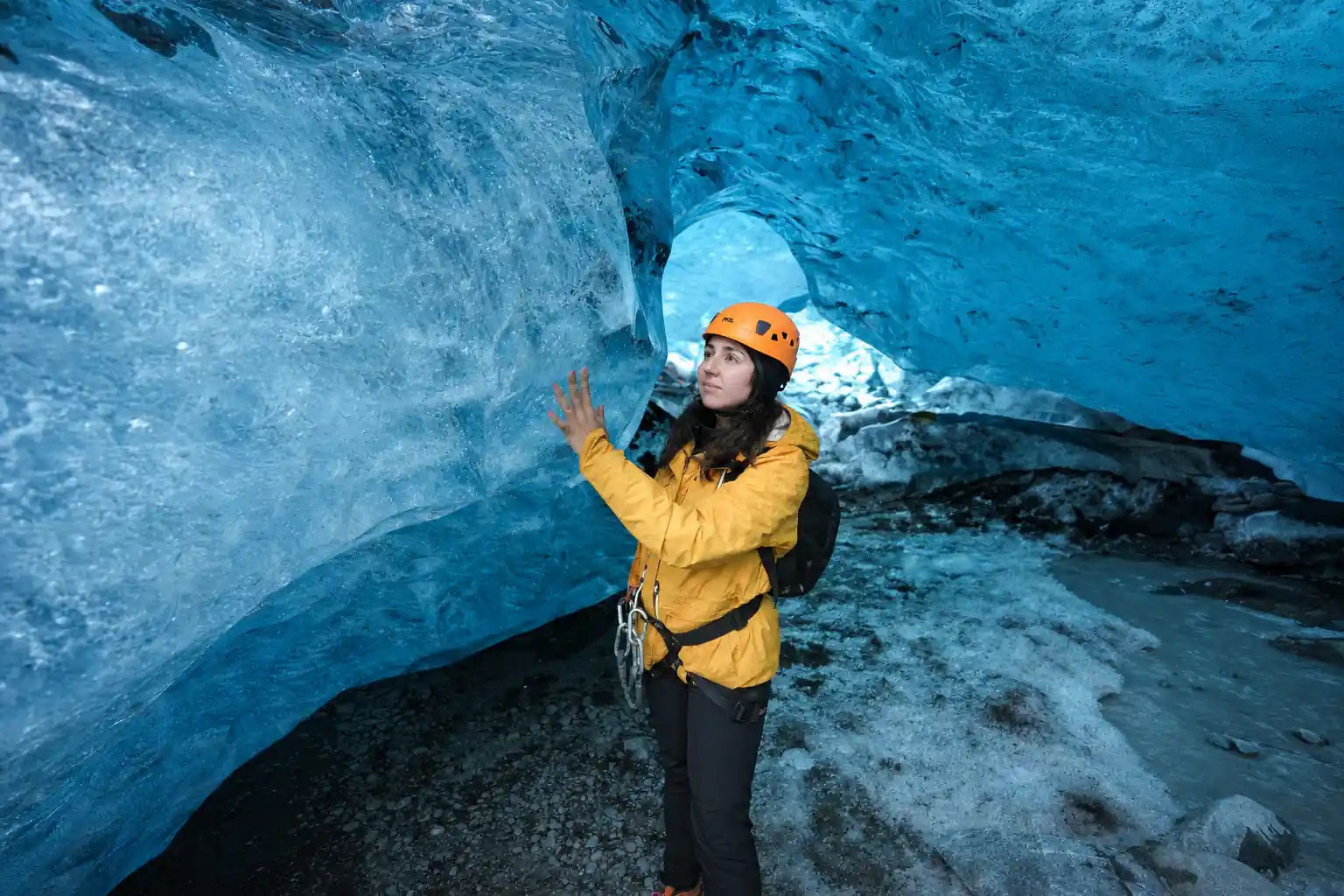
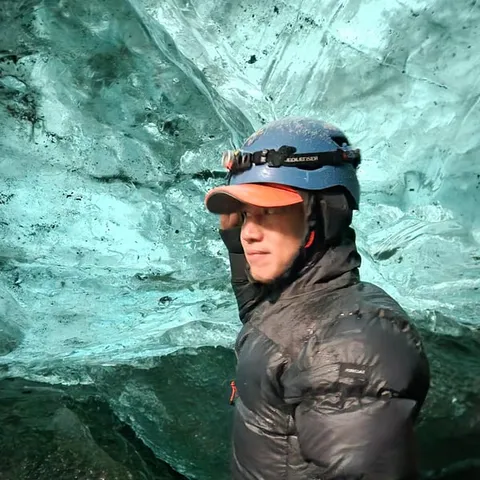
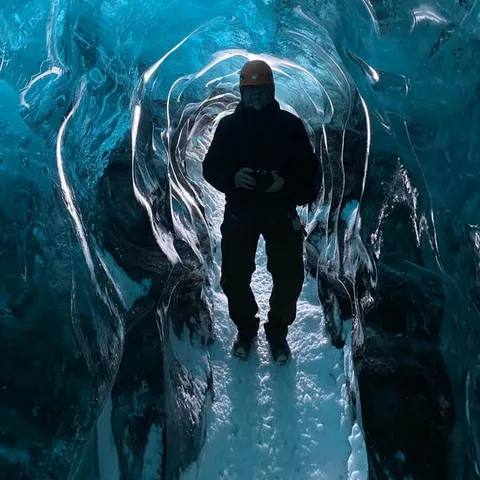
Ice caves are a winter phenomenon. A natural ice cave in Vatnajökull lasts one winter: it forms in October, remains through April, and is taken back by returning meltwater in May.[3] Inside, a sturdy helmet is essential protection against falling ice and low-hanging cave ceilings, and operators generally provide one.[17] The blue light is not a trick: when light hits the large, dense crystals deep in the ice, they absorb long wavelengths and scatter short-waved blue light.[18]
Snow, ice and wind change how the car behaves. Gentle braking, longer stopping distances and a full tank are the basics on the Ring Road, and the open plains east of Vík are where the wind pushes hardest. Keep your plans loose enough to move a day, and remember that a clear forecast in Reykjavík says little about the south coast. If the road looks doubtful, the sensible answer is to stay put and try again tomorrow.
How long ice cave tours from Jökulsárlón last
Ice cave tour prices from Jökulsárlón
From-prices per person:[2][5][6]
When to plan your Jökulsárlón trip
Getting to the lagoon
Plan the drive
From Reykjavík, Route 1 runs about 370 km (230 miles) to the lagoon, roughly 5 hours each way in good conditions.[1]
Break the journey
Overnight in Vík, Skaftafell or Höfn if one long day of driving does not appeal.
Park and walk down
Park beside the lagoon and walk to the shoreline; the icebergs and the bridge are both close.
Find your guide
Ice cave tours meet at Jökulsárlón and transfer by Jeep or SUV into Vatnajökull National Park.[2]
Check conditions
Look at road and weather information before you leave. Late December daylight runs 4 to 5 hours.[4]
Book the ice cave tour, then plan the drive around it
from US$164Reserve now & pay later