The quick version
- Glacier ice absorbs long wavelengths of light and scatters short-waved blue light, which makes the deep ice look blue.[1]
- A natural cave in Vatnajökull forms in October and lasts through April before returning meltwater takes it back in May.[2]
- Some icebergs that calve into Jökulsárlón are thought to be made of ice more than 1,000 years old.[3]
- Jökulsárlón is about 370 km (230 miles) from Reykjavík, and the drive takes roughly 5 hours each way in good conditions.[4]
- The Vatnajökull Ice Cave Guided Tour runs 3 hours from Jökulsárlón with a live English-speaking guide.[5]
- Top choice Vatnajökull Ice Cave Tour from US$164 Duration3 hours[5]Rating4.25 from 2,171 reviews[5]GuideLive tour guide: English[5]CancellationFree cancellation, 24 hours in advance[5] Check availability
- Crystal Ice Cave Super Jeep from US$173 Duration2.5 hours[6]Rating4.21 from 1,751 reviews[6]GuideLive tour guide: English[6]CancellationFree cancellation, 24 hours in advance[6] See this tour
- The Original Ice Cave Tour from US$161 Duration3 hours[7]Rating4.61 from 1,129 reviews[7]GuideLive tour guide: English[7]CancellationFree cancellation, 24 hours in advance[7] See this tour
An ice cave in Vatnajökull typically lasts one winter. The summer meltwater channel that shaped it drains and firms up in October, stabilises through November, holds its coldest and bluest form from December to February, ages through March and April, and is taken back by meltwater in May.
Is the Vatnajökull ice cave tour right for you?
Know this first
Why Glacier Ice Glows Electric Blue
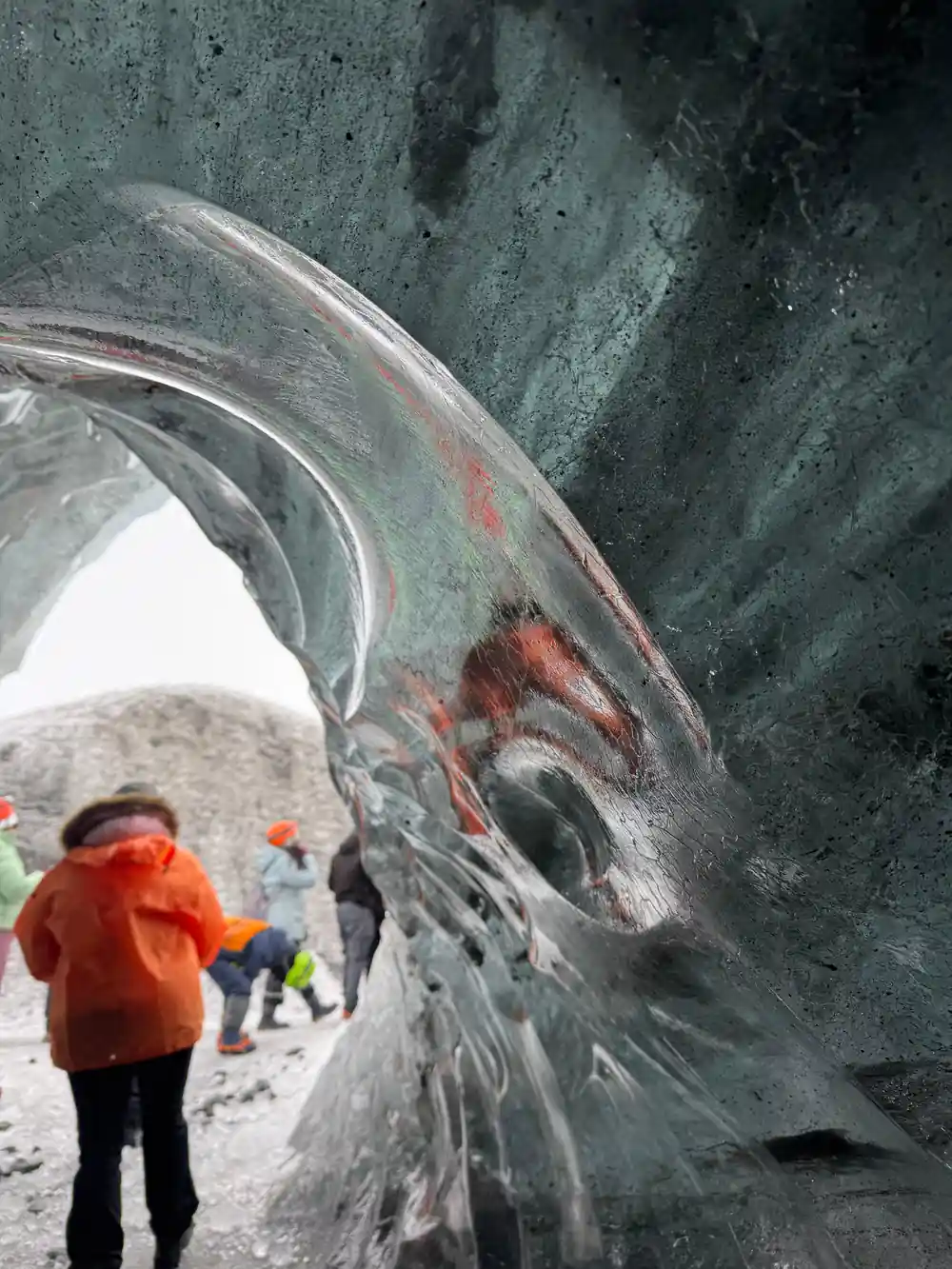
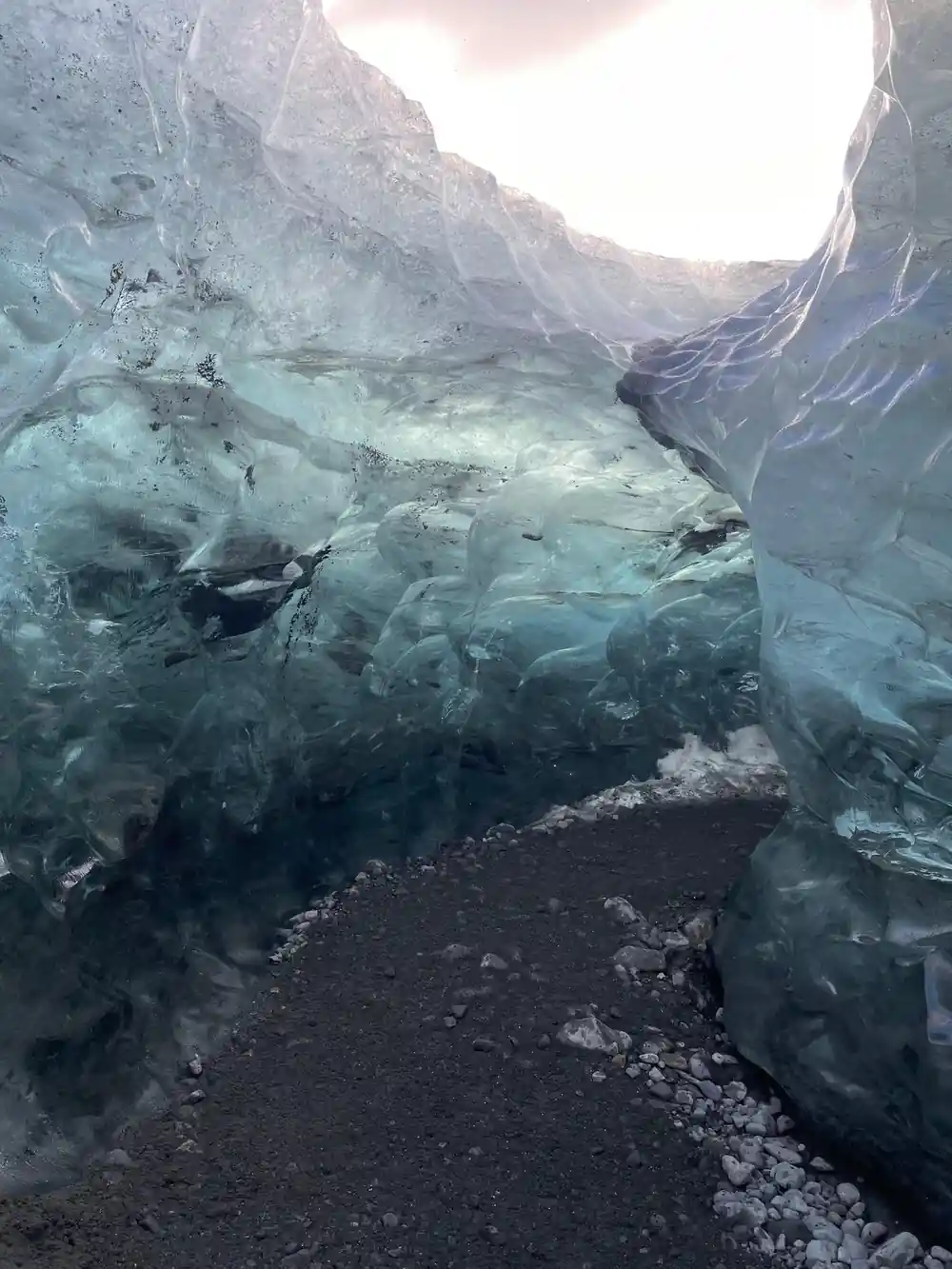
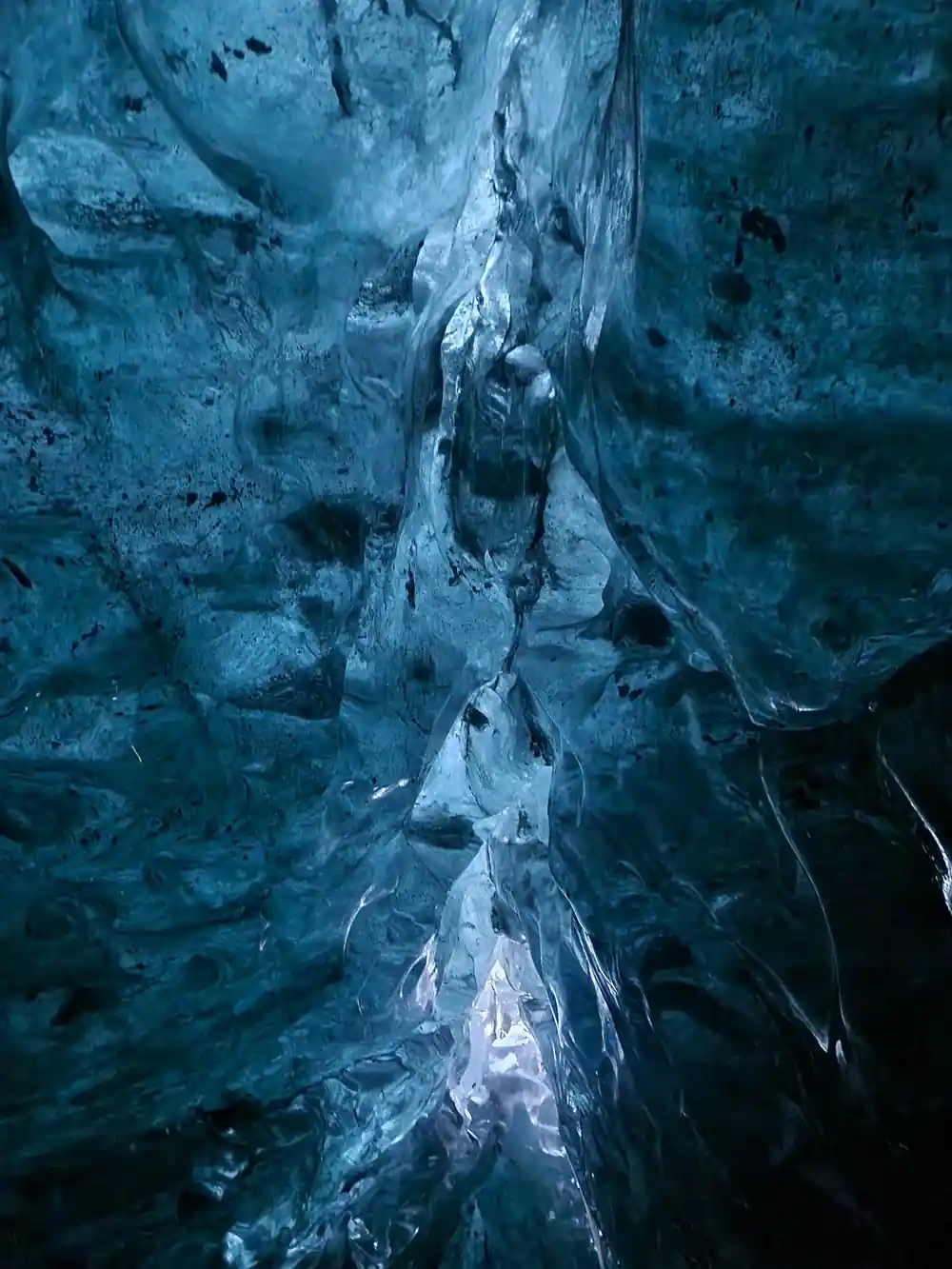
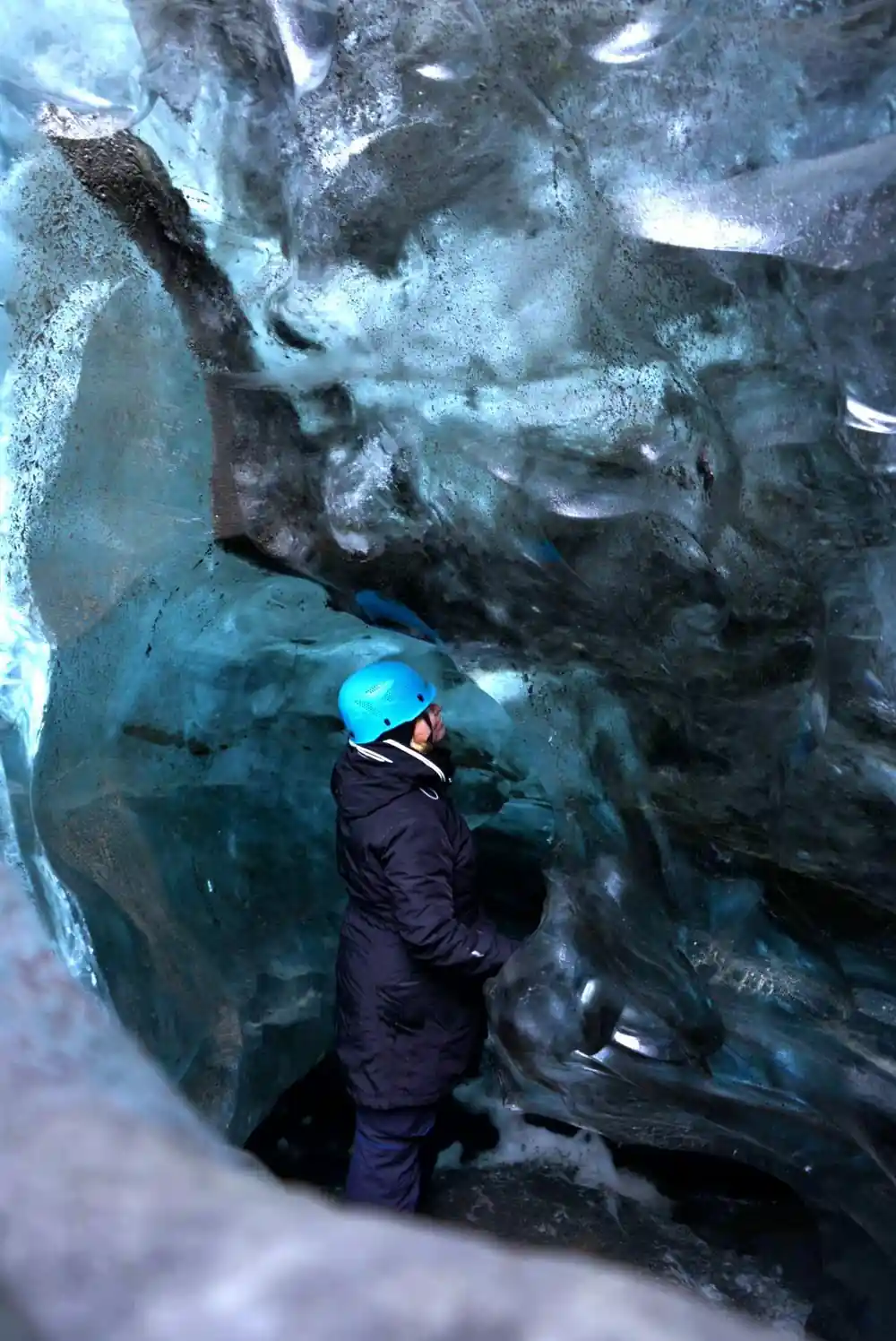
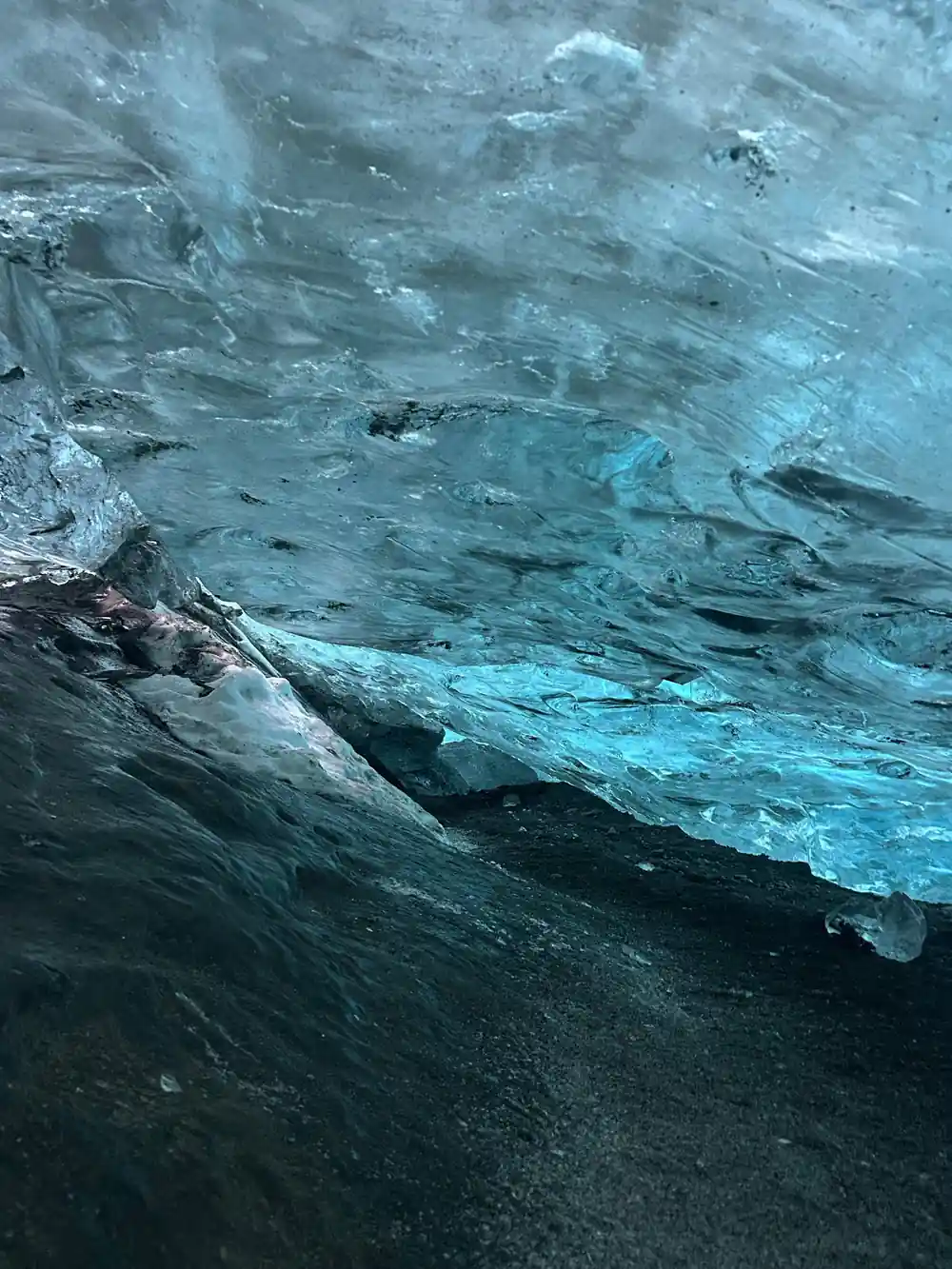
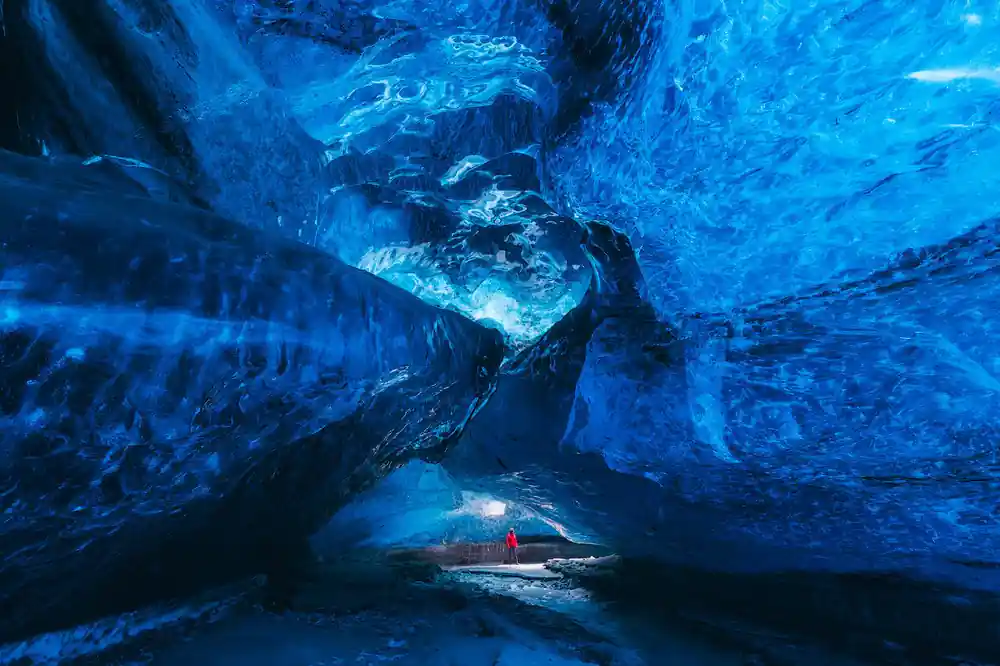
Stand inside a blue ice cave and the colour looks almost artificial, as if a lamp were switched on behind the wall. It is not a trick of photography, and it is not mineral pigment. Glacier ice starts as snow, and as layer after layer is buried the air is pressed out and the crystals grow large and dense. When light hits these crystals, they absorb long wavelengths of light. At the same time, they scatter short-waved blue light, which makes the ice appear blue.[1]
That is why the deepest, most compressed ice usually carries the strongest colour, while thin crusts and fresh snow on top look white or grey. On a bright day the effect is softer; in flat winter light the walls can seem lit from within. Photographers often find the colour reads best when the camera is not pointed at the sky, and that a person standing in the frame gives the blue something to be blue against. Your guide will know which face of the cave is holding the colour that day.
Moulins and the Rivers That Carve Caves
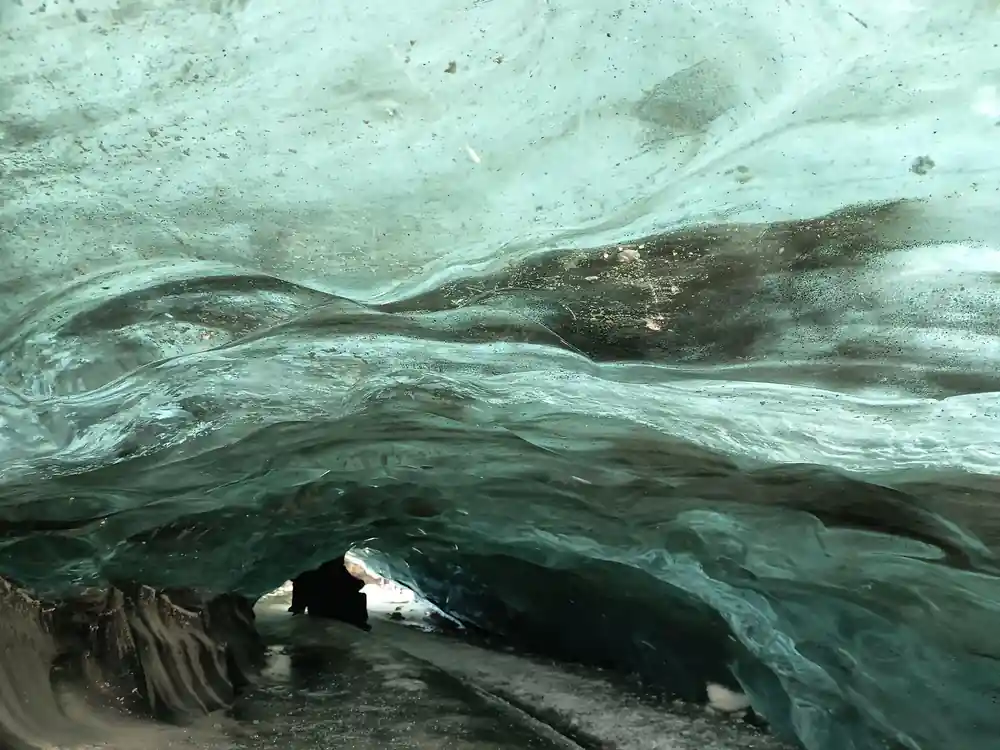
An ice cave is not dug out by a machine and not hollowed by wind. In summer, meltwater on the surface of the ice cap gathers into streams, finds a weakness and drops. A moulin is the vertical shaft that forms where that water plunges through the ice. Below the surface it becomes a subglacial river, running along the bed of the glacier, grinding at the ice and carrying grit and sediment with it. What it leaves behind is a tunnel, and the tunnel is what you walk into in winter.
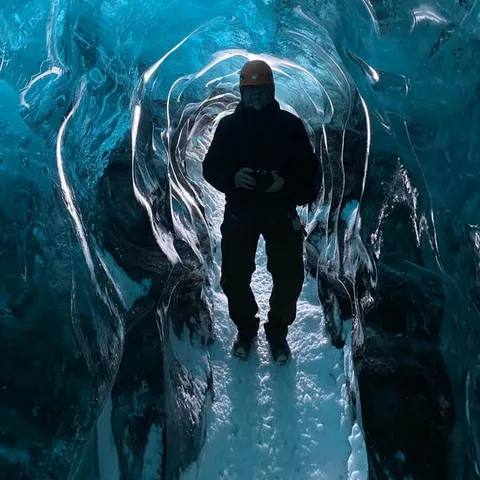
The shapes that result are rounded and glossy rather than jagged. Running water smooths ice much as it smooths stone, so you find arched ceilings, scalloped walls and floors polished by the flow. Narrow sections open suddenly into wider chambers, and the passage follows the water's route downhill. Some caves are shallow and low; others run far under the ice cap. In that sense a cave is a record of where the summer melt went, and of how much of it there was.
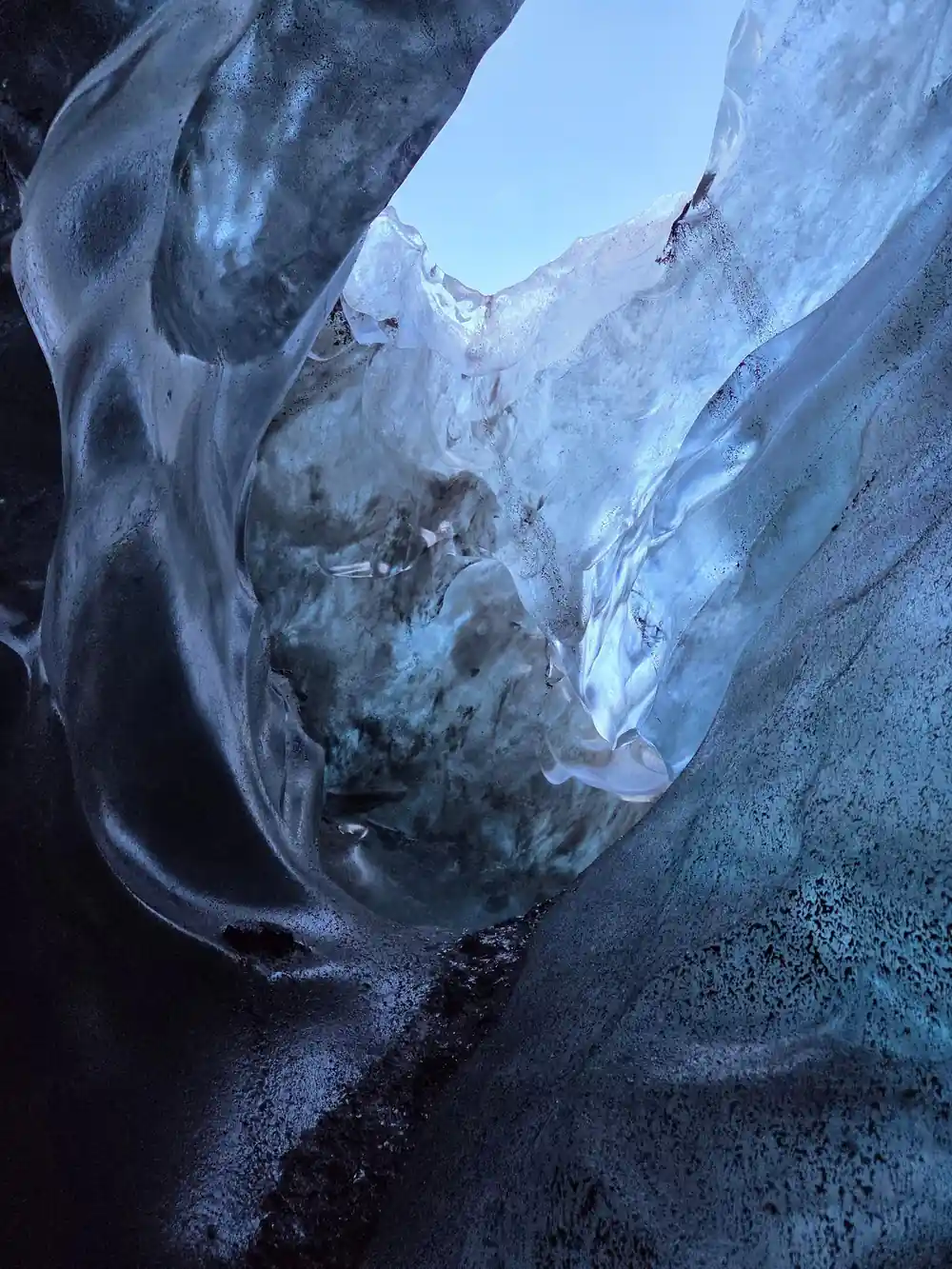
Deep blue ice at Jökulsárlón, shaped by meltwater the winter before
Why Every Cave Must Be Rediscovered Each Winter
The cave you visit this winter did not exist last winter and will not exist next winter. A natural ice cave in Vatnajökull lasts one winter. The meltwater channel that shaped it drains and firms up in October, settles through November, holds its coldest and bluest form from December to February, ages through March and April, and is taken back by meltwater in May.[2]
That cycle means each winter begins with a search for whatever new passage the meltwater left behind. Meltwater, snowfall and the slow movement of the glacier constantly reshape the ice, and a passage that is generous early in the season may close before the winter is over. It also means visits differ each winter. Come back in another season and you will walk into different ice, under a different roof, with a different patch of light on the floor.
The Age of Ice You Touch Inside the Cave
The ice around you is old, and the glacier that holds it is enormous. The thickest point of the Vatnajökull ice cap measures 3,120 feet (950 m) in depth, with an average thickness of 1,250 feet (380 m).[10] Snow buried under that much ice loses its air, and its crystals grow large and clear, which is where the deep colour in the walls comes from. Some of the icebergs that break off into Jökulsárlón are thought to be made of ice more than 1,000 years old.[3]
The lagoon itself is younger than most of the ice that floats in it. Jökulsárlón is 248 meters (814 feet) deep and has quadrupled in size since the 1970s.[3] Its tidal inlet, also called Jökulsárlón Lagoon, was excavated during the last glacial advance, about 26,500 years ago.[11] The lagoon has also had a second life on screen: it was a filming location for A View to a Kill, Die Another Day and Lara Croft: Tomb Raider.[12]
from US$164
The guided tour leaves from Jökulsárlón and runs 3 hours, with a jeep or SUV transfer into Vatnajökull National Park.[5]
The Sounds of a Glacier in Motion
Ice looks static when you stand beside it, but a glacier is a moving body of ice and its edge is always shedding material. Breiðamerkurjökull, the outlet glacier that calves into Jökulsárlón lagoon, has retreated at an annual rate of up to 200-300 m in recent years.[13] Icebergs break away along the waterline and drift out across the water.
Inside a cave, sound is the giveaway that the ice is alive. A deep boom rolls through the walls when a block shifts somewhere above. A sharp crack runs along the ceiling, close and quick. Meltwater drips in the background the whole time you are in there. Guides read those sounds the way a sailor reads weather, and they will not take a group into a passage that is talking too much.
The walk in is short but strange: across moraine, onto the ice, along a line the guide has checked that morning. Then the ceiling closes over, the light turns blue, and the wind outside stops mattering. Crampons crunch, breath shows in the air, and the wall beside you is blue in a way that photographs rarely manage.
Volcanic Ash Frozen in the Ice
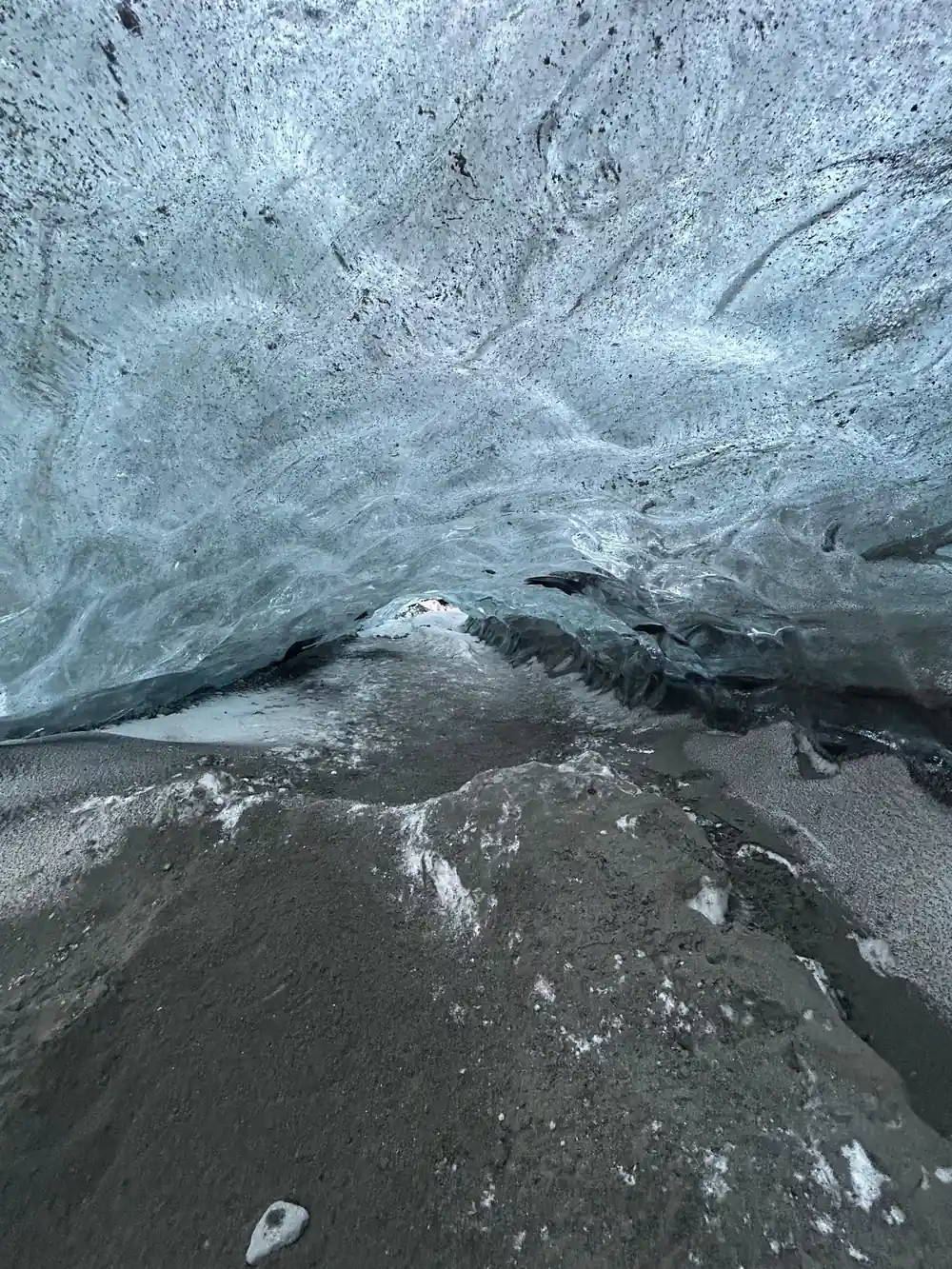
Look closely at a cave wall and you often find dark bands running through the blue. Iceland is a volcanic island, and when an eruption sends ash into the sky some of it lands on the ice cap and is buried by the next winter's snow. The layers stay in the glacier, striped through the ice, until the ice holding them melts or calves away. Inside a cave the bands show as thin grey or black lines, sometimes wavy, sometimes thick, and the blue reads deeper where they cross it.
The same ice ends up on the coast. Diamond Beach in Southeast Iceland is black volcanic sand scattered with clear glacial ice that breaks off from Breiðamerkurjökull, drifts through Jökulsárlón Glacier Lagoon and washes ashore.[14] The lagoon is also home to harbour seals, the most common seal species in the area, which surface between the drifting bergs.[15] An ash band you notice inside the cave may well show up on a berg floating past the car park a few hours later.
Preparing for Your Ice Cave Expedition
The tour handles the hard part. On the Vatnajökull Ice Cave Guided Tour you start at Jökulsárlón and travel by jeep or SUV into Vatnajökull National Park with a live English-speaking guide, and the outing runs 3 hours.[5] Underground the pace is slow and there are plenty of stops, so fitness matters less than warm, dry clothing and a willingness to shuffle along on crampons.
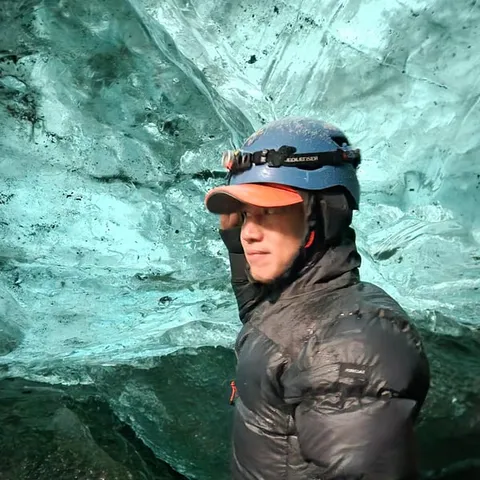
A sturdy helmet is essential inside an ice cave, protecting against falling ice and low-hanging cave ceilings, and it is generally provided by the tour operator.[8] Above the helmet, dress for Iceland rather than for the photograph: a waterproof shell, an insulating mid-layer, a hat, gloves and boots with grip. Average temperatures in Iceland are around 32°F (0°C) in winter, and daylight runs from 4 to 5 hours in late December to about 21 hours by late June, so a winter day is mostly spent before you notice it passing.[9]
The drive is the real commitment. Jökulsárlón is about 370 km (230 miles) from Reykjavík along Route 1, and the drive takes roughly 5 hours each way in good conditions.[4] Many travellers base themselves in the southeast for a night or two rather than do it in a single push. In summer the lagoon gets busy: rangers faced one of their busiest summers on record, with around 100,000 tourists visiting in July alone.[16]
Depths of ice and water at Vatnajökull
Ice thickness of the Vatnajökull ice cap, maximum and average, and the depth of Jökulsárlón lagoon.[3][10]
Ice cave tour from-prices in US dollars
From-prices in US dollars for these GetYourGuide tour listings.[5][6][7][17]
The life of a Vatnajökull ice cave
Planning your ice cave day
Get to the southeast
Jökulsárlón is about 370 km (230 miles) from Reykjavík, roughly 5 hours each way in good conditions.[4]
Book a winter slot
Check availability for starting times and reserve your place; this tour offers free cancellation up to 24 hours in advance.[5]
Meet at Jökulsárlón
The guided tour starts at the lagoon and continues by jeep or SUV into Vatnajökull National Park with a live English-speaking guide.[5]
Put on the helmet
A sturdy helmet protects against falling ice and low cave ceilings, and operators generally provide one.[8]
Step into the blue
Deep, dense ice absorbs long wavelengths of light and scatters short-waved blue light back into the cave.[1]
See the blue ice under Vatnajökull this winter
from US$164Reserve now & pay later