The quick version
- A boat or kayak trip keeps you on the lagoon among the icebergs, while a guided ice cave tour takes you inside the glacier by jeep.
- Natural caves in Vatnajökull form in October and last through April, holding their coldest and bluest ice from December to February.[1]
- Diamond Beach in Southeast Iceland is black volcanic sand strewn with clear ice that drifts through the lagoon before washing ashore.[2]
- Jökulsárlón is about 370 km (230 miles) from Reykjavík, roughly 5 hours each way in good conditions.[3]
- Around 100,000 tourists visited Jökulsárlón in July alone during one of its busiest summers on record.[4]
- Top choice Vatnajokull Ice Cave Tour from US$164 Duration3 hours[5]Rating4.25 from 2,171 reviews[5]GuideLive tour guide: EnglishCancellationFree cancellation up to 24 hours[5] Check availability
- Crystal Ice Cave Super Jeep from US$173 Duration2.5 hours[6]Rating4.21 from 1,751 reviews[6]GuideLive tour guide: EnglishCancellationFree cancellation up to 24 hours[6] See this tour
- The Original Ice Cave Tour from US$161 Duration3 hours[7]Rating4.61 from 1,129 reviews[7]GuideLive tour guide: EnglishCancellationFree cancellation up to 24 hours[7] See this tour
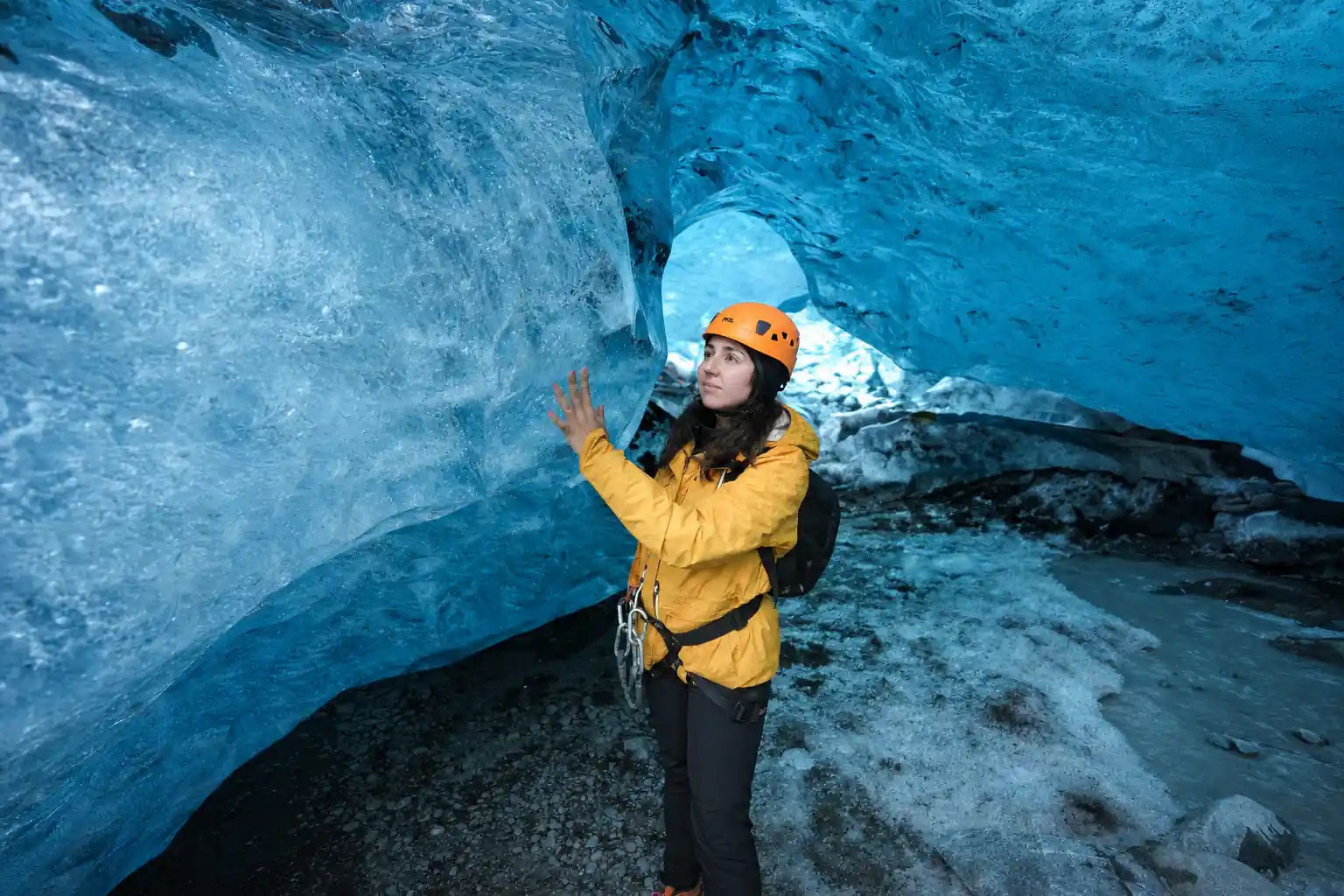
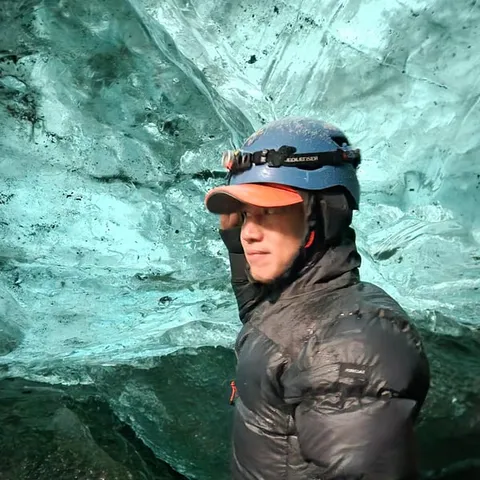
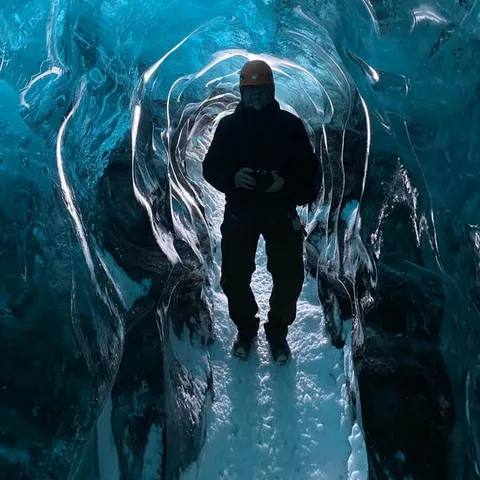
An ice cave in Vatnajökull typically lasts one winter. The summer meltwater channel that shaped it drains and firms up in October, stabilises through November, holds its coldest and bluest form from December to February, ages through March and April, and is taken back by meltwater in May.
Verdict: ice cave in the middle, lagoon on the edges
Know this first
- Check the meeting point on your voucher before you set off for the lagoon
- Reserve now and pay later is offered on the ice cave tour booked from this site
- Compare from-prices across lagoon and glacier listings before you choose
- Book winter and summer dates early if you want a specific departure time
On the day
- Wear the helmet your guide hands out and keep it on inside the cave
- Bring sunglasses, the ice and snow bounce a lot of light back at you
- Dress in warm layers with a waterproof outer shell and gloves
- Stay with your group and follow the line your guide takes across the ice
Ice caves and Jökulsárlón boat tours: which to pick
Jökulsárlón is a glacial lagoon on Iceland's southeast coast, sitting at the edge of the Vatnajökull ice cap where the Breiðamerkurjökull outlet glacier calves icebergs into the water. The lagoon is 248 meters (814 feet) deep and has quadrupled in size since the 1970s.[8] Visitors come for two very different experiences: time on the water among the floating ice, and a guided walk inside a cave in the glacier itself.
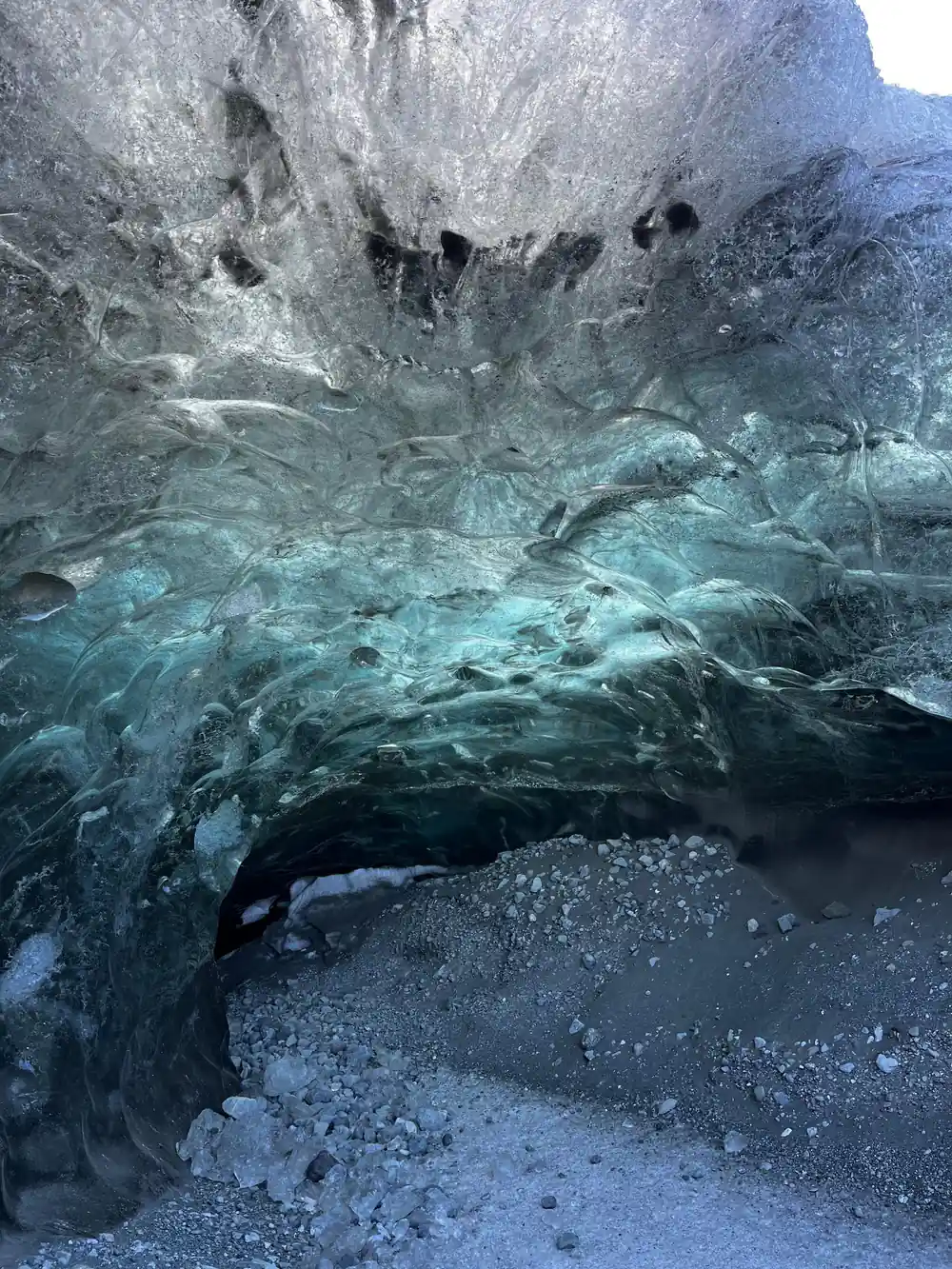
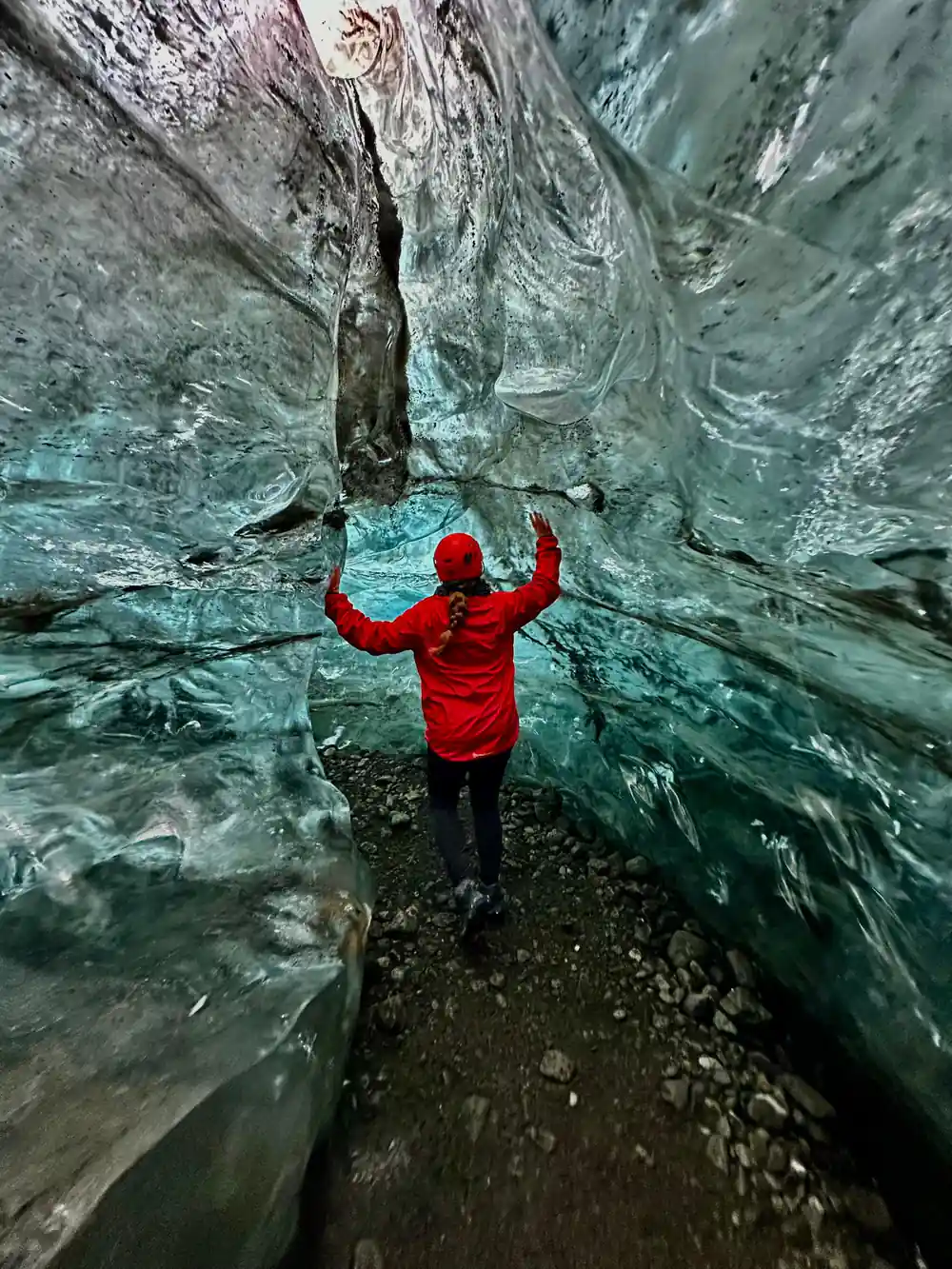
A boat or kayak trip keeps you on the lagoon, looking up at icebergs that have only recently broken away from the glacier face. Some of those icebergs are thought to be made of ice more than 1,000 years old.[8] An ice cave tour goes the other way: you travel by jeep or SUV onto the glacier, put on the gear your guide hands out, and step inside a cavity carved by meltwater, where the walls and ceiling are dense blue ice.
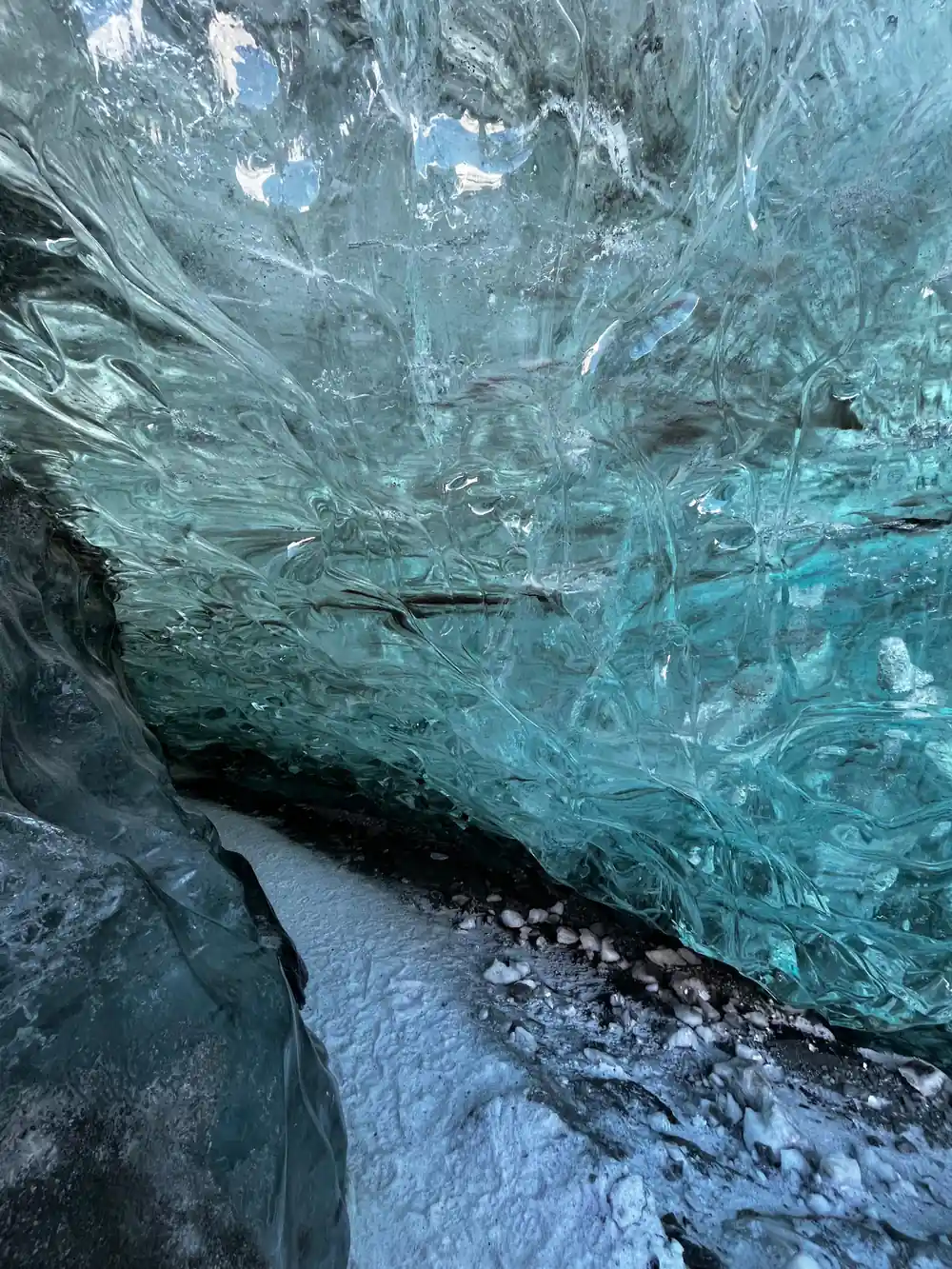
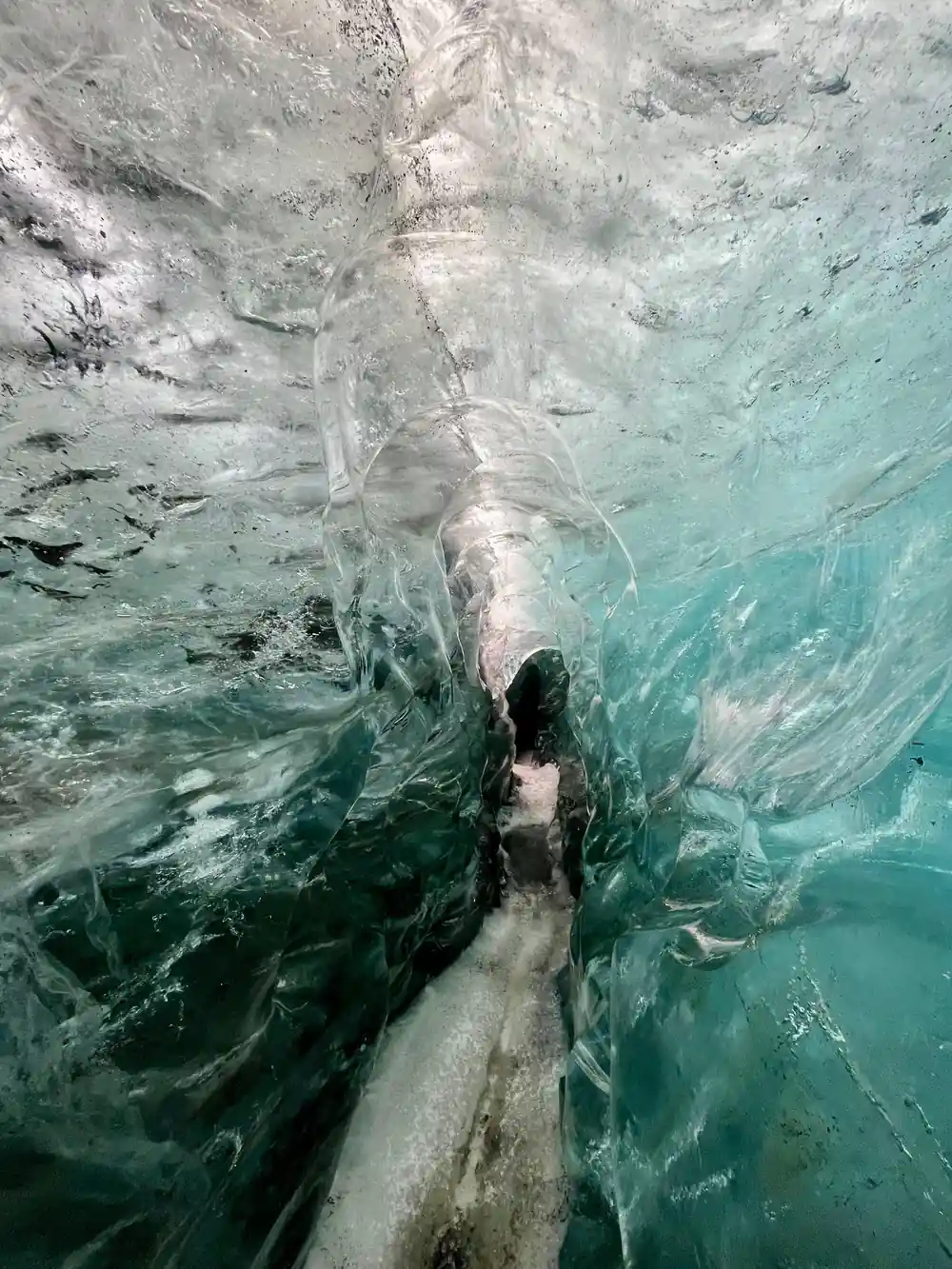
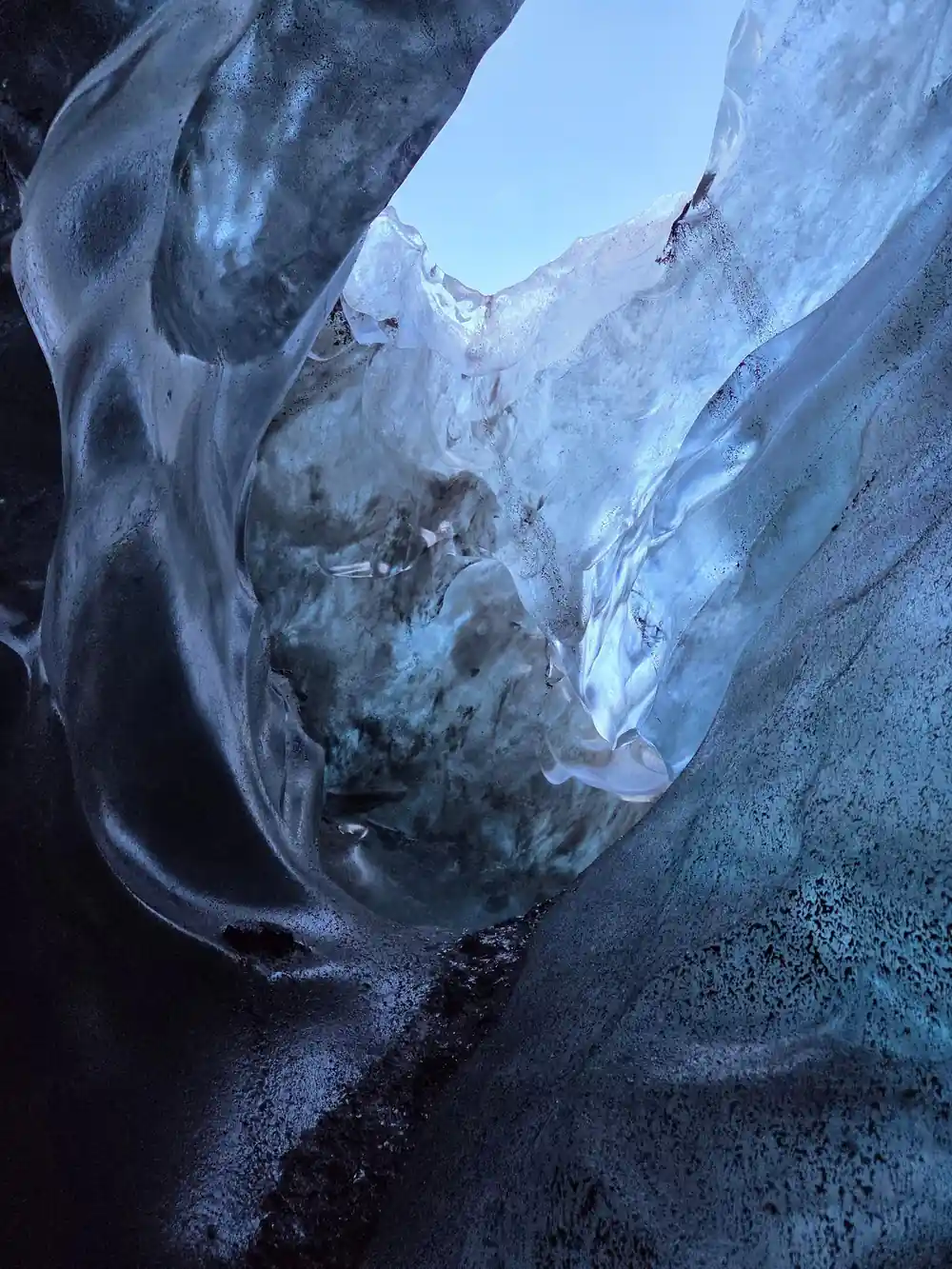
The cave keeps its own calendar. A natural ice cave in Vatnajökull lasts one winter, forming in October and remaining through April before returning meltwater takes it back in May.[1] The blue is a trick of the light: when light hits the large, dense crystals in deep ice, long wavelengths are absorbed and short-waved blue light is scattered.[9] If you are in Iceland in the colder months, the cave and the lagoon can both fit into one trip; outside that window, the water and the beach carry the day.
Amphibian boats and Zodiac tours through the seasons
Amphibian boats are the gentler option on the lagoon: they drive down a ramp, float, and give you a steady platform and a seat while the driver threads between the ice. Zodiacs sit much lower in the water, which puts you almost at eye level with the smaller chunks of ice and leaves you more exposed to spray. The two feel very different on a cold, breezy morning, so pick according to how much water you want on your jacket.
Seals are part of the show. Harbour seals are the most common seal species in the Jökulsárlón area, and they swim and feed in the lagoon.[10] They surface quickly and sink fast, so keep your camera ready and watch the water close to the ice rather than the far horizon.
Iceland's light swings hard across the year. Daylight runs from 4 to 5 hours in late December to about 21 hours by late June, with average winter temperatures around 32°F (0°C).[11] That swing changes how the ice photographs as much as the weather does. July is busy: around 100,000 tourists visited the lagoon in July alone during one of its busiest summers on record.[4] The glacier is changing too, and Breiðamerkurjökull, the outlet glacier that calves into the lagoon, has retreated at an annual rate of up to 200-300 m in recent years.[12]
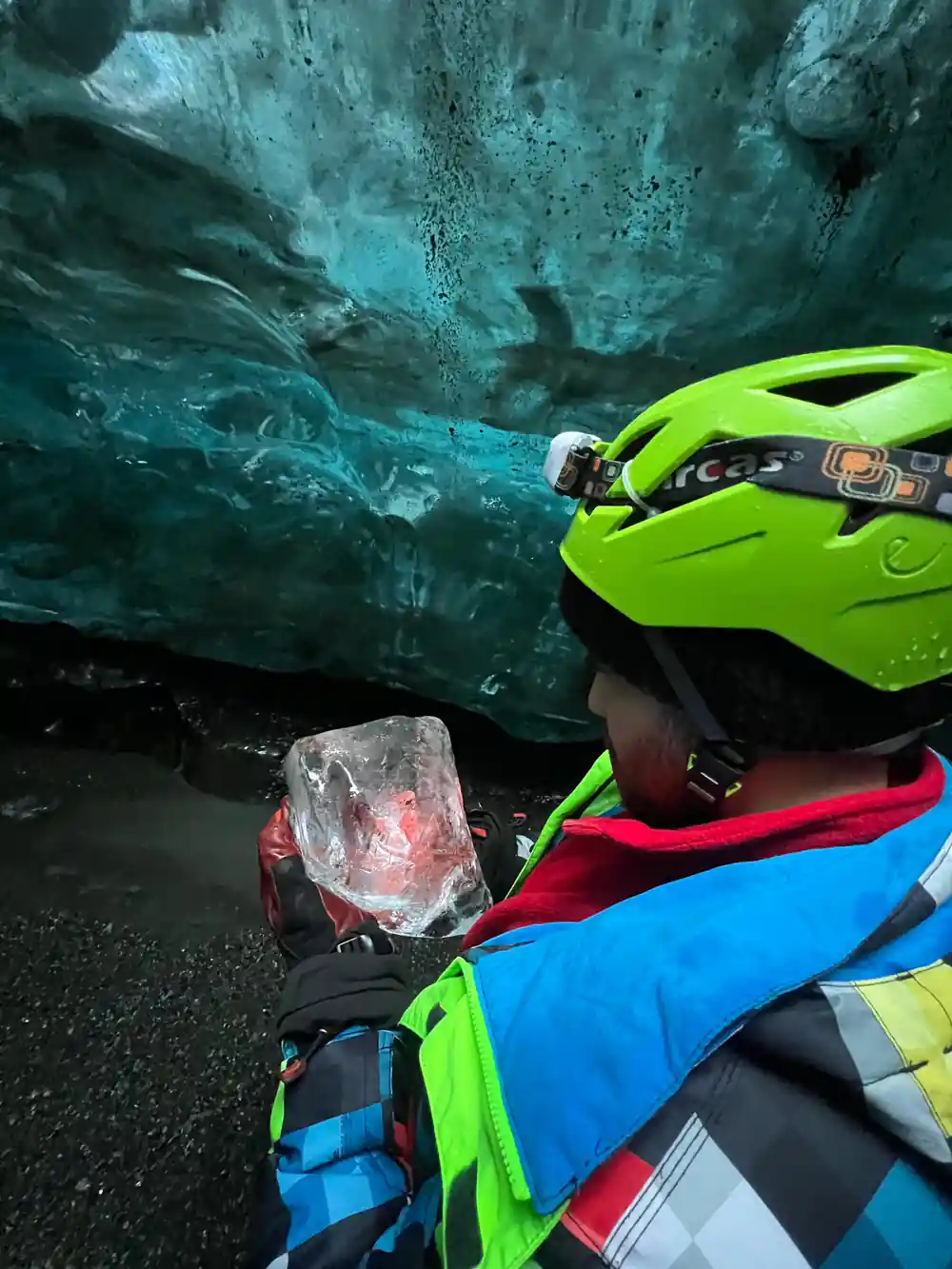
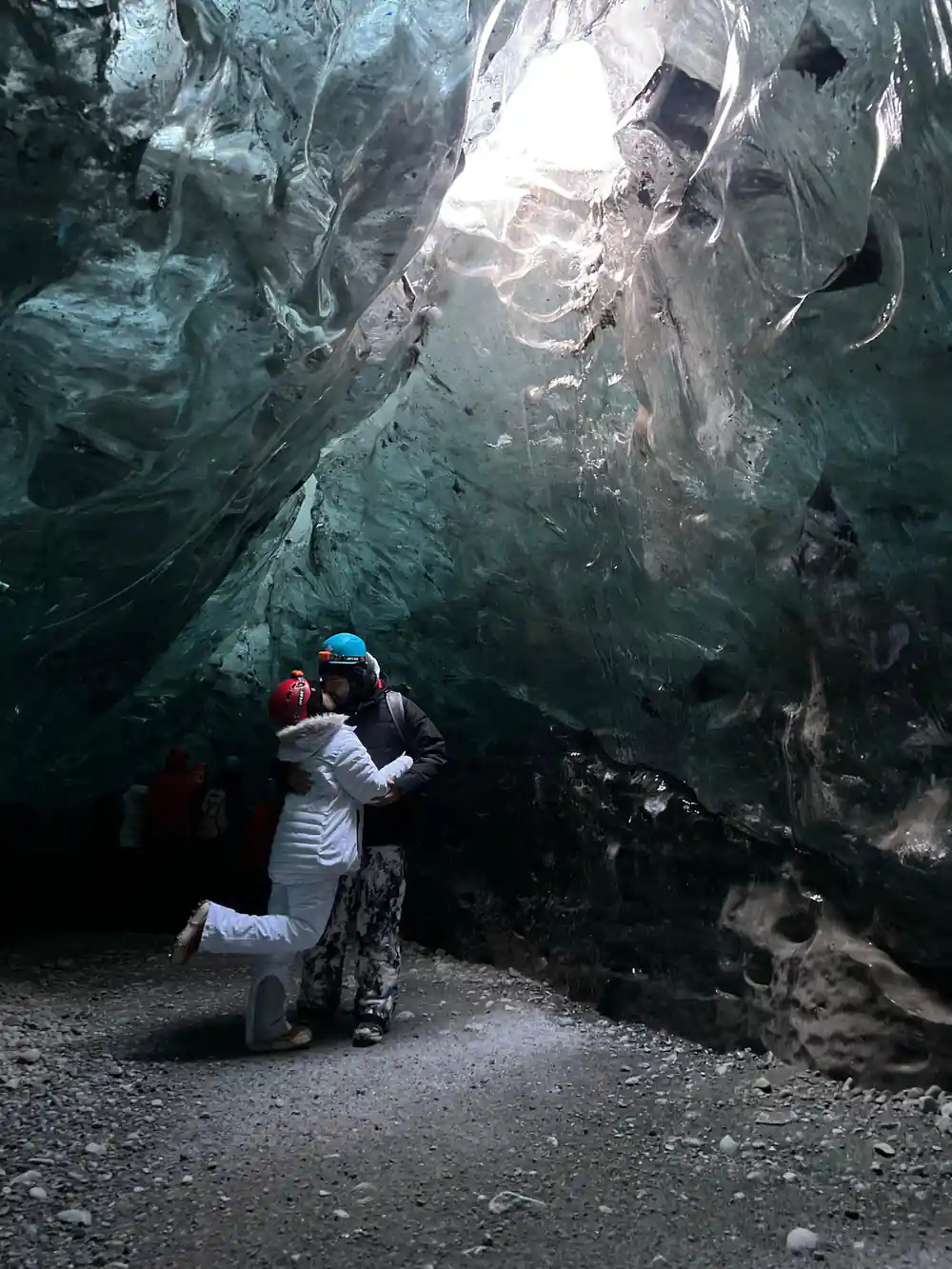
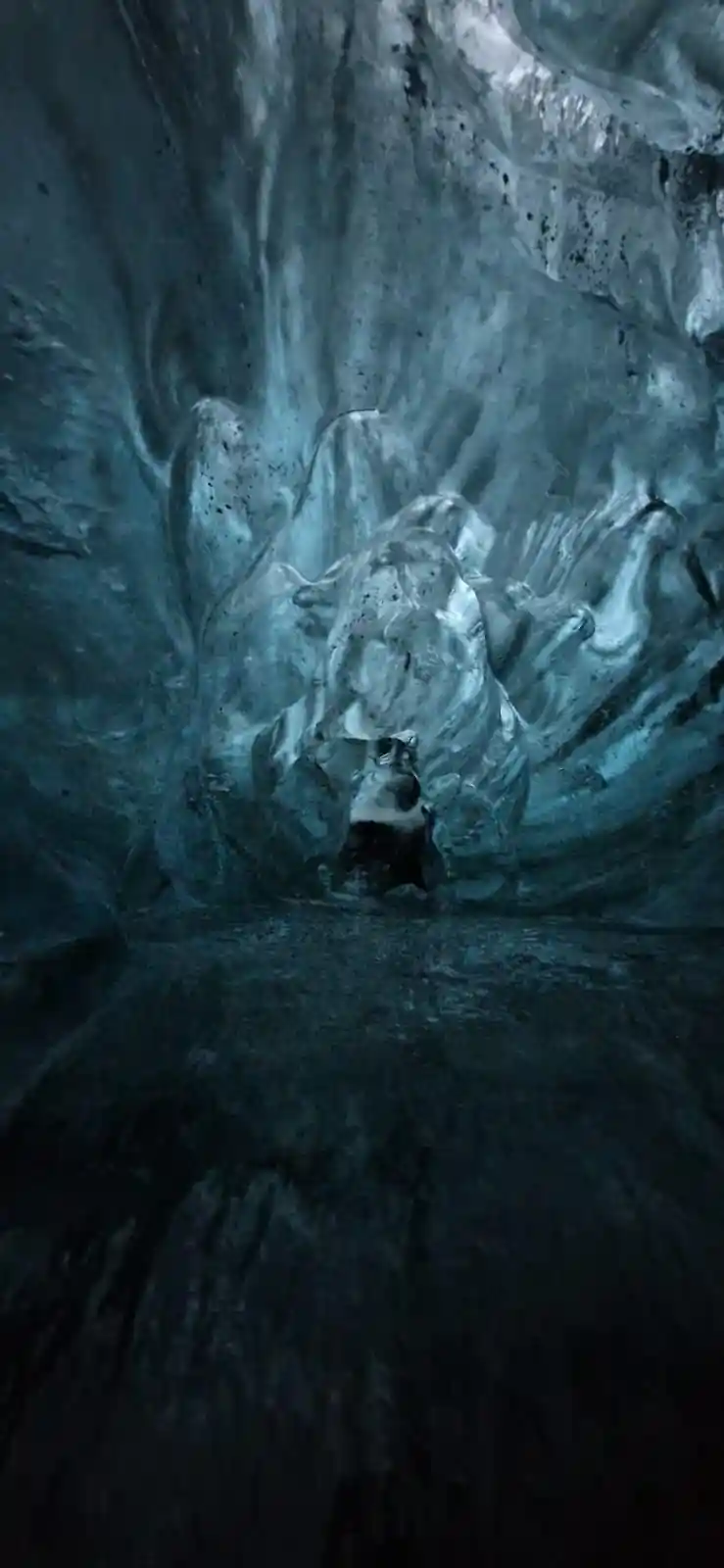
Blue ice inside a Vatnajökull cave, lit only by daylight near the entrance.
Diamond Beach before or after your ice cave tour
Diamond Beach sits in Southeast Iceland, where black volcanic sand is scattered with clear glacial ice. The fragments break off from Breiðamerkurjökull, drift through Jökulsárlón Glacier Lagoon and wash ashore along the coast.[2] The beach and the lagoon are neighbours, so most people walk from one to the other in the same visit rather than choosing between them.
Timing is easier than it looks. Diamond Beach changes by the hour as the tide shifts the ice around, and it is at its most photogenic in low sun. Go before your cave departure if you have a morning slot, or afterwards if the light is already dropping. Never turn your back on the water, because sneaker waves are a real hazard on Iceland's south coast, and the stranded ice on the sand is slippery underfoot.
The tour booked from this site runs 3 hours and starts from Jökulsárlón, following a route out by jeep or SUV to Vatnajökull National Park and back.[5] That leaves a good part of the day free for the beach, and free cancellation up to 24 hours in advance means you can move plans if the weather turns.[5]
Combining an ice cave with Skaftafell hiking
Skaftafell is the other main base in this part of Vatnajökull National Park, and many glacier walks start there. The Skaftafell Glacier Hike runs 3 hours from US$97 and is rated 4.38 from 85 reviews.[13] The small group Blue Ice Glacier Hike takes 3.5 to 4.5 hours from US$105, is limited to 12 participants, and is rated 4.73 from 432 reviews.[14] A third option, the Blue Ice Glacier Hike on Vatnajökull, runs 4 hours from US$106 and is rated 4.71 from 1,357 reviews.[15]
A hiking day and an ice cave day ask different things of you. On a glacier walk you are roped up and moving for hours across ice and ash, with crampons biting into the surface and the wind in your face. Inside a cave you are slower, bent low in places, and standing still to look at the ice above you. Doing both on consecutive days is usually kinder than stacking them into one afternoon.
It helps to know what you are standing on. The thickest point of the Vatnajökull ice cap is 3,120 feet (950 m) deep, with an average thickness of 1,250 feet (380 m).[16] Under all that weight, the ice at depth is pressed dense and clear, and the surface you walk on sits above it like a lid.
from US$164
The tour booked from this site runs 3 hours with an English speaking guide and free cancellation up to 24 hours in advance.[5]
Which Jökulsárlón activity suits families with younger children
Short trips on the water are often the easiest sell for young children. The Jökulsárlón Glacier Lagoon Kayaking Tour runs 1.5 hours from US$159 and is rated 4.66 from 325 reviews.[17] The Vatnajökull National Park Glacier Lagoon Kayaking Tour is also 1.5 hours, starts from US$167, and is limited to 6 participants.[18]
On the glacier side, gentler walks are available. The Vatnajökull Easy Level Glacier Hike runs 3 hours from US$132 and is rated 4.57 from 33 reviews.[19] The Short Glacier Encounter Walk with 4x4 transfer takes 2.5 hours, starts from US$121, and is rated 4.83 from 219 reviews.[20]
Ice cave tours from Jökulsárlón commonly run 2.5 to 3 hours[5][6], including a jeep transfer to the glacier and a slow walk inside. Children who are happy in a helmet and can follow a guide's line through a narrow space usually manage well, while children who dislike confined spaces or cold hands do better with the lagoon. Check the age limits shown on the listing before you book, and put everyone in waterproof outer layers.
What to expect on the day and what to plan for
The tour booked from this site runs 3 hours with a live English speaking guide, and follows a route from Jökulsárlón by jeep or SUV to Vatnajökull National Park and back.[5] Reserve now and pay later is available, and cancellation is free up to 24 hours in advance for a full refund.[5] Starting times are confirmed when you check availability, so build your day around the slot you are given.
Inside the cave, a sturdy helmet is essential safety equipment, protecting against falling ice and low-hanging ceilings, and it is generally provided by the operator.[21] For everything else, ask what you need to bring when you book. In practice that means warm layers, a waterproof and windproof outer shell, gloves and boots with ankle support that you do not mind getting wet.
An ice cave is not a museum corridor. You will crouch, scramble over uneven ice and stop often, and the light inside shifts from grey to deep blue as you move. Bring a camera you can work with gloves on, and expect the cave to feel colder than the car park, wetter than it looks and quieter than the lagoon outside.
Planning your day: ice cave, lagoon, and beach timing
Distance decides the shape of your trip. Jökulsárlón is about 370 km (230 miles) from Reykjavík, and the drive takes roughly 5 hours each way in good conditions.[3] That is a long spell behind the wheel, so many travellers sleep somewhere along the south coast, or near the lagoon itself, and treat the ice cave day as the centrepiece of the trip.
A workable pattern is to book the cave for the middle of the day, use the morning for the lagoon or a paddle, and finish at Diamond Beach as the light drops. Keep a buffer of an hour or two either side, because jeep transfers run out to the glacier and back and meeting times are fixed once they are confirmed.[5]
This setting has a longer history than the tours suggest. Jökulsárlón's tidal inlet was excavated during the last glacial advance, about 26,500 years ago.[22] The lagoon has had its film moments as well: A View to a Kill, Die Another Day and Lara Croft: Tomb Raider were all shot here.[23] Whatever you book, leave time to simply stand at the water and watch the ice drift past.
How long ice cave and glacier tours from Jökulsárlón last
Compare from-prices per person
Per-person from-prices in US dollars from GetYourGuide listings, so both columns show the same figure:[5][6][7][17][19]
When a Vatnajökull ice cave is at its best
Plan your Jökulsárlón day
Choose your season
A natural ice cave in Vatnajökull forms in October and is taken back by meltwater in May.[1]
Book the cave first
The tour booked from this site runs 3 hours and offers reserve now and pay later.[5]
Add the lagoon
Pair the cave with the lagoon and Diamond Beach on the same day, with a buffer either side.
Layer up properly
Warm layers, a waterproof outer shell and boots with grip matter far more than style here.
Settle the driving
Driving from Reykjavík takes roughly 5 hours each way in good conditions.[3]
Book the Vatnajökull ice cave tour and build your day around it
from US$164Reserve now & pay later