The quick version
- Jökulsárlón: Vatnajökull Ice Cave Guided Tour, 3 hours from US$164, with a live English speaking guide and a 4.25 rating from 2,171 reviews.[1]
- It meets at Jökulsárlón and uses a jeep or SUV transfer into Vatnajökull National Park and back again.[1]
- A natural ice cave in Vatnajökull lasts one winter, forming in October and being taken back by returning meltwater in May.[2]
- Reserve now and pay later, with free cancellation up to 24 hours in advance for a full refund.[1]
- Jökulsárlón is about 370 km (230 miles) from Reykjavík, roughly 5 hours each way in good conditions.[3]
- Top choice Ice Cave Guided Tour from US$164 Duration3 hours[1]Rating4.25 from 2,171 reviews[1]Tour guideLive guide in English[1]CancellationFree up to 24 hours ahead[1] Check availability
- Crystal Ice Cave from US$173 Duration2.5 hours[4]Rating4.21 from 1,751 reviews[4]Tour guideLive guide in English[4]CancellationFree up to 24 hours ahead[4] See this tour
- The Original Ice Cave Tour from US$161 Duration3 hours[5]Rating4.61 from 1,129 reviews[5]Tour guideLive guide in English[5]CancellationFree up to 24 hours ahead[5] See this tour
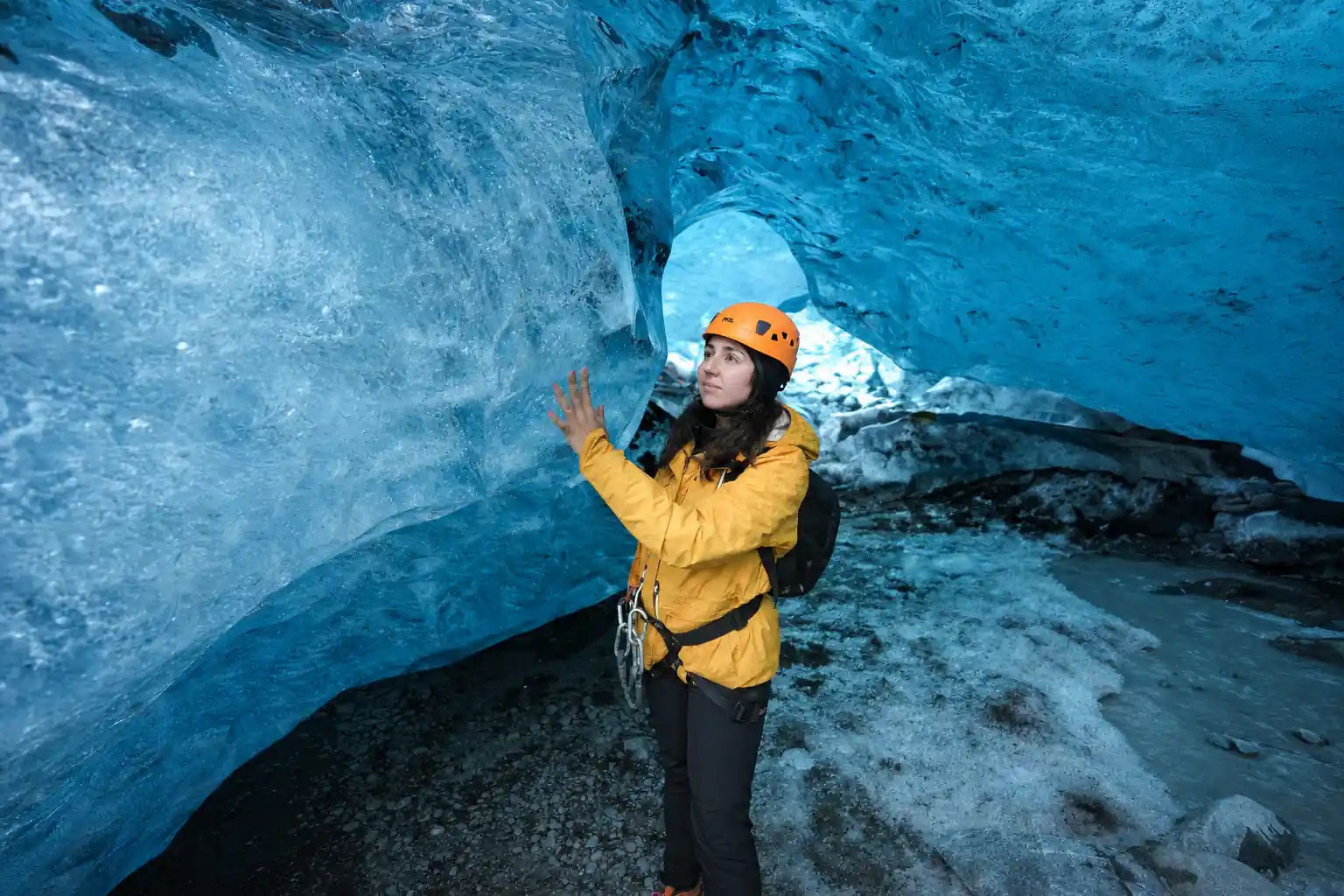
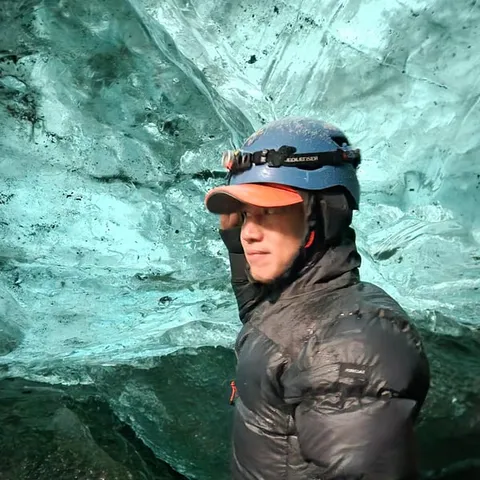
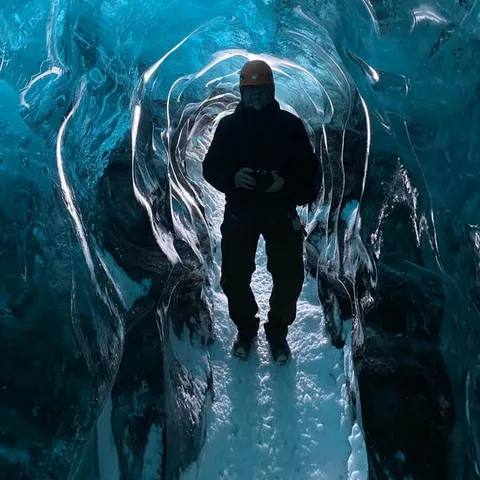
When light hits these crystals, they absorb long wavelengths of light. At the same time, they scatter short-waved blue light, which makes the ice appear blue.
Is the crystal ice cave tour from Jökulsárlón worth it?
Booking essentials
What this ice cave tour from Jökulsárlón actually is
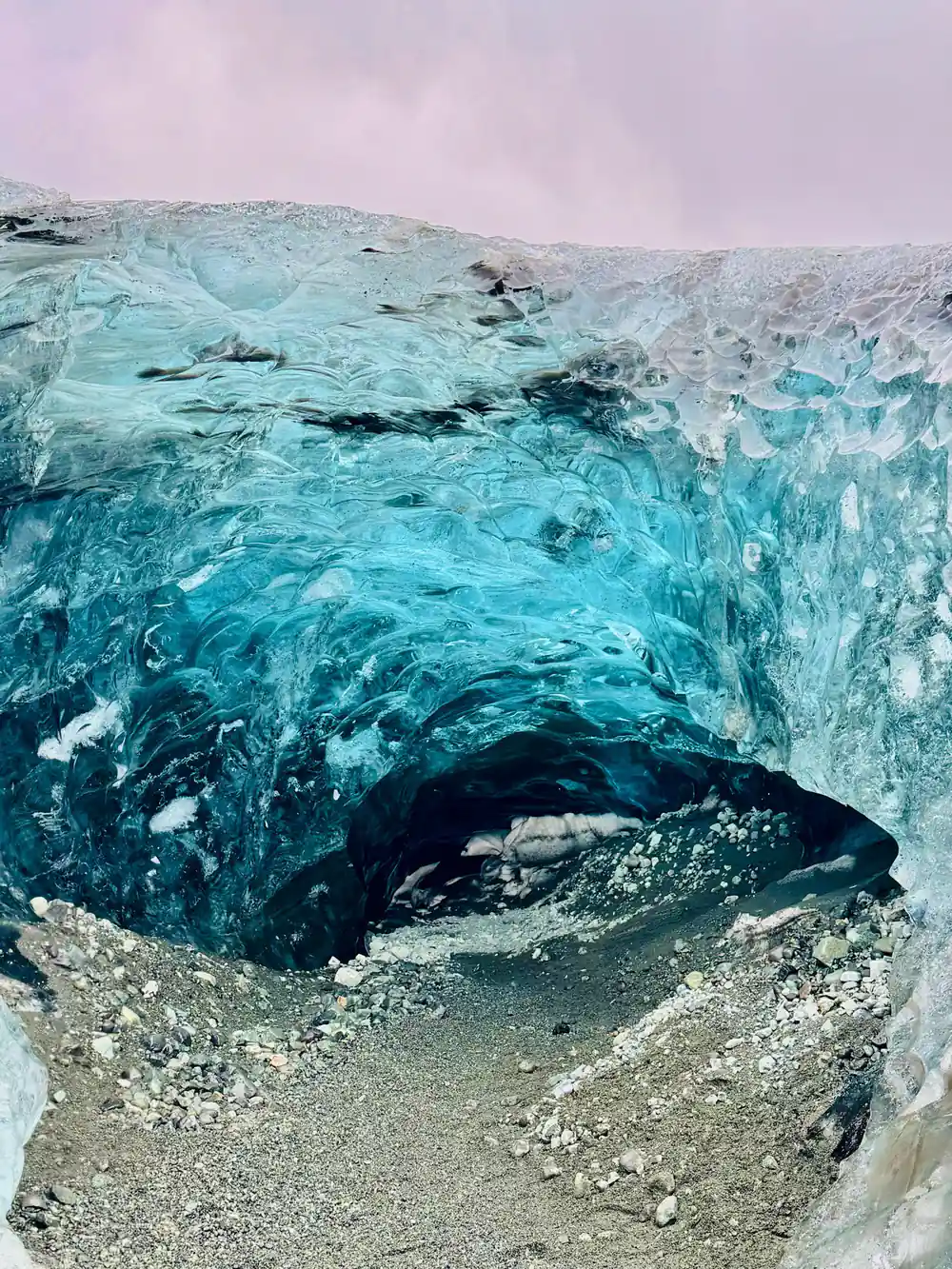
The tour booked here is the Jökulsárlón: Vatnajökull Ice Cave Guided Tour. It runs 3 hours with a live English speaking guide, starts at the lagoon, and uses a jeep or SUV to reach Vatnajökull National Park and bring you back.[1] The route is straightforward: Jökulsárlón, the transfer, the national park, the transfer again.[1] This is not a cave that has stood for centuries. A natural ice cave in Vatnajökull lasts one winter, forming in October and remaining through April before being taken back by returning meltwater in May.[2]
Underneath all of it sits an enormous ice cap. The thickest point of the Vatnajökull ice cap is 3,120 feet (950 m) deep, with an average thickness of 1,250 feet (380 m).[8] The deep interior is where the colour comes from. Glacier ice appears blue because when light hits the large, dense crystals in the deep ice, they absorb long wavelengths of light and scatter short-waved blue light.[9] Some of what you see is old ice: some icebergs that calve into Jökulsárlón are thought to be made of ice more than 1,000 years old.[10]
Why the ice is blue and why the cave changes
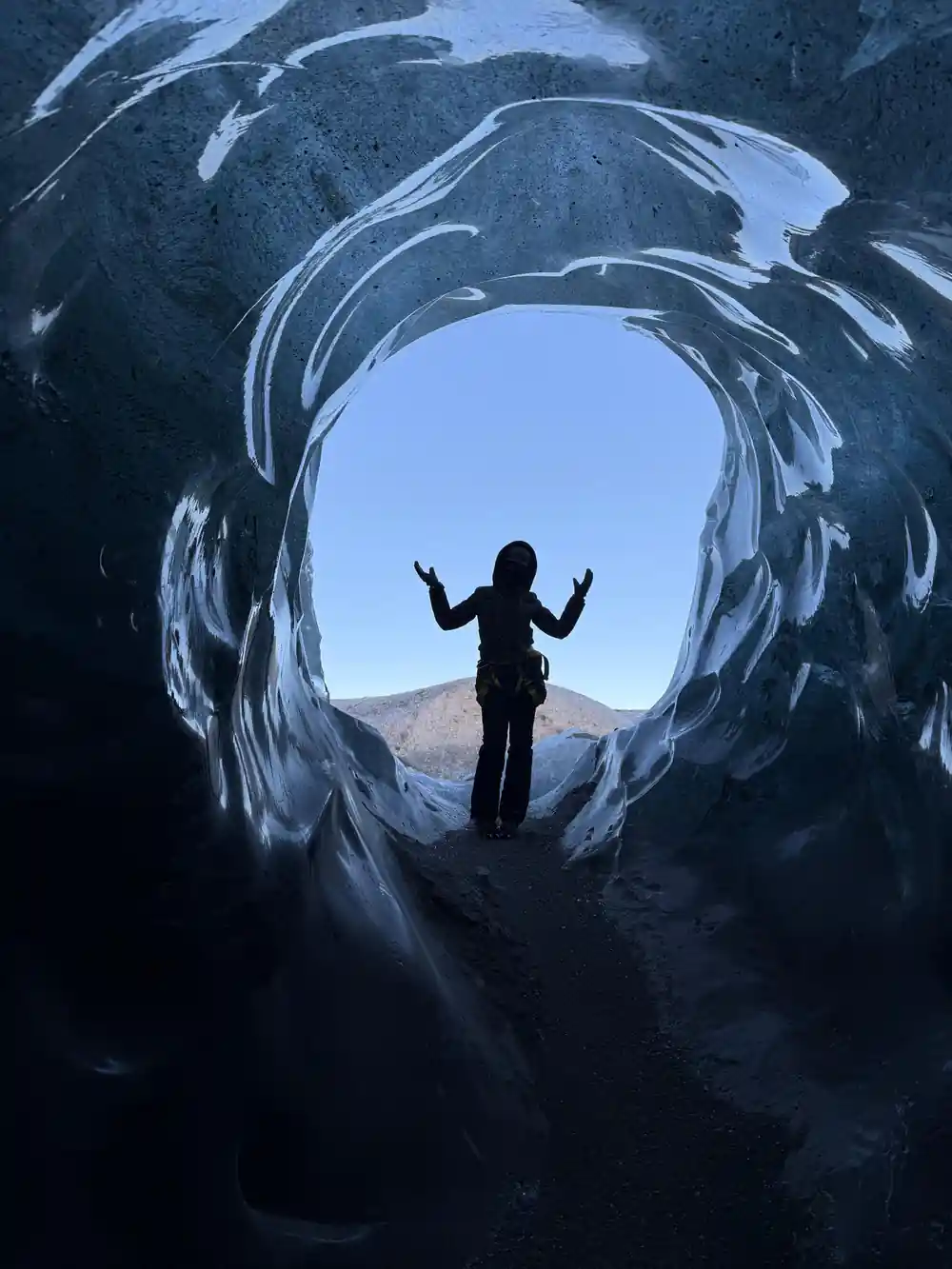
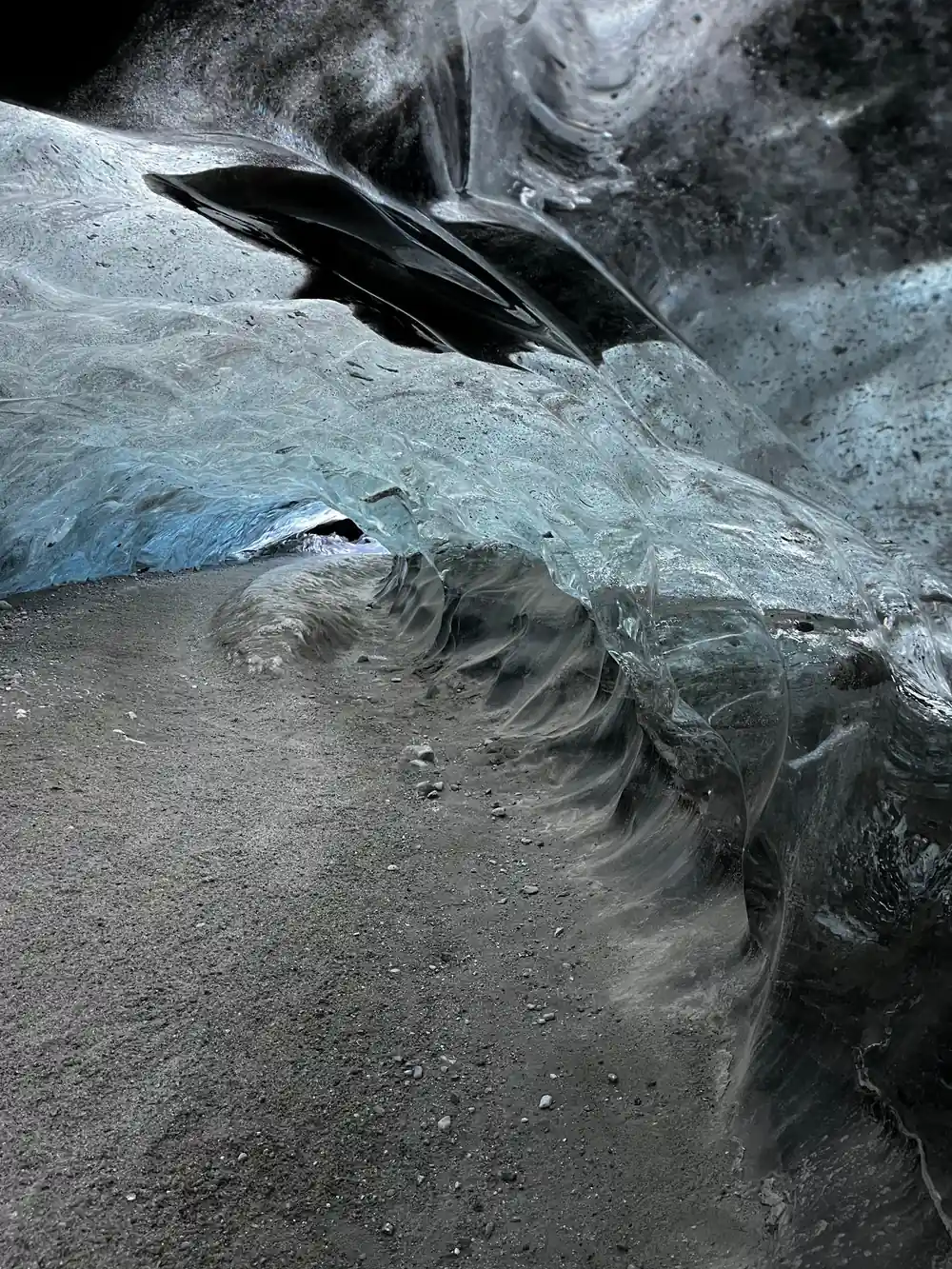
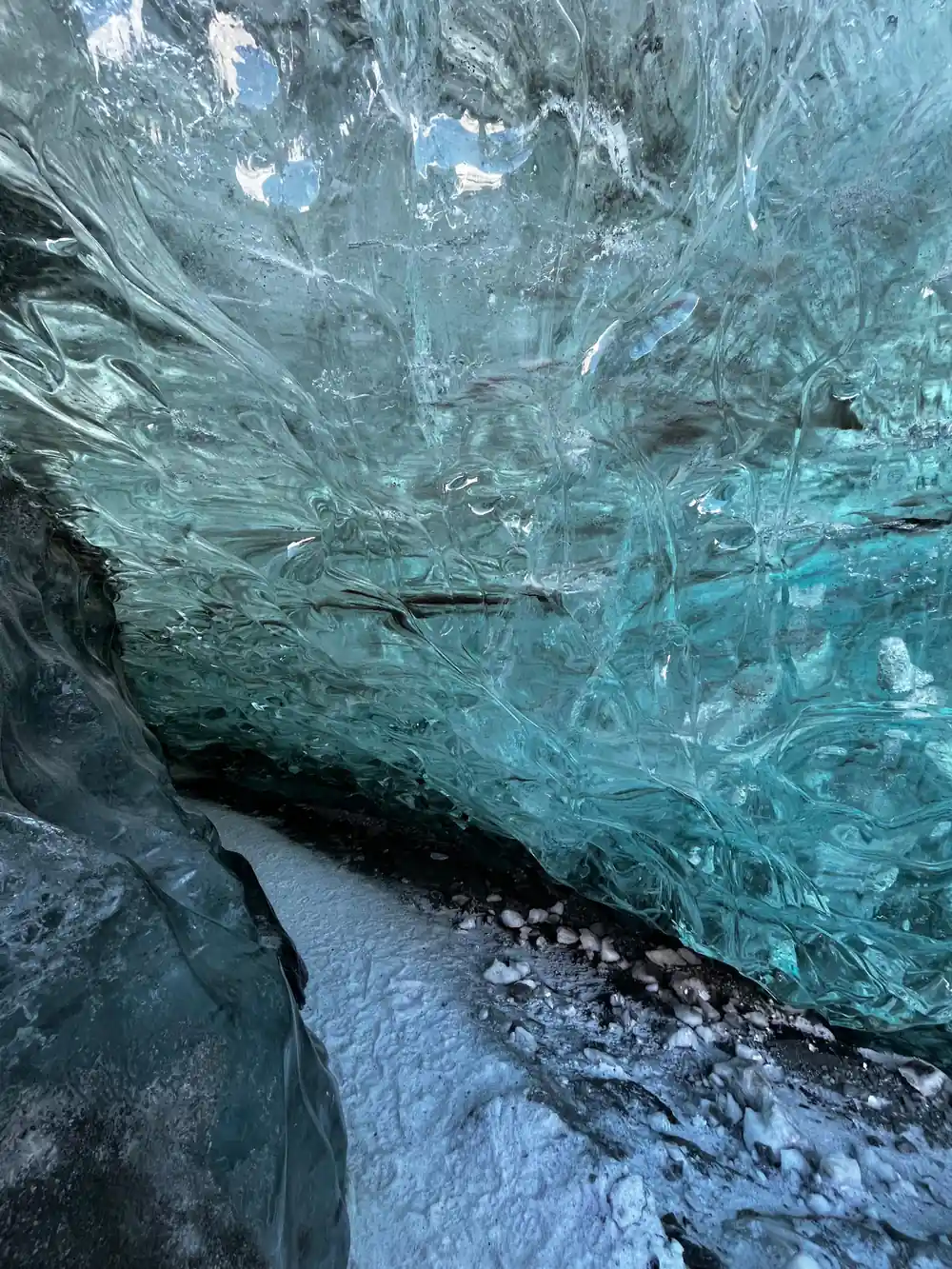
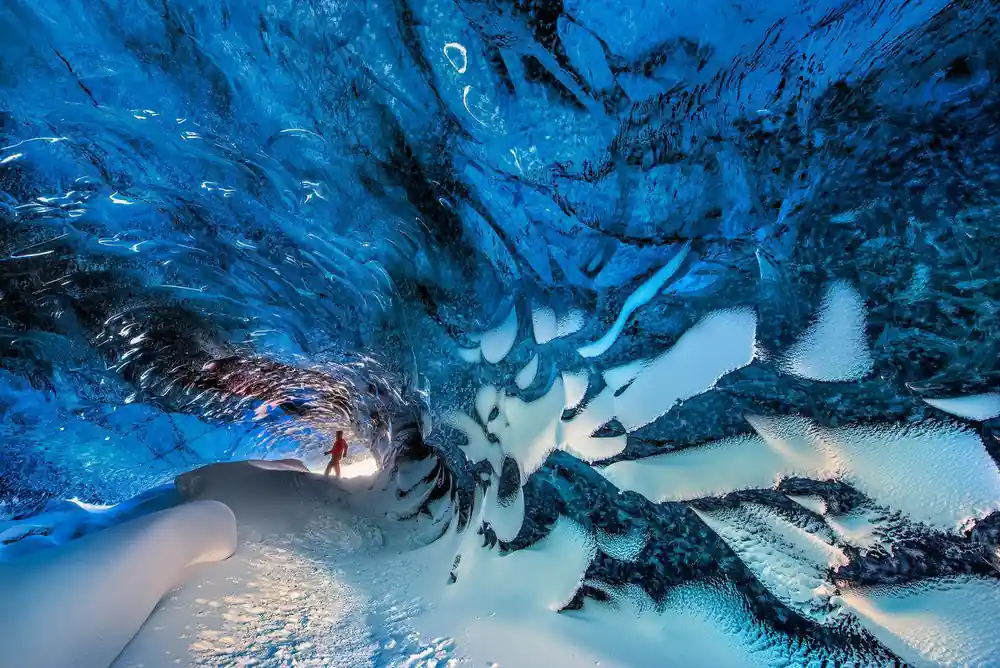
When people picture a crystal blue ice cave, Jökulsárlón is usually the setting they have in mind: a low translucent roof, dark grit above, and light moving through the walls. The blue comes from the scattering of short-waved blue light inside dense, airless ice.[9] What you actually photograph depends on the light. Overcast days flatten the colour and make it easier to expose, while sun at the entrance turns the ice into a bright, contrasty blue. A wide lens takes in a whole chamber, and a phone torch held against a wall adds a surprising glow. Keep your gloves on and your footing steady.
The glacier above the cave is always on the move. Breiðamerkurjökull, the outlet glacier that calves into Jökulsárlón lagoon, has retreated at an annual rate of up to 200-300 m in recent years.[11] The lagoon it feeds is 248 meters (814 feet) deep and has quadrupled in size since the 1970s.[10] Icebergs break off, drift, and wash up on the coast as clear blocks on black sand. This is a landscape that rebuilds itself between winters, and the cave on offer is chosen for the conditions of the week you visit.
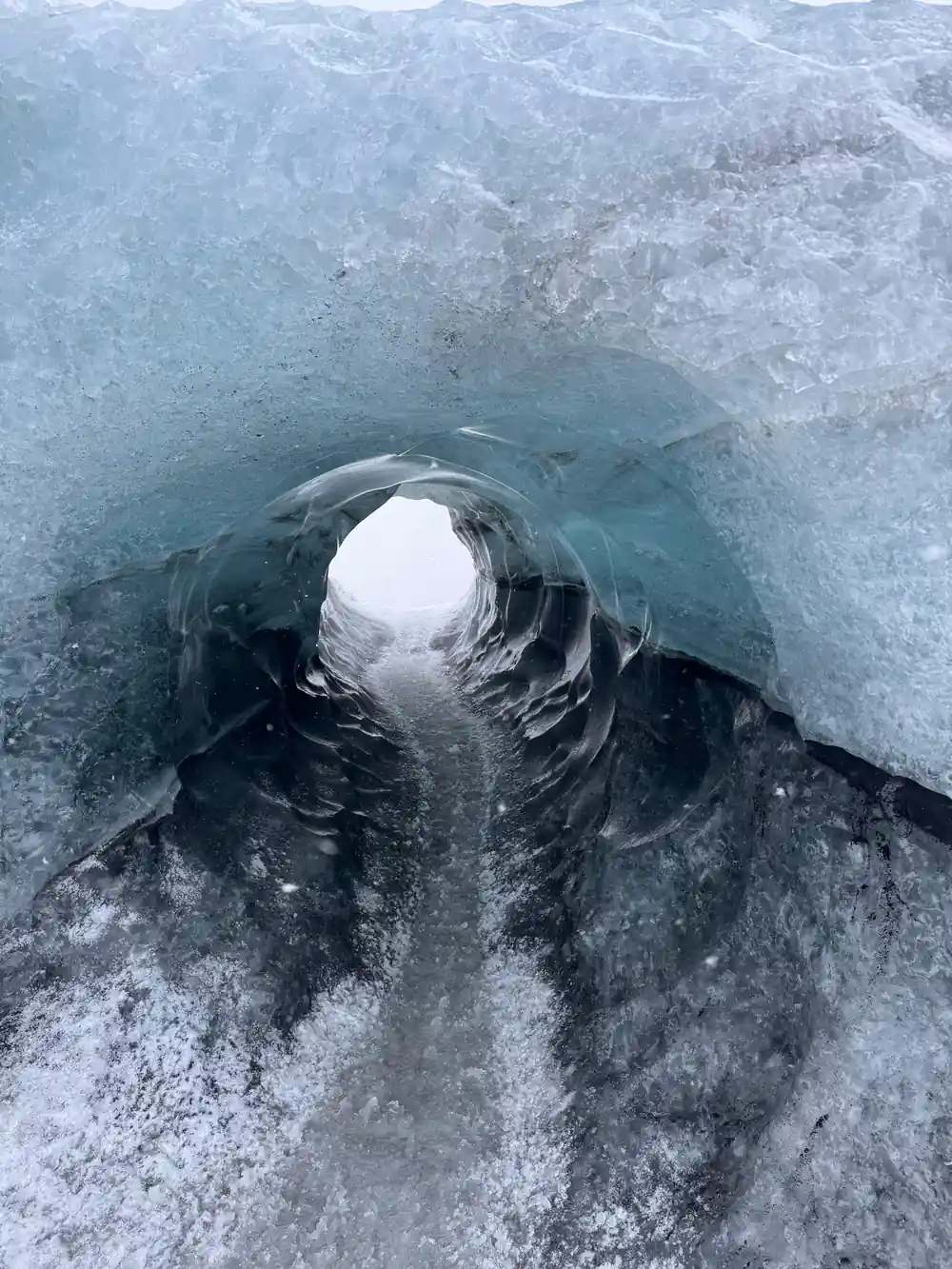
Blue ice overhead, black sand underfoot, a cave that only exists this winter.
Where the tour meets and how the hours pass
Your meeting point is Jökulsárlón, on the south coast beside the lagoon.[1] The tour runs 3 hours from US$164, with reserve now and pay later and free cancellation up to 24 hours in advance for a full refund.[1] There is no fixed departure clock to memorise: the listing says to check availability to see starting times.[1] Arrive with time to park and find your group, and dress for standing around in the cold, both at the meeting point and at the cave.
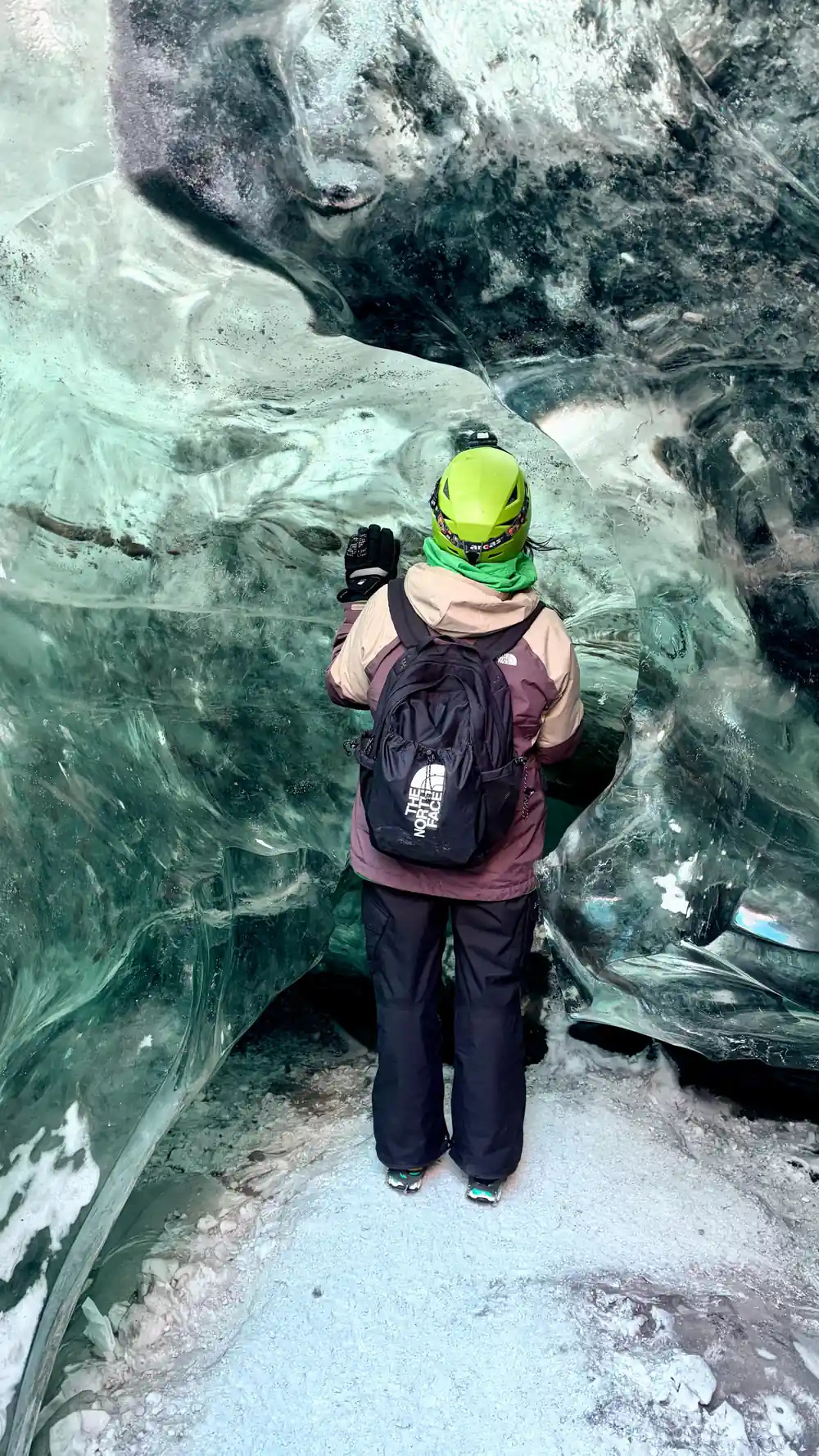
Once you are at the cave, everything slows down. A sturdy helmet is essential safety equipment inside an ice cave, protecting against falling ice and low-hanging cave ceilings, and it is generally provided by the tour operator.[6] Follow the guide's line, keep your hands free for balance, and resist the urge to duck under overhangs for a photograph. The best pictures are often taken from further back, where the entrance light still reaches and the blue of the interior reads clearly. Groups move through in single file, and the guide will say when it is safe to stop.
Getting to Jökulsárlón from Reykjavík or Vík
Jökulsárlón is about 370 km (230 miles) from Reykjavík, and the drive takes roughly 5 hours each way in good conditions.[3] That is a long day if you do it in one go, and many travellers break the journey with a night along the south coast instead. Winter adds ice, wind and short daylight. Allow extra time and check road conditions before setting out. If your schedule is tight, sleeping near the lagoon and taking a short tour the next morning is far more relaxed than driving down and turning straight around.
The lagoon rewards an hour before or after your tour. Diamond Beach is in Southeast Iceland, formed by black volcanic sand scattered with clear glacial ice that breaks off from Breiðamerkurjökull, drifts through Jökulsárlón Glacier Lagoon, and washes ashore along the coast.[12] Harbour seals are the most common seal species in the area.[13] Keep an eye on the water as well as the ice. Filmmakers have used this view too: Jökulsárlón Glacier Lagoon was a filming location for A View to a Kill, Die Another Day, and Lara Croft: Tomb Raider.[14]
from US$164
The Jökulsárlón: Vatnajökull Ice Cave Guided Tour runs 3 hours with a live English speaking guide and rated 4.25 from 2,171 reviews.[1]
The ice cave season, month by month
Natural caves only exist for part of the year. A natural ice cave in Vatnajökull lasts one winter, forming in October and remaining through April before returning meltwater takes it back in May.[2] Inside that window the cave changes character: it stabilises through November, holds its coldest and bluest form from December to February, and ages through March and April.[2] Iceland's average winter temperature is around 32°F (0°C), and daylight shifts fast, from 4 to 5 hours in late December to about 21 hours by late June.[7]
The cave holds its coldest and bluest form from December to February, and ages through March and April.[2] Daylight is short, from 4 to 5 hours in late December.[7] Book early if your dates are fixed, and accept that the exact cave is decided on the day. Crowds at the lagoon are real: rangers reported around 100,000 tourists visiting Jökulsárlón Glacier Lagoon in July alone during one of its busiest summers on record.[15] Winter is quieter on the road and in the car park, and the cave season is narrower.
What to wear and what to bring
Think of the cave as a very cold, very damp room with an uneven floor. Waterproof outer layers over a warm mid-layer and a base layer that wicks are the standard kit, with a hat and gloves you can keep on while handling a phone. Boots need ankle support and a stiff sole. Trainers get wet and slippery on the walk in. Carry a small backpack you can manage without using your hands, and leave anything loose that could fall on the ice.
Beyond clothing, think about light and time. Iceland's winter daylight ranges from 4 to 5 hours in late December, so a late slot can finish in the dark.[7] A head torch helps at the car park, and a lens cloth is worth packing, because cold glass fogs fast in humid cave air. If you carry a camera, keep it in a bag between stops rather than letting it swing on your shoulder. And take the helmet seriously: a sturdy helmet protects against falling ice and low-hanging cave ceilings, and is generally provided by the tour operator.[6]
Choosing between Jökulsárlón ice cave tours
The tour booked here is a short, focused option: 3 hours from US$164.[1] Two close alternatives in the same area are the Crystal Ice Cave Super Jeep Tour, from US$173 with a 4.21 rating from 1,751 reviews,[4] and The Original Ice Cave Tour on Vatnajökull, from US$161, rated 4.61 from 1,129 reviews.[5] If you would rather walk further and stay out longer, the Vatnajökull Glacier Guided Hiking Tour runs 4.5 hours from US$134, rated 4.75 from 1,008 reviews.[16]
Decide on duration first and price second. If you want more time on the ice, the longer listings are the ones to look at; if you are fitting the cave between the lagoon and the Ring Road, the shorter trips do the job. All four listings offer reserve now and pay later and free cancellation up to 24 hours in advance for a full refund.[1][4][5][16] That takes much of the risk out of booking a winter date in advance, when weather can still change your plans.
How long Jökulsárlón ice cave and glacier tours run
From-prices for ice cave and glacier tours from Jökulsárlón
From-prices per listing in US dollars. No separate child rate is published, so child entries repeat the adult from-price.[1][4][5][16]
The Vatnajökull ice cave season
Planning your ice cave day
Book your slot
The tour runs 3 hours from US$164, with reserve now and pay later and free cancellation up to 24 hours in advance.[1]
Sort out the drive
Jökulsárlón is about 370 km (230 miles) from Reykjavík, roughly 5 hours each way in good conditions.[3]
Meet at the lagoon
The meeting point is Jökulsárlón, then a jeep or SUV transfer into Vatnajökull National Park.[1]
Walk in with your guide
A live English speaking guide leads the way inside the cave, and a helmet is generally provided by the operator.[1][6]
Dress for the cold
Iceland's average winter temperature is around 32°F (0°C).[7] Waterproof layers and sturdy boots are the practical choice.
Book the Vatnajökull ice cave tour from Jökulsárlón
from US$164Reserve now & pay later