The quick version
- The Vatnajökull Ice Cave Guided Tour runs 3 hours from Jökulsárlón, with a live guide in English.[1]
- The Jökulsárlón: Vatnajökull Ice Cave Guided Tour starts from US$164, with free cancellation up to 24 hours in advance.[1]
- Natural ice caves in Vatnajökull form in October, hold their bluest form from December to February and are gone by May.[2]
- Iceland's average winter temperature is around 32°F (0°C), and late December brings only 4 to 5 hours of daylight.[3]
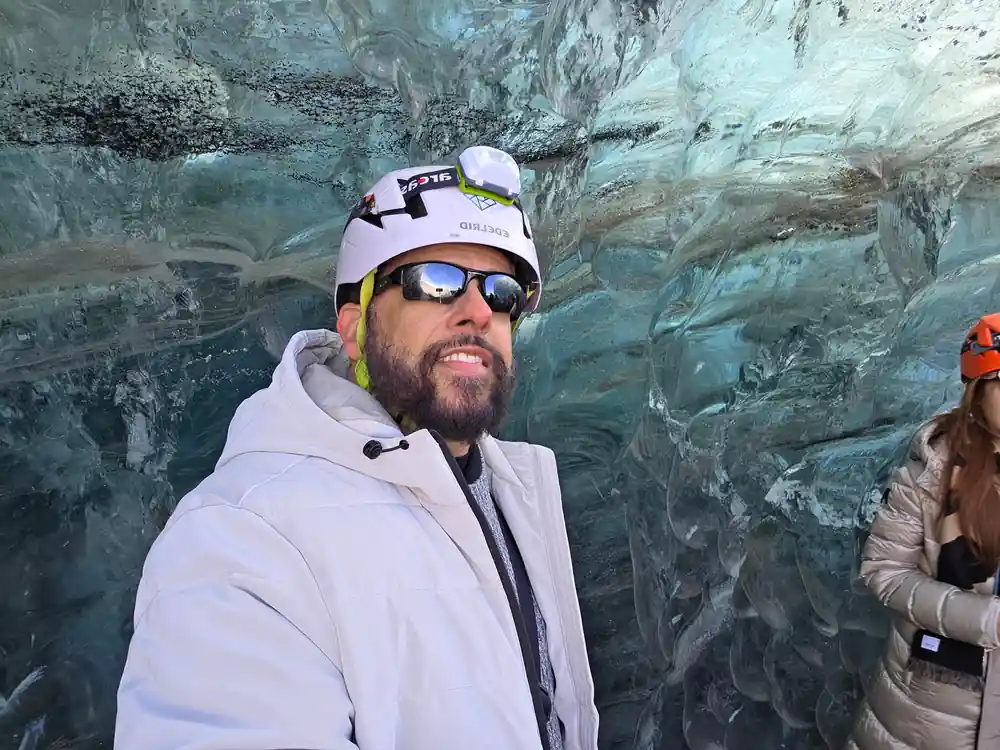
- A sturdy helmet is generally provided by the tour operator and protects against falling ice and low cave ceilings.[4]
- Top choice Vatnajökull Ice Cave Tour from US$164 Tour length3 hours[1]GuideLive tour guide: English[1]Ratingrated 4.25 from 2,171 reviews[1]PaymentReserve now & pay later[1] Check availability
- Crystal Ice Cave Tour from US$173 Tour length2.5 hours[5]GuideLive tour guide: English[5]Ratingrated 4.21 from 1,751 reviews[5]PaymentReserve now & pay later[5] See this tour
- The Original Ice Cave Tour from US$161 Tour length3 hours[6]GuideLive tour guide: English[6]Ratingrated 4.61 from 1,129 reviews[6]PaymentReserve now & pay later[6] See this tour
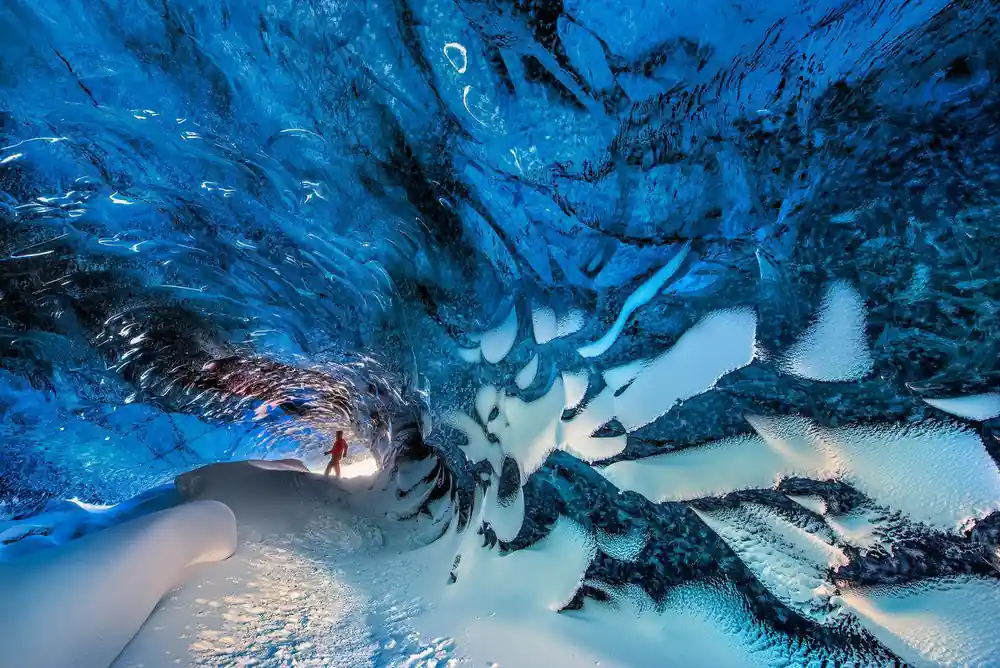
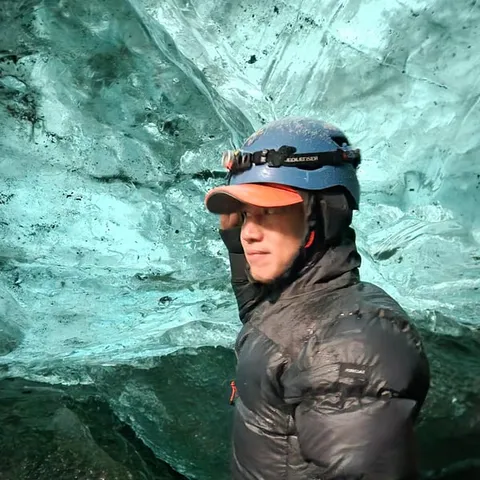
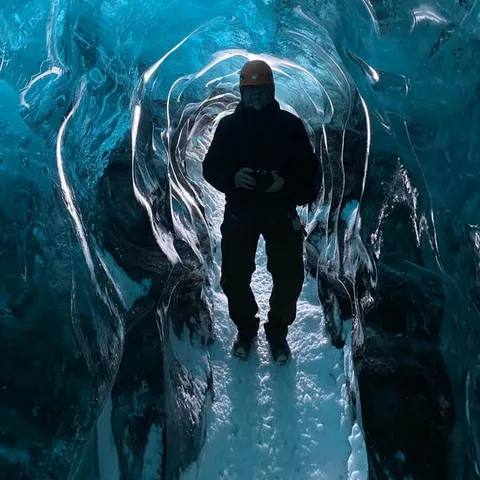
Firstly, a sturdy helmet is essential for protection against potential falling ice or low-hanging cave ceilings. It's a basic safety measure that can't be overlooked and is generally provided by your tour operator.
Verdict: dress for the cave, not the car park
Pack these
- Wool or synthetic base layer, a mid layer and a windproof shell
- Sturdy, ankle-high boots that crampon straps can grip
- A helmet, generally provided by the tour operator[4]
- Sunglasses and sunscreen for the drive and the glacier light
How cold the day feels, and why the ice looks blue
Iceland's average winter temperature sits near 32°F (0°C), and daylight runs from 4 to 5 hours in late December to about 21 hours by late June.[3] Inside a cave the air is still, so the cold reaches you from the walls and the floor rather than from wind. The lagoon you drive past is 248 meters (814 feet) deep and has quadrupled in size since the 1970s.[7] Above it, the ice cap is 3,120 feet (950 m) deep at its thickest point, with an average thickness of 1,250 feet (380 m).[8]
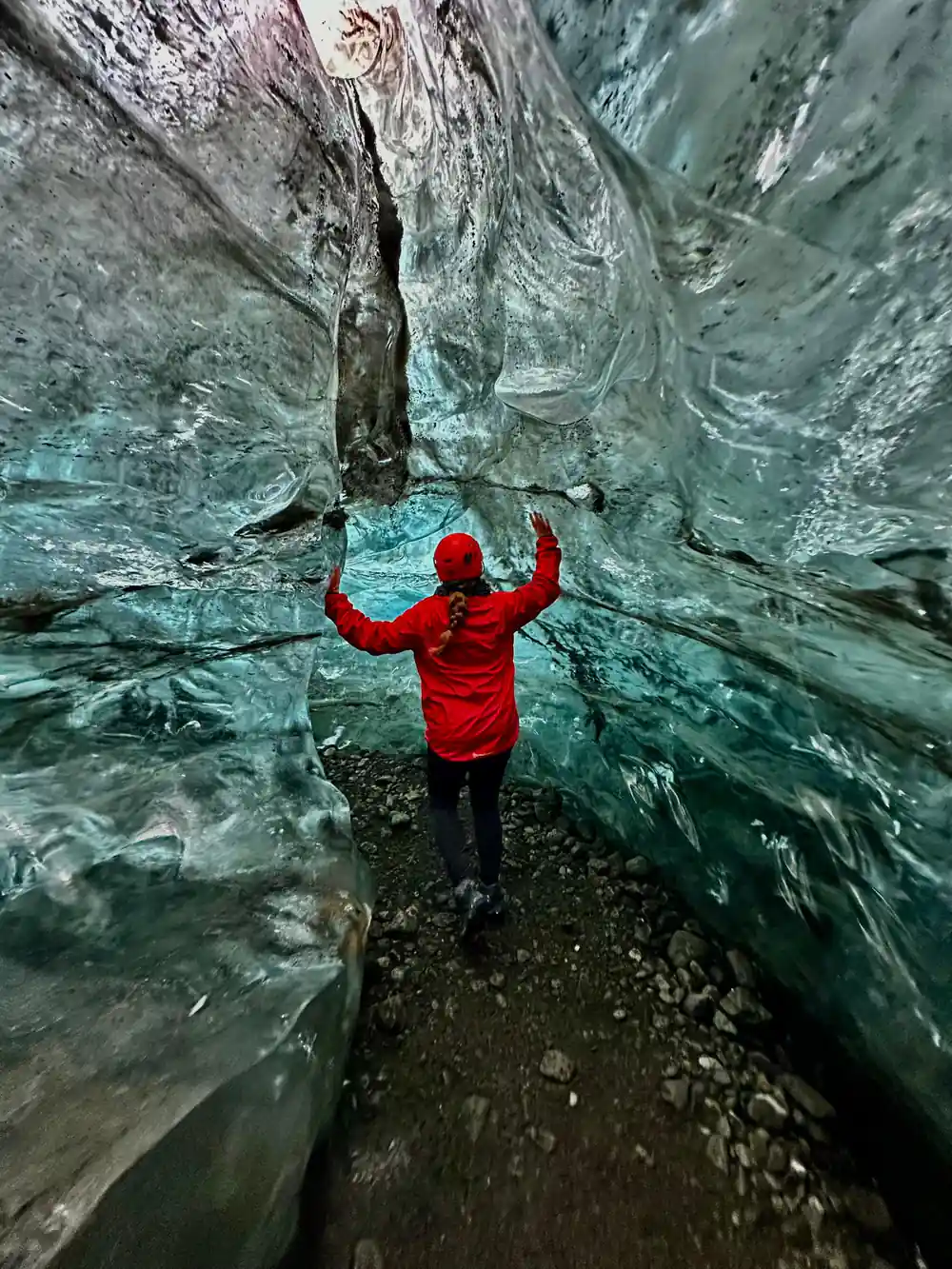
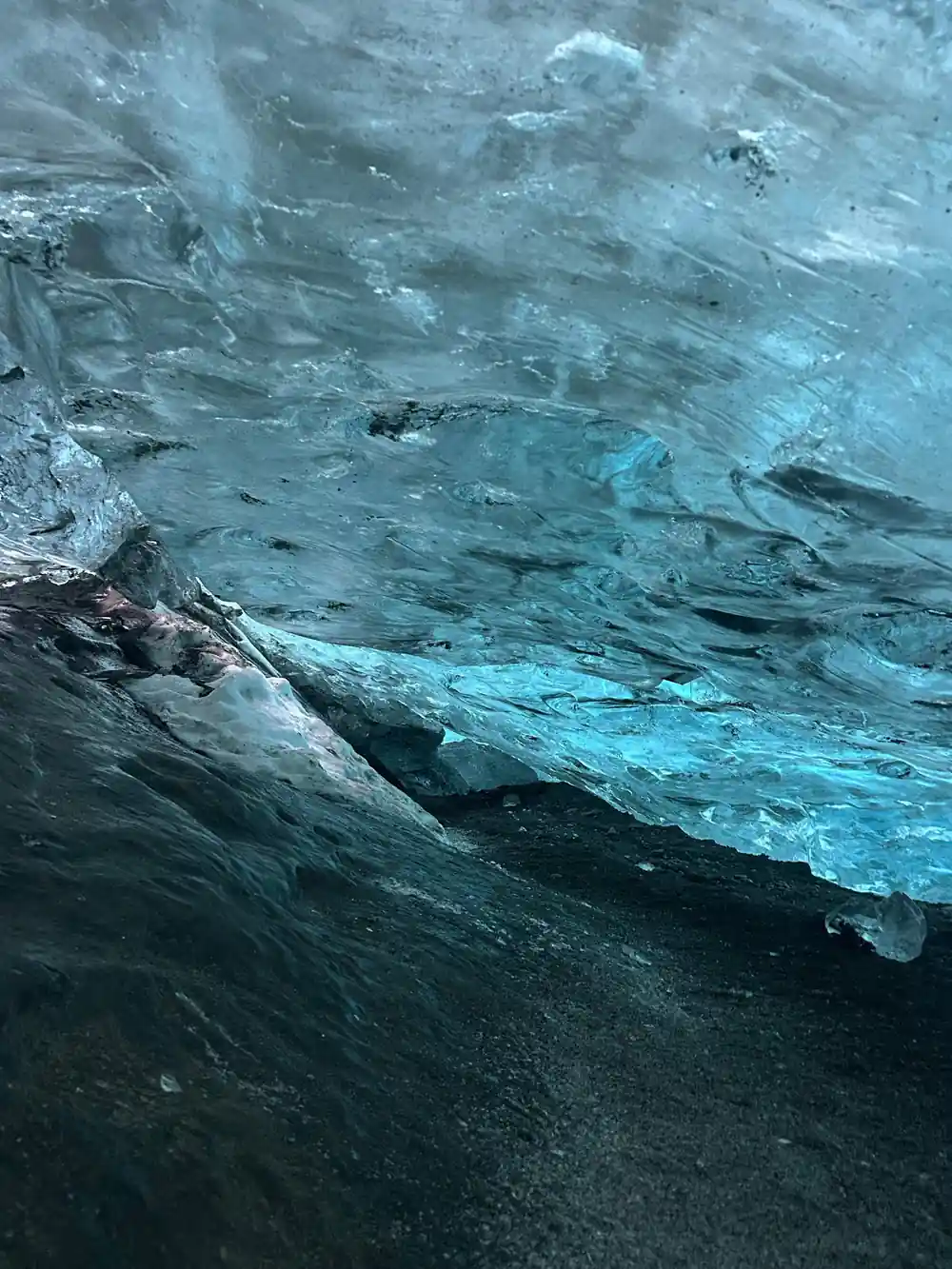
The blue you came to see is a trick of the light. When light hits the large, dense crystals in deep glacier ice, they absorb long wavelengths and scatter short-waved blue light, which makes the ice appear blue.[9] Natural caves in Vatnajökull last one winter: they form in October, hold their coldest and bluest form from December to February, age through March and April, and are taken back by returning meltwater in May.[2] The Vatnajökull Ice Cave Guided Tour runs 3 hours from Jökulsárlón.[1]
Base layers and mid layers that do the work
The cave is a cold room, not a polar expedition, and the easy mistake is wearing too much too early. You will ride, walk, stand still and walk again, all within the same trip, so your clothing has to cope with every part of that. Start with a thin merino wool or synthetic base layer against your skin. It moves sweat away rather than holding it. Cotton does the opposite, and a damp cotton t-shirt turns properly cold the moment you stop moving.
Over the base, add a fleece or a light down jacket, then check that you can still bend your arms, hold a camera and climb in and out of a vehicle. Layers that pinch cut circulation, and cold hands and feet often start with a squeezed torso. If you run warm, carry the mid layer in your bag and put it on at the cave mouth instead of before the transfer.
A thin neck gaiter, a spare pair of socks and a second base layer in the car make the return drive far more pleasant than any single extra jacket. If you are travelling with children, pack the same layers you would wear yourself, sized to fit, and add one more mid layer than you think they need.
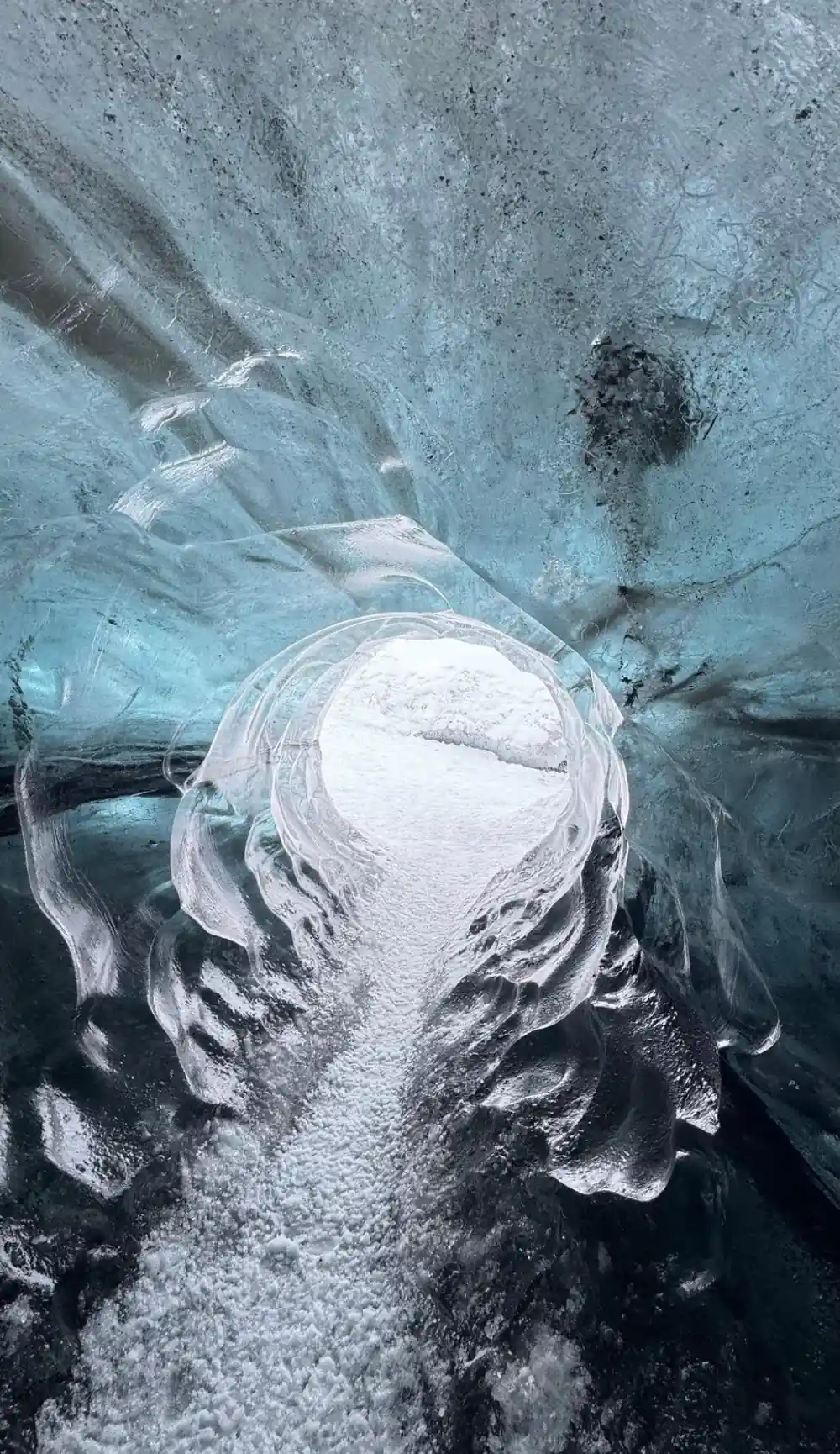
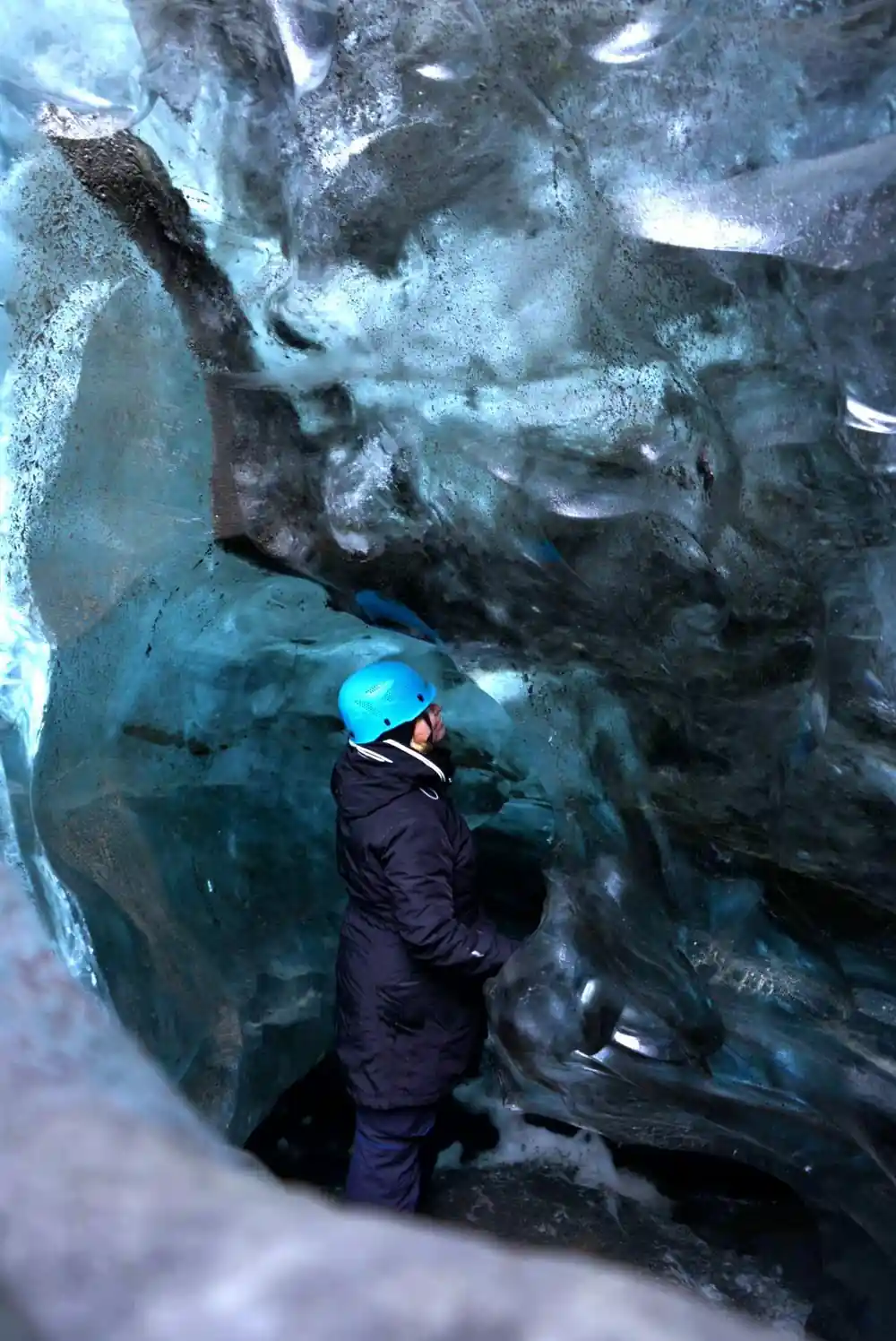
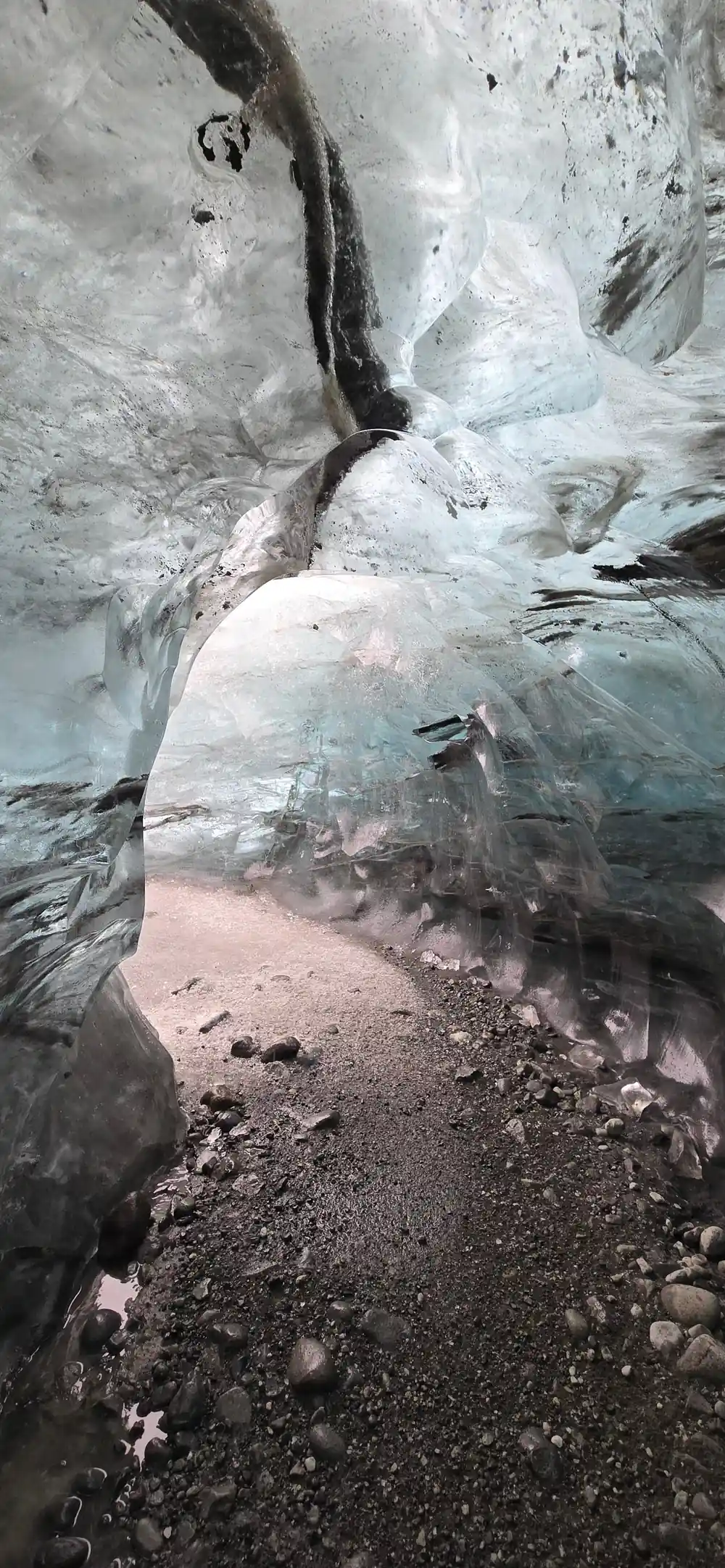
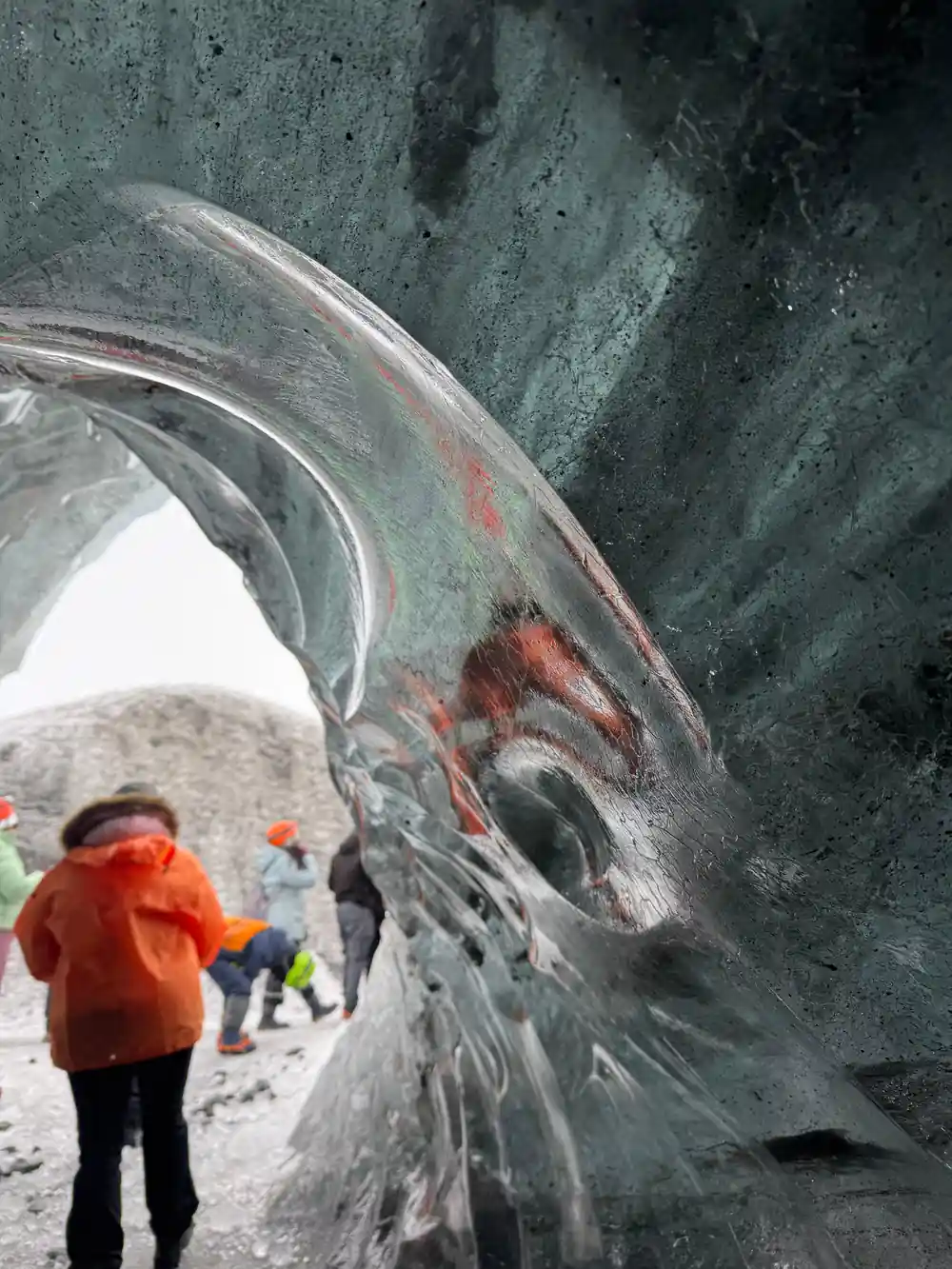
Meltwater and torchlight along the blue walls of a Vatnajökull ice cave.
The shell layer: wind, drips and wet ice
A waterproof and windproof shell decides how the day feels. Ice caves drip, meltwater runs down the walls, ceilings hang low, and snow or rain can meet you at the meeting point. A jacket with a hood that fits over a hat keeps the wet off your mid layer, and it also blocks the wind that takes warmth away while you stand still waiting for the group to move.
Look for taped seams and a hood you can tighten with one hand, and wear the shell slightly loose so it traps a pocket of air. Trousers matter just as much. Waterproof over-trousers or softshell trousers over a warm base keep your legs dry while you sit and kneel on ice, and they stop snow packing into the tops of your boots.
If you own one jacket, take the one with the roomiest hood and the most breathable fabric. A shell that traps sweat leaves you damp and cold inside the cave, and one that leaks does the same from the outside.
Gloves, hats and neckwear for a glacier
Hands go first. Bring two pairs: a thin liner pair for laces, phone screens and hood cords, and a warm insulated or mitt style pair for standing still. Mittens keep fingers together and warmer than gloves, and a liner inside a mitten is a combination worth packing. Check that you can use your camera or phone with the liner pair alone.
A hat that covers your ears and a buff or neck gaiter do more for comfort than an extra sweater. Pull the buff over your chin when the guide stops to talk, and push it down when you are moving and warm. A helmet is generally provided by the tour operator, and it protects against falling ice and low-hanging cave ceilings.[4]
Thin knitted gloves with a loose weave are worse than useless once they are wet. Leather or synthetic palms grip a walking pole better, and a drawcord at the wrist stops a mitten disappearing into a meltwater channel.
from US$164
The Jökulsárlón: Vatnajökull Ice Cave Guided Tour runs 3 hours from Jökulsárlón, with free cancellation up to 24 hours in advance.[1]
Footwear that works with crampons
Boots are the one item worth sorting before everything else. You want a stiff sole, a deep tread and support around the ankle. Crampon straps need something firm to sit on, and soft boots twist on uneven ice. Ankle-high boots also stop snow and meltwater running in. Trainers, fashion boots and thin wellingtons are a poor match for the walk onto the glacier.
Size your boots so a thick wool sock fits without your toes pressing the front. Toes that touch the boot stay cold all day. Take the socks you plan to wear when you try boots on at home, and pack a spare pair so you have dry ones for the drive back. Gaiters are a small addition that keeps snow out of your socks on deeper days.
If you plan to rent boots, do it in Reykjavík or at your guesthouse before you drive east, so you have time to check the fit and walk around in them. A boot that is half a size too big will rub on the walk in.
Cameras, phones and cold batteries
Cold shortens battery life. Keep your phone and any spare batteries in an inside pocket where your body heat reaches them, and keep that pocket zipped. A phone that shows an empty battery at the cave mouth often wakes up again once it is warm. Screen brightness and video are the two settings that drain a battery fastest in the cold, so dim the screen and shoot short clips.
For a camera, carry a spare battery and change it with dry hands, ideally inside your jacket. When you get back into a warm car or a cafe, condensation forms on cold glass and metal, so leave the camera in your bag for a while before opening it. A microfibre cloth and a small dry bag earn their space. The light in the cave is dim, so steady hands matter more than a long lens.
If you plan to film, shield the camera from the wind for a moment before you press record, and keep your hood out of the frame. The blue light shifts through the day, so a slow walk through the passage often gives more useful footage than one long static shot.
What to carry in and what to leave behind
Take a small backpack or a hip pack rather than a large rucksack. Water, a snack, spare gloves, a spare battery and a dry bag for your phone are enough. The tour meets at Jökulsárlón, transfers by jeep or SUV into Vatnajökull National Park and returns the same way.[1] Large luggage, tripods and a second pair of shoes are weight you will not want on the ice.
Plan the drive around the tour. Jökulsárlón is about 370 km (230 miles) from Reykjavík along Route 1, and the drive takes roughly 5 hours each way in good conditions.[10] An overnight stop nearby makes the day easier than driving there and back in one go. The lagoon gets busy in high summer, with around 100,000 tourists visiting in July alone during one of its busiest summers on record.[11] Book your slot early, and note that the tour offers free cancellation up to 24 hours in advance for a full refund.[1]
Leave a dry bag, a small towel and a spare pair of socks in the vehicle. It is a short drive back to the main road, and dry feet make the difference between a good day and a long one.
How long each Jökulsárlón ice cave and glacier tour lasts
Durations as listed for each tour on GetYourGuide:[1][5][6][12].
From-prices for ice cave tours from Jökulsárlón
US dollar from-prices for ice cave tours starting from Jökulsárlón:[1][5][6][13].
When the natural ice caves are there
Packing order for the day
Base layer first
Start with merino or synthetic next to the skin. Cotton holds sweat and turns cold once you stop moving.
Mid layer
Add a fleece or thin down layer that fits under your shell without squeezing your arms.
Shell on top
A waterproof, windproof jacket with a hood keeps drips, snow and wind off your mid layer.
Boots
Stiff-soled, ankle-high boots give crampon straps something to grip and keep snow out.
Pockets and bag
Keep your phone, spare battery and a snack in inside pockets where body heat reaches them.
Ready to stand inside a blue cave under Vatnajökull?
from US$164Reserve now & pay later