The quick version
- The guided tour runs about 3 hours, with starting times shown when you check availability.[1]
- It meets at Jökulsárlón and moves into Vatnajökull National Park by Jeep or SUV, then back again.[1]
- A live guide leads the tour in English, from the meeting point beside the lagoon to the ice itself.[1]
- Prices start from US$164 per person, and you can reserve now and pay later.[1]
- Free cancellation up to 24 hours in advance gives you room to change plans if the weather turns.[1]
- Top choice Vatnajökull Ice Cave Tour from US$164 Duration3 hours[1]Rating4.25 from 2,171 reviews[1]GuideLive tour guide: English[1]CancellationFree cancellation up to 24 hours[1] Check availability
- Crystal Ice Cave Super Jeep from US$173 Duration2.5 hours[2]Rating4.21 from 1,751 reviews[2]GuideLive tour guide: English[2]CancellationFree cancellation up to 24 hours[2] See this tour
- The Original Ice Cave Tour from US$161 Duration3 hours[3]Rating4.61 from 1,129 reviews[3]GuideLive tour guide: English[3]CancellationFree cancellation up to 24 hours[3] See this tour
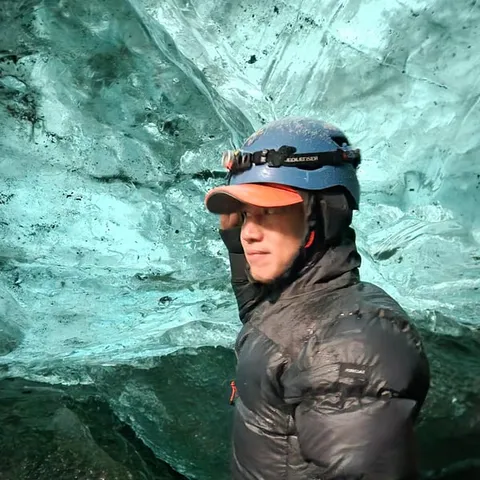
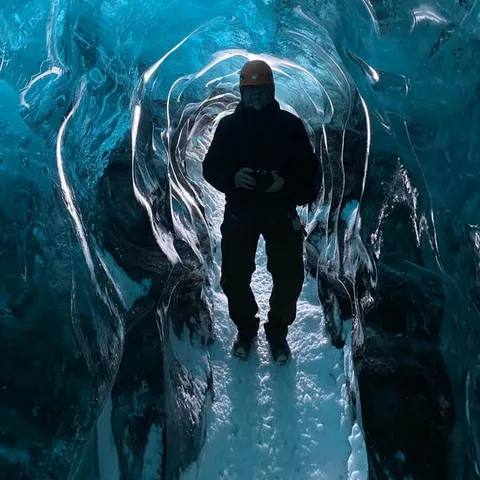
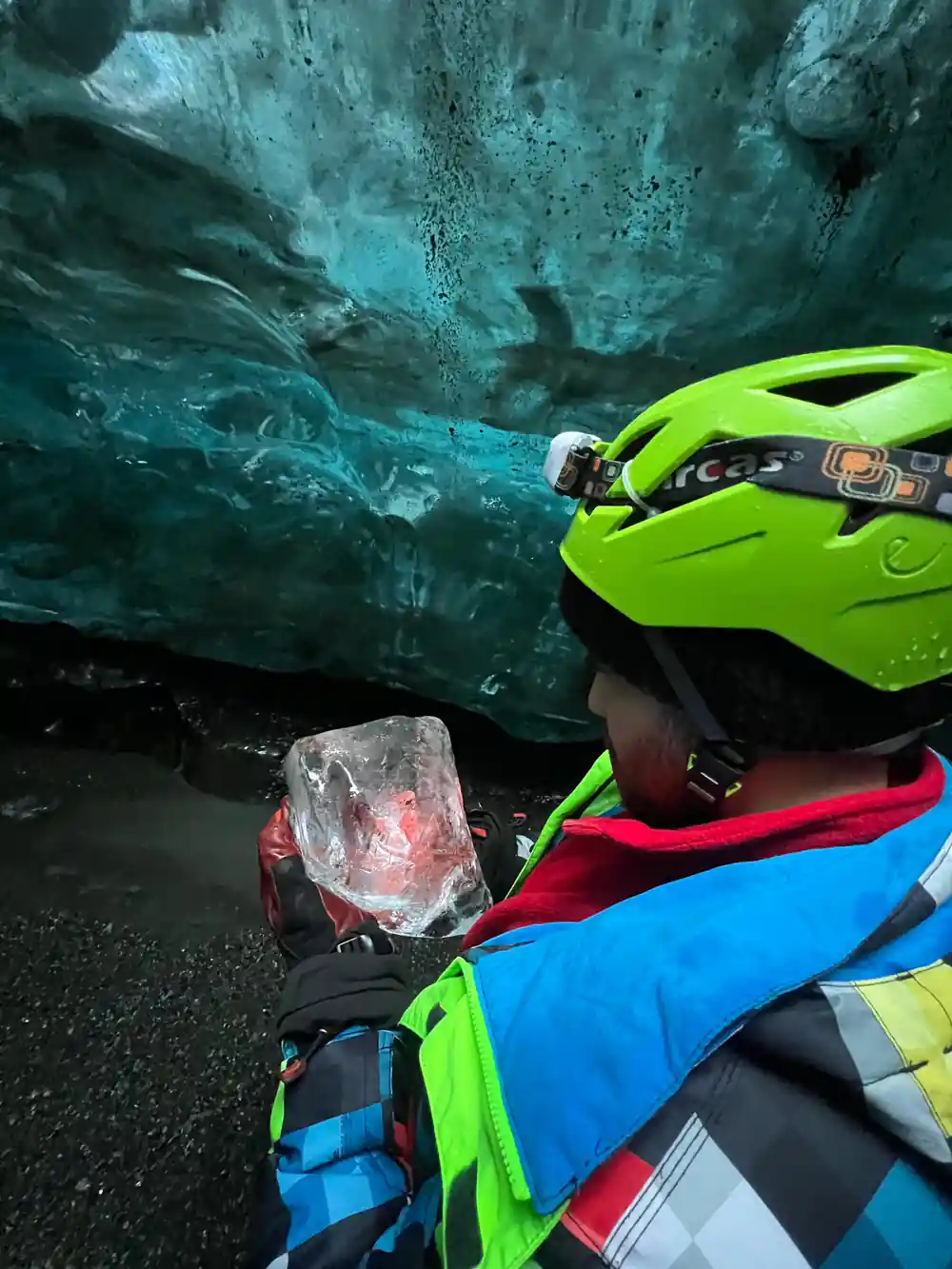
Firstly, a sturdy helmet is essential for protection against potential falling ice or low-hanging cave ceilings. It's a basic safety measure that can't be overlooked and is generally provided by your tour operator.
Who this ice cave tour suits
Know this first
On the day
How fit do you need to be for an ice cave hike?
The guided tour runs about three hours from start to finish, and it begins at Jökulsárlón before a Jeep or SUV carries you into Vatnajökull National Park and back again.[1] Nobody expects mountaineering experience or technical skill. What the day asks for is the ability to walk on uneven, frozen ground for a stretch at a time, to step carefully where the surface is slick, and to keep your balance while you look up at the ice rather than at your feet.
If you can manage a long, slow walk over rough paths with plenty of stops, you will most likely be comfortable. If stairs, steep slopes or loose surfaces are already difficult for you at home, they will be harder here, where the air is cold and the ground has not been tidied for visitors. Tell your guide about knees, hips, a heart condition or recent surgery before you set off. Guides are used to adjusting the pace, and they would far rather know in advance than discover it halfway to the cave.
What the walk to the cave actually demands
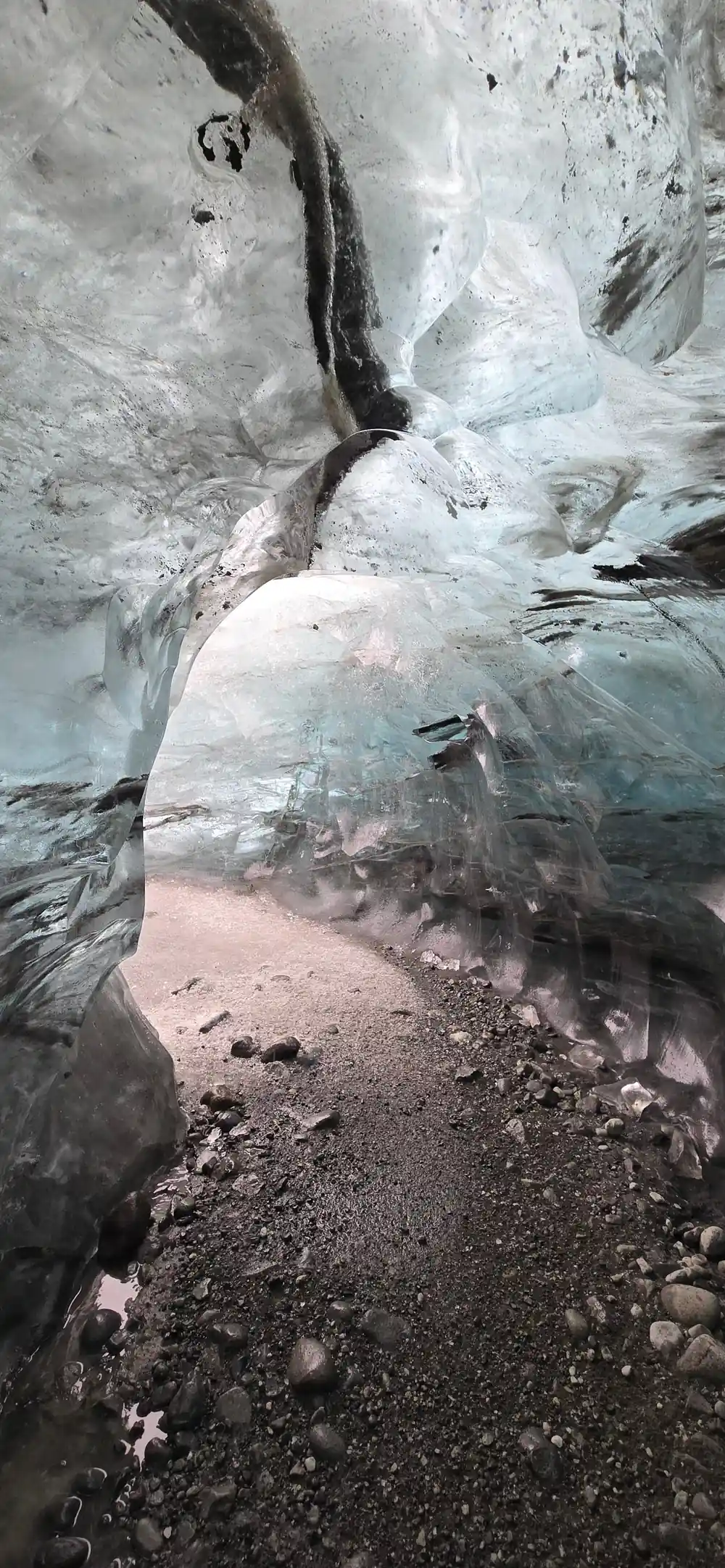
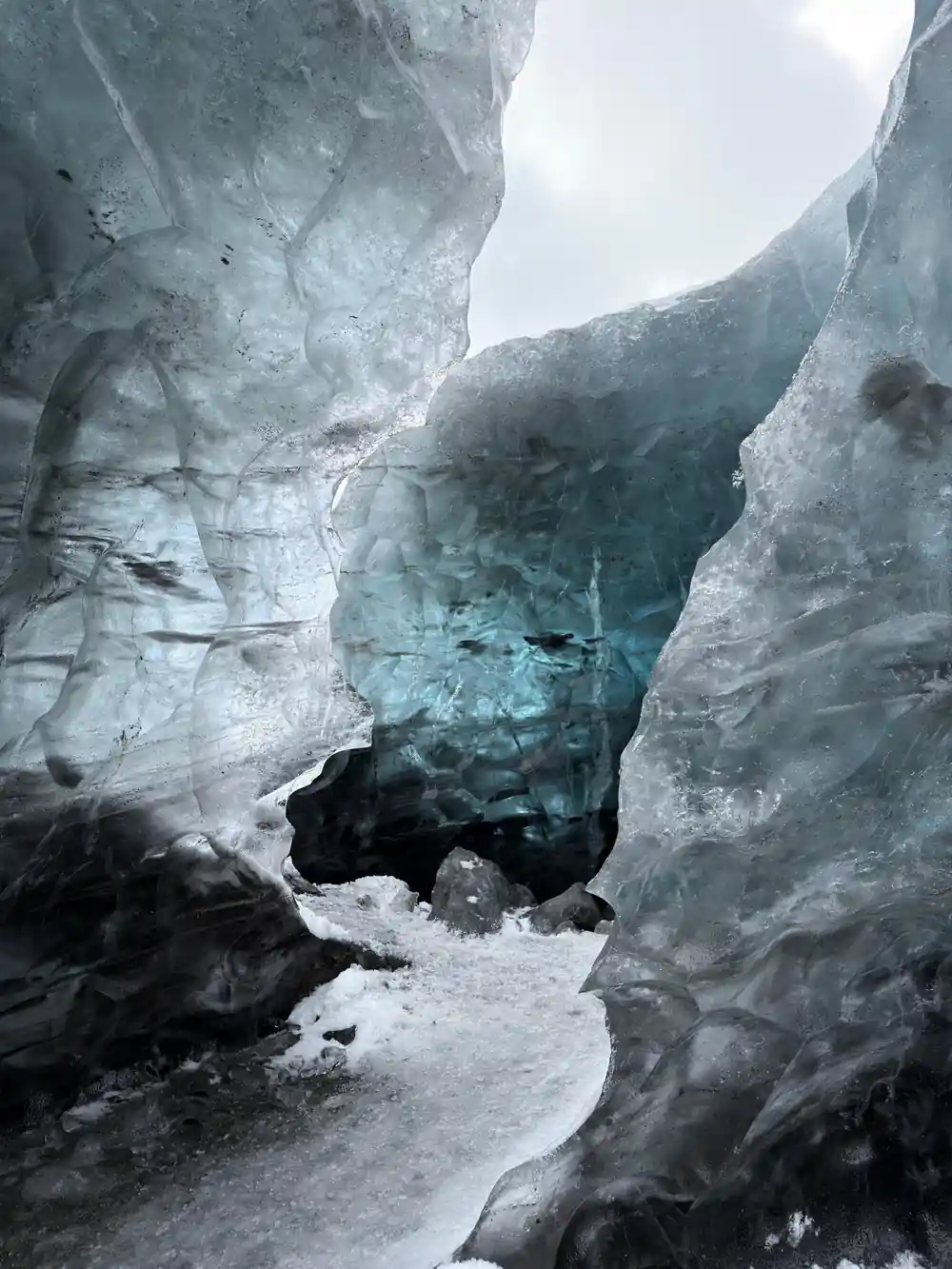
The approach crosses ground shaped by the glacier itself: dark, gritty moraine, patches of old snow, and ice scoured smooth by meltwater. The surface changes from one step to the next, and the final stretch usually means walking on ice rather than on rock. Boots with ankle support and a deep tread make a real difference, and a waterproof outer layer keeps you dry if the weather turns. A live guide leads the way in English[1], reading the ground ahead and keeping the group together.
Iceland's average winter temperature sits around 32°F (0°C), and daylight runs from 4 to 5 hours in late December to about 21 hours by late June.[4] A midwinter afternoon start can finish in the dark, so bring a head torch and keep a warm layer in the vehicle for the return. Expect to duck, to turn sideways and to move in single file once you are inside the ice. The guide sets the pace, pausing where the passage narrows or the ceiling drops.
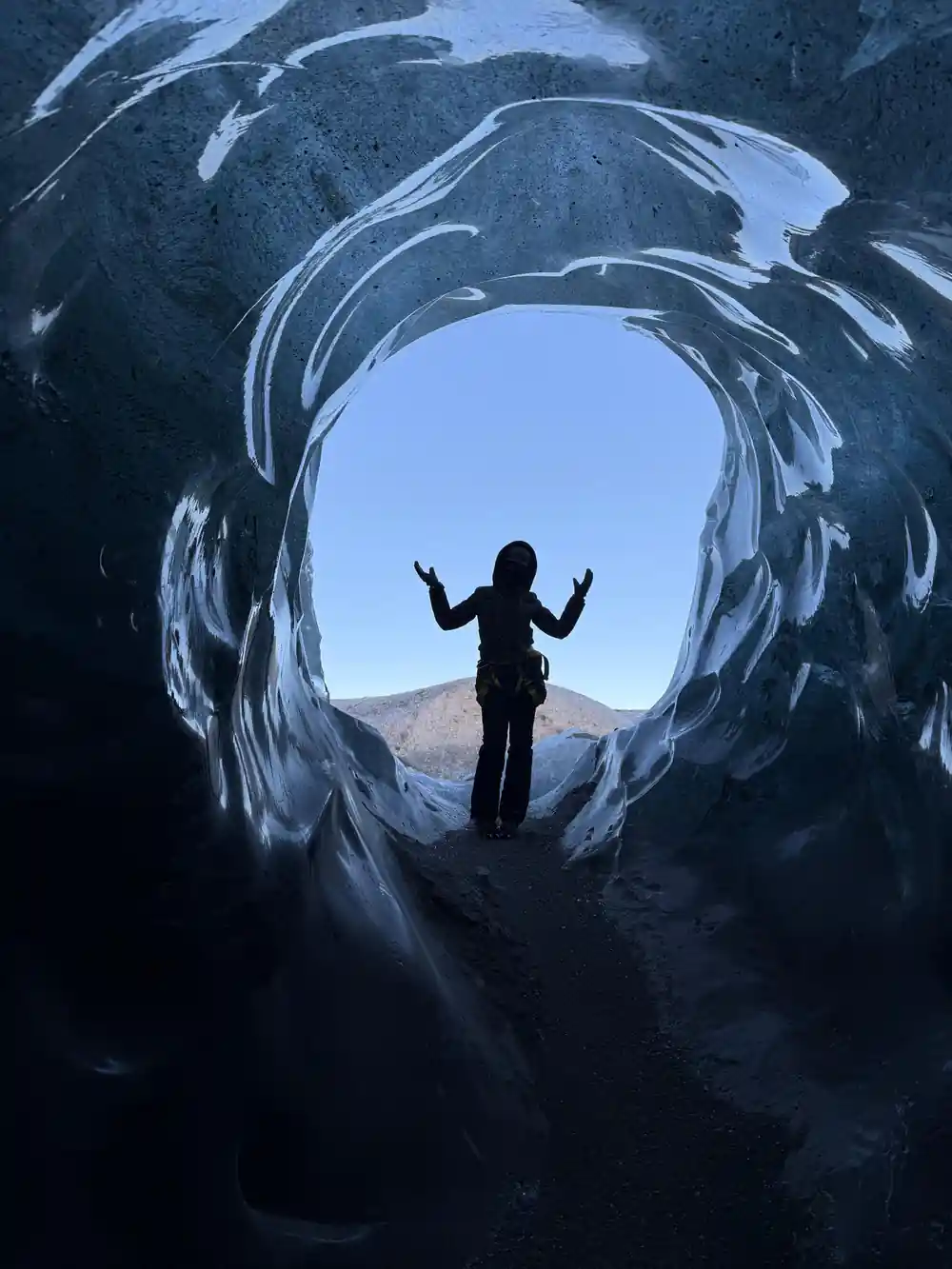
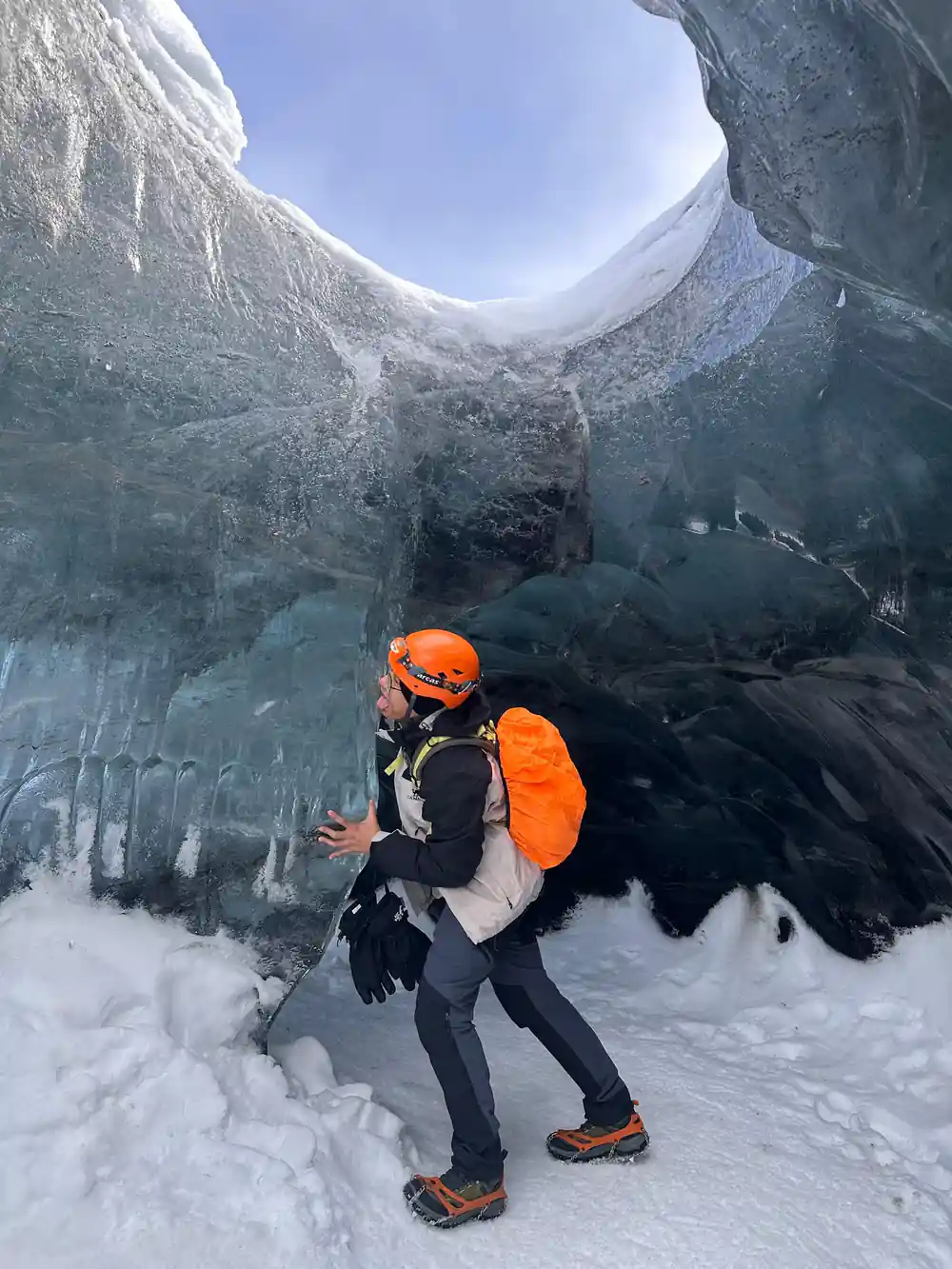
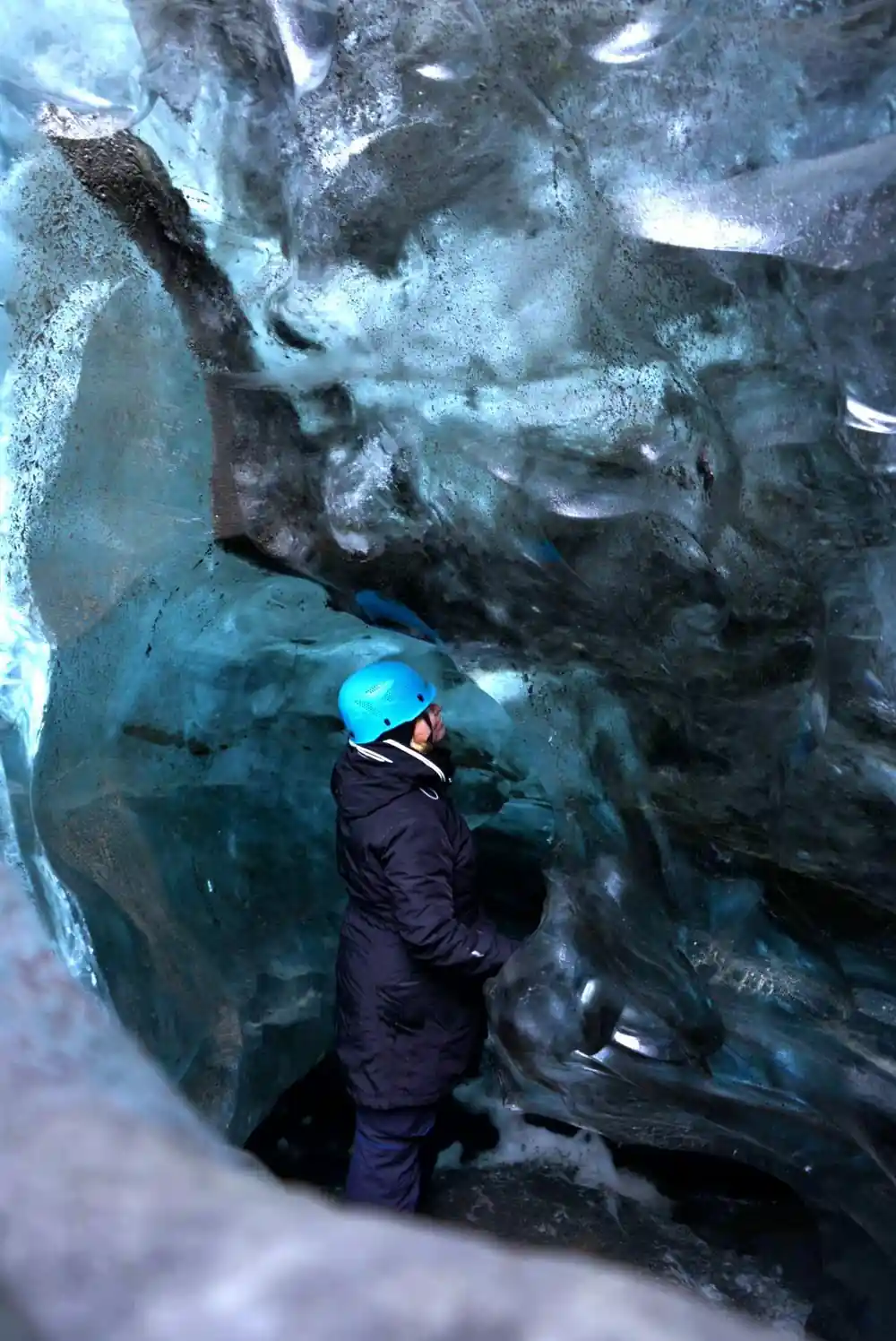
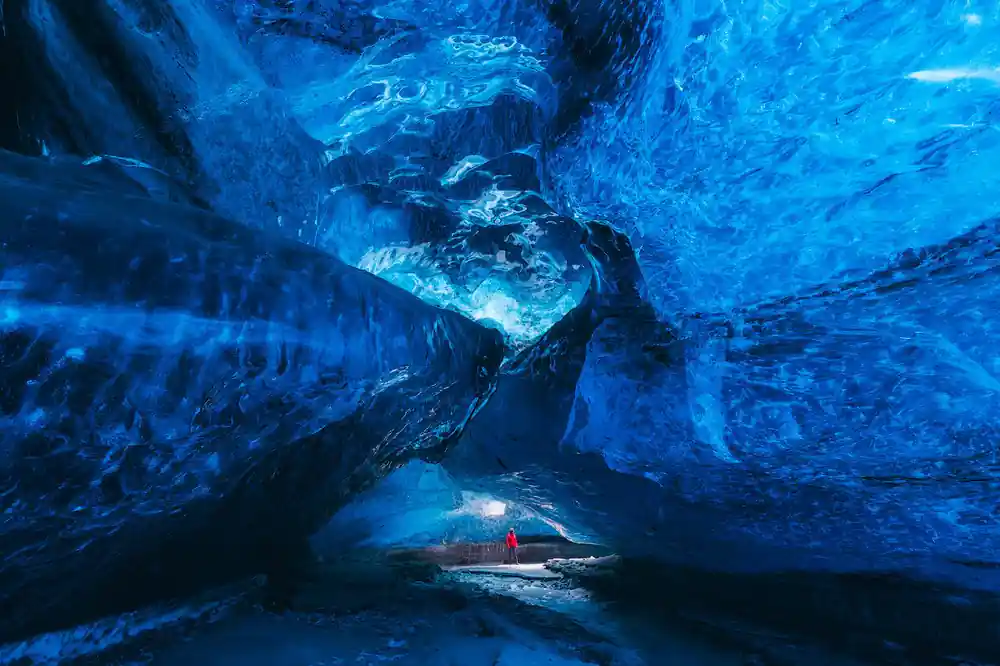
Blue light filtering through the roof of a Vatnajökull ice cave.
Safety gear and what your guide provides
On an ice cave tour, a sturdy helmet is essential safety equipment. It protects against falling ice and low-hanging cave ceilings, and it is generally provided by the tour operator.[5] Wear it properly, with the strap snug under your chin, and keep it on for the whole time you are under the ice rather than only for photographs.
Gloves you can actually use, a warm hat and a waterproof jacket and trousers over insulating layers matter more than style. Wool or synthetic base layers work better than cotton, which holds moisture and then turns cold against the skin. Footwear is the single most important item: stiff soles with deep tread grip frozen ground, while thin, smooth ones slide. Pack a spare pair of socks and gloves in the vehicle, because wet hands and feet will make the drive back feel much longer.
Sorting out gear in advance is easier than improvising at the lagoon, where facilities are limited. If you are hiring boots, do it the day before so you can walk around in them and check the fit. Cold hands make camera work difficult, so keep a spare pair of gloves in a pocket rather than in a bag you cannot reach once you are inside the cave.
Claustrophobia inside the ice chamber
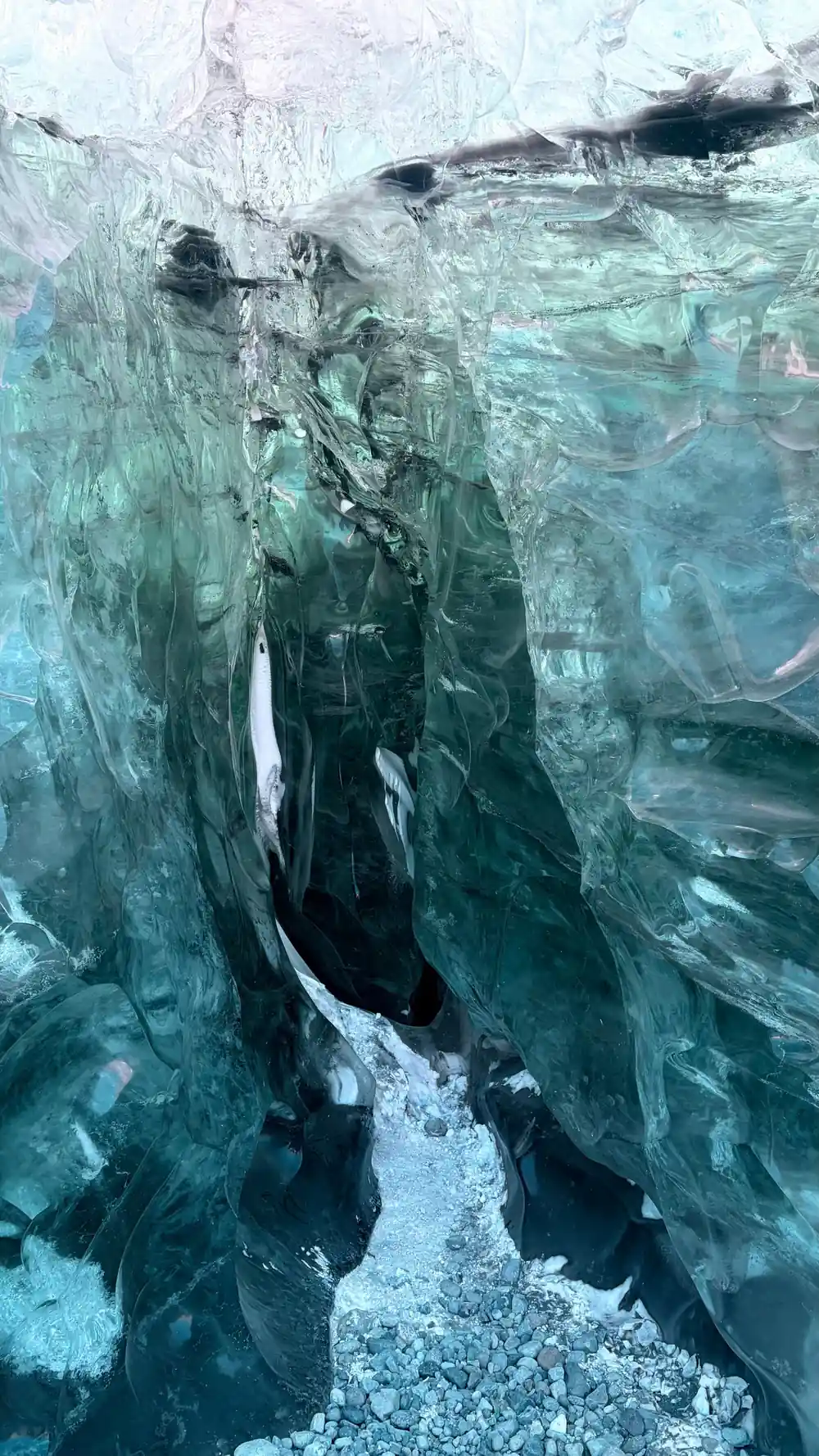
Deep glacier ice looks blue because light passing into it is scattered by large, dense crystals, which absorb long wavelengths and scatter short-waved blue light.[7] The colour is strongest in the dim interior, where daylight filtering through the roof and torchlight bouncing off the walls turn the ceiling a deep, translucent blue. Some of the icebergs floating nearby are thought to be made of ice more than 1,000 years old.[8]
The enclosed feeling is real, and it catches people by surprise. Some find the narrow entrance the hardest part; others are fine until the group stops moving and the noise drops. If you know you dislike tight spaces, say so at the meeting point, stay near the entrance and step outside when you need to. Guides are used to this, and knowing you can leave makes it much easier to stay.
from US$164
The guided ice cave tour from Jökulsárlón runs about 3 hours and is led by an English-speaking guide.[1]
Mobility, wheelchairs and limited-mobility guests
This tour moves from Jökulsárlón into Vatnajökull National Park by Jeep or SUV, and the last part of the approach is on foot over moraine and ice.[1] For travellers who want to see the lagoon and the south coast without that walk, private Jökulsárlón and Diamond Beach day tours are offered in wheelchair accessible vehicles.[6] Those are private, full-day tours rather than a like-for-like swap with the guided cave visit.
If you use a wheelchair or have limited mobility, ask before booking about step-free access, how far the walking goes, and whether a shorter version is possible for your date. Companions should also plan where to wait. The lagoon area has viewpoints and parking near the water, so someone can sit out the cave section and still watch the ice drift past. Diamond Beach is in Southeast Iceland, where black volcanic sand is scattered with clear glacial ice that breaks off from Breiðamerkurjökull, drifts through the lagoon and washes ashore.[9]
It also helps to think about the whole day, not just the cave. Cold, waiting and uneven ground tire people faster than the walking itself, and a slower group can mean standing still while the guide checks the way ahead. A folding stool, a thermos and a spare layer left in the vehicle make the waiting time much easier for anyone who finds standing uncomfortable.
The super jeep ride: bumps, nausea and comfort
The transfer between the lagoon and the glacier runs on rough tracks, and the vehicles are built for exactly that. Expect a bouncy, noisy ride with plenty of side-to-side movement, especially where the track crosses gravel and meltwater channels. If you are prone to travel sickness, take your usual precautions before you set off, sit where you can see out of a window, and look at the horizon rather than at a screen.
Coming from Reykjavík, the drive is long: Jökulsárlón is about 370 km (230 miles) away along Route 1, and it takes roughly 5 hours each way in good conditions.[10] Many travellers stay overnight in the area instead of driving both ways in a single day, particularly in winter when the light is short. If you do drive, treat the journey as part of the trip, with stops at the waterfalls and the black sand coast along the way.
How guides judge whether a cave is safe to enter
Ice caves are temporary. A natural cave in Vatnajökull forms in October, holds its coldest and bluest form through midwinter, and is taken back by returning meltwater in May.[11] Every winter builds a new cave, and winter is the window for this kind of trip. The lagoon in front of it is 248 meters (814 feet) deep and has quadrupled in size since the 1970s.[8]
The glacier underneath is always moving. Breiðamerkurjökull, the outlet glacier that calves into the lagoon, has retreated at an annual rate of up to 200 to 300 m in recent years.[12] Because a cave only survives one winter, and because the ice edge shifts year on year, no two seasons look the same down here. Treat the exact cave, the route and the timings as things that are settled close to your visit, and keep your phone charged in case the plan moves.
One practical consequence is that the cave you walk into is not something you can count on from a photograph taken last year. If a particular shape or shade of blue matters to you, set expectations loosely and enjoy whatever the season has built. The ice you walk through is taken back by meltwater the following May.[11]
How long Jökulsárlón ice cave tours run
Listed durations for four Jökulsárlón ice cave tours:[1][3][13][14]
Typical from-prices, per person
From-prices per person for four Jökulsárlón ice cave tours.[1][2][3][13]
When a natural ice cave exists
Getting ready for the cave
Book your slot
Starting times are shown when you check availability, so book before you plan the rest of your day.[1]
Check the light
Iceland's average winter temperature is around 32°F (0°C), so check the forecast and the daylight hours before you set out.[4]
Dress in layers
Wool or synthetic base layers, a warm midlayer and a waterproof shell keep you comfortable. Stiff soles with deep tread grip the ice better than smooth ones.
Meet at the lagoon
The tour starts at Jökulsárlón before a Jeep or SUV carries you into Vatnajökull National Park.[1]
Let the guide lead
A live guide speaks English and sets the pace, so follow their line and ask questions as you go.[1]
Speak up early
Tell your guide about knees, balance, travel sickness or claustrophobia before you leave the meeting point.
See the blue ice for yourself on a guided tour from Jökulsárlón
from US$164Reserve now & pay later